In summary:
- Rural Japan faces a severe depopulation crisis (*kaso*), threatening local economies and cultural heritage.
- Conscious travel choices directly support these communities, turning your visit into a meaningful act of revitalization.
- Embracing “inconveniences” like infrequent buses and cash-only shops is key to participating in the local economy.
- Staying with families (*minpaku*) and buying from local producers offers social and economic lifelines that hotels and supermarkets cannot.
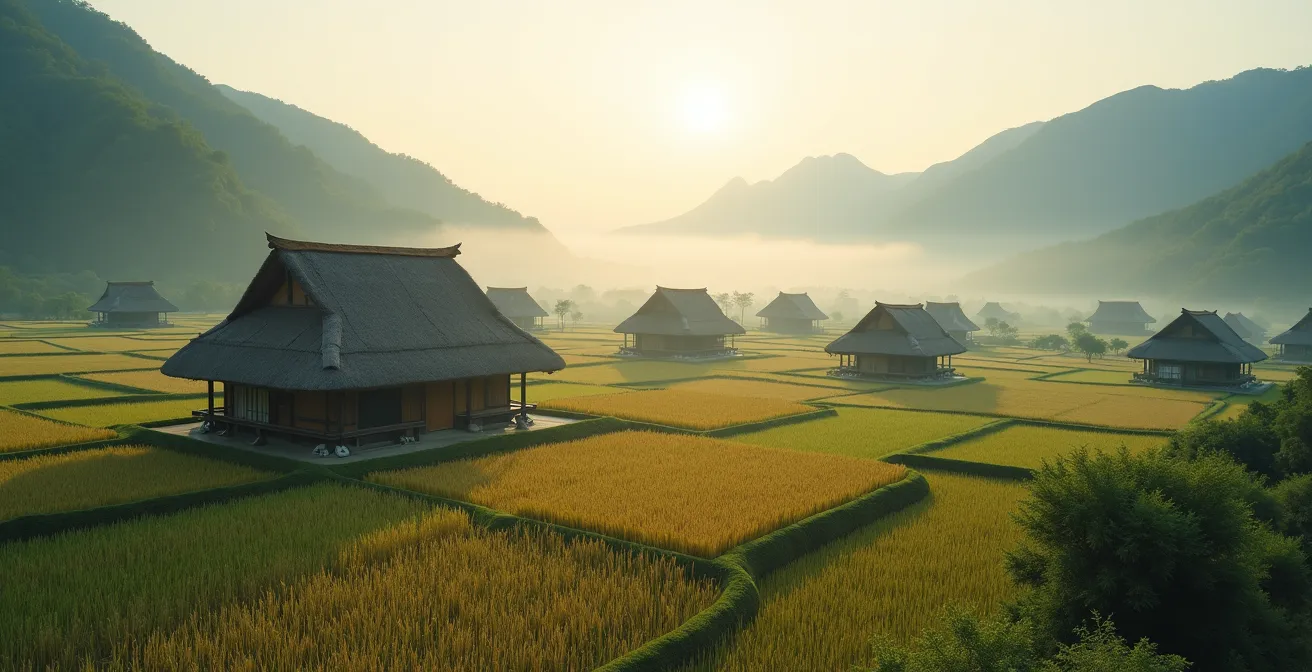
The image of rural Japan is often one of serene beauty: mist-covered mountains, ancient temples, and quiet villages where time seems to stand still. Yet, beneath this idyllic surface lies a profound challenge: *kaso*, or the steady depopulation that leaves schools empty and businesses shuttered. Many travelers seek the countryside as a peaceful escape, a digital detox from the neon-lit rush of Tokyo and Osaka. The common advice revolves around finding the most picturesque spots and the best photo opportunities.
But what if the true purpose of a rural journey wasn’t just to observe, but to participate? What if the very fabric of your trip—the way you travel, spend your money, and connect with people—could become a powerful force for good? This guide moves beyond the platitudes of simple sightseeing. It reframes the challenges of rural travel not as obstacles, but as meaningful opportunities for connection. The seemingly inconvenient aspects of Japan’s countryside are, in fact, the very avenues through which you can offer the most significant support.
This article will guide you through the practical decisions that transform a simple vacation into an act of solidarity. We will explore how to navigate transport, why cash is king, where to stay for genuine connection, and how your outdoor activities can contribute to preserving the delicate balance of these environments. Your journey is more than a vacation; it’s a direct investment in the resilience of these communities, a chance to help preserve a precious way of life.
This article breaks down the essential aspects of traveling with purpose in rural Japan. Below, you will find a detailed guide to making your visit a truly supportive and transformative experience for both you and the communities you encounter.
Summary: Why Visiting Rural Villages Helps Fight Depopulation
- One Bus a Day: How to Plan Schedules in Deep Rural Japan?
- Card or Cash: Why You Must Carry Yen in Rural Areas?
- More Than a Rest Stop: Why Michi-no-Eki Are Culinary Destinations?
- Hotel or Minpaku: What Is It Like to Stay With a Rural Japanese Family?
- Haikyo Exploration: Is It Legal to Visit Abandoned Rural Schools?
- Why You Cannot Rely on English in Rural Prefectures?
- Is Hitchhiking in Japan Safe and Legal for Foreigners?
- Hiking or Kayaking: Which Outdoor Activity Fits a 2-Week Trip?
One Bus a Day: How to Plan Schedules in Deep Rural Japan?
In Japan’s sprawling metropolitan areas, public transport is a marvel of efficiency. In the countryside, or *inaka*, it’s a different story. The reality for many remote villages is a bus that runs only once or twice a day. This isn’t a flaw in the system; it’s a direct consequence of depopulation. Over the last two decades, some regions have seen a 36% decrease in bus usage, pushing many routes toward extinction. Choosing to use these services is a powerful vote for their survival.
This reality requires a shift in mindset. Instead of a frustration, view this “intentional inconvenience” as a feature of slow, sustainable travel. Planning your day around the bus schedule forces a deeper, more meditative engagement with your surroundings. A powerful example of this commitment comes from Hokkaido, where Japan Railways kept a rural train line open for a single high school student, its only regular passenger. This story illustrates that every passenger counts, and your ticket purchase directly contributes to keeping these lifelines open for the few residents who depend on them.
To navigate this landscape, meticulous planning is key. Use apps like Japan Travel by Navitime to get accurate schedules for rural routes. Always check times in advance and have a backup plan, such as a local taxi number or a walking route. Many small tourism centers at train stations rent bicycles, offering a fantastic way to explore the area between bus runs. By embracing the local pace, you not only reduce your carbon footprint but also demonstrate that these essential services are still valued.
Card or Cash: Why You Must Carry Yen in Rural Areas?
While Japan is a technologically advanced nation, its relationship with money remains deeply traditional, especially outside the major cities. The prevalence of credit cards and digital payments in Tokyo is a world away from the cash-based economy of the *inaka*. For a socially conscious traveler, this isn’t an annoyance; it’s an opportunity for a more direct and personal form of economic support. Carrying and using cash is essential.

When you pay with a card, a portion of the transaction goes to banks and processing companies. When you pay with yen, 100% of the money goes directly into the hands of the local shop owner, farmer, or artisan. Think of it as an “economic handshake,” a direct transfer of value that sustains family-run businesses. These small enterprises are the backbone of the rural economy, and your cash purchases are a tangible lifeline. This applies not only to small market stalls but often to restaurants and even traditional inns, or *ryokan*.
As travel writer Donny Kimball, who specializes in rural Japan, bluntly puts it:
If you don’t want to spend the night washing dishes after devouring a fine local meal, be sure to have enough notes in your wallet to foot the damn bill! Note also that the cash only policy extends to likes of traditional ryokan and other such lodgings that you would expect to accept credit cards.
– Donny Kimball, Travel writer specializing in rural Japan
Before heading into the countryside, make it a priority to withdraw a sufficient amount of yen from an ATM in a larger city. This simple act of preparation ensures your spending has the maximum positive impact, strengthening the very community resilience you came to experience.
More Than a Rest Stop: Why Michi-no-Eki Are Culinary Destinations?
Along Japan’s rural highways, you’ll find a unique institution: the *michi-no-eki*, or “roadside station.” Far from being simple rest stops with vending machines, these are vibrant community hubs that serve as ground zero for rural revitalization. For the conscious traveler, they are not just a place to stretch your legs but a primary destination for connecting with the local economy and culture. They are showcases of everything that makes a region unique.
Each *michi-no-eki* is fiercely local. Instead of generic souvenirs, you’ll find shelves stocked with hyper-local produce, pickles, sake, and crafts sourced directly from the surrounding farms and workshops. This is where you can buy a jar of jam from the grandmother down the road or a bag of rice from a young “U-Turn” entrepreneur who has returned from the city to work the family land. Your purchase is a direct investment in their livelihood and their decision to stay and contribute to the community’s future.
One of the most powerful features to look for are the producer stickers. Many products have a label with the name and often the face of the farmer who grew it. This simple detail transforms an anonymous transaction into a personal connection. You’re not just buying a tomato; you’re supporting Tanaka-san’s family. This act of purchasing is a core tenet of sustainable tourism, where travelers actively participate in protecting and promoting local resources rather than just passively consuming them.
Hotel or Minpaku: What Is It Like to Stay With a Rural Japanese Family?
When choosing accommodation in rural Japan, the decision between a modern hotel and a family-run guesthouse (*minpaku*) is a choice between observation and participation. While hotels offer predictable comfort, a *minpaku* or farm stay provides an unparalleled opportunity to experience “living heritage” and contribute to the social vitality of an aging community. It’s about sharing a home, a meal, and a conversation.
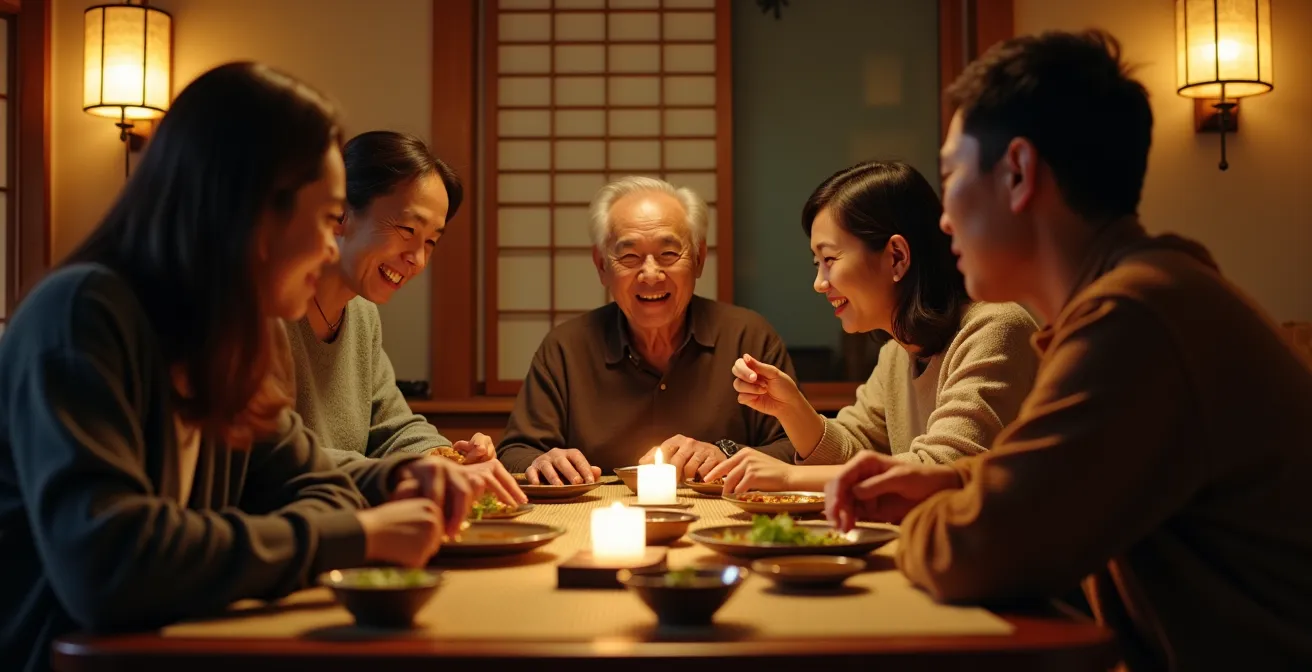
Research from Kanazawa University on rural tourism highlights a fascinating point: for many elderly hosts, the primary benefit isn’t financial. While the income helps, studies show that often the economic gains were marginal compared to the immense improvements in quality of life. The social interaction is the real treasure. Hosting visitors provides a powerful sense of purpose, a connection to the wider world, and an incentive to preserve their traditions.
This is confirmed by the hosts themselves, who find the experience deeply rewarding. As one study notes:
The social aspects were especially encouraging. Many of the aging workers found it invigorating to engage with the range of visitors, who include foreigners and students.
By staying in a *minpaku*, you are not a passive customer; you are an active participant in a cultural exchange. You become part of the family’s day, sharing stories over a home-cooked meal made with local ingredients. This is the deepest level of support you can offer—not just an economic transaction, but a human connection that combats the isolation that often accompanies depopulation.
Haikyo Exploration: Is It Legal to Visit Abandoned Rural Schools?
The landscape of rural Japan is dotted with silent monuments to the *kaso* crisis: abandoned schools, homes, and clinics, collectively known as *haikyo*. For many travelers, these atmospheric ruins are a powerful draw. However, the question of legality is straightforward: entering a *haikyo* without permission is trespassing and illegal in Japan. These properties, no matter how derelict, are still owned by someone—an individual, a company, or the local municipality.
The allure of these places is understandable. They are tangible symbols of a community’s history and its struggle against decline, especially in areas where the elderly population can reach 30-40%. Instead of illegal entry, the more respectful approach is to view these sites from public roads and reflect on the stories they hold. In some cases, communities have found creative ways to transform these symbols of loss into beacons of memory and even tourism.
A striking example is the village of Nagoro on Shikoku Island. Here, a local artist began creating life-sized scarecrows, or *kakashi*, to populate the village and its closed school, each one representing a resident who has left or passed away. Today, the scarecrows outnumber the human inhabitants, waiting at bus stops and sitting at desks in the old schoolhouse. This hauntingly beautiful project has turned Nagoro into an unlikely tourist destination, preserving the village’s identity and memory in a way that is both legal and deeply poignant. It demonstrates a powerful form of community resilience in the face of irreversible change.
Why You Cannot Rely on English in Rural Prefectures?
The language barrier is often cited as the biggest challenge for travelers in rural Japan. Outside of major tourist hubs, English signage is rare, and few locals speak it fluently. However, for a traveler focused on connection, this barrier is not a wall but a bridge waiting to be built. Attempting to communicate in Japanese, no matter how basic, is a fundamental sign of respect. It shows you see the community not as a service to be consumed, but as a culture to be engaged with.
Your effort, however clumsy, will almost always be met with surprising warmth and patience. As travel blogger Donny Kimball notes, the perceived aloofness of city dwellers often melts away in the countryside.
I found that countrysiders tend to be much more amicable and approachable than those in the inner city. If you can overcome the challenges of the blasted language barrier, you might just end up making a dear friend for life.
– Donny Kimball, Travel blogger and digital marketer
You don’t need to be fluent. A few key phrases can open doors and create moments of genuine connection. Learning to say “thank you,” “it’s delicious,” or simply “hello” can transform a transactional encounter into a memorable human interaction. It’s a small investment of time that pays huge dividends in goodwill and helps foster a positive relationship between visitors and residents.
Your Essential Phrasebook for Respectful Connection
- Arigatou gozaimasu (Thank you): The most important phrase. Use it often to show gratitude and basic respect for any service or kindness.
- Oishii desu (It’s delicious): Essential for meals shared with locals or at family-run restaurants. It’s a huge compliment.
- Konnichiwa (Hello/Good day): A simple, friendly greeting that is always appreciated when entering a small shop or passing someone on a path.
- Sumimasen (Excuse me/Sorry): A versatile phrase for getting someone’s attention, apologizing for a mistake, or navigating a crowd.
- Onegaishimasu (Please): A polite way to make a request, showing deference and respect when asking for help or placing an order.
Is Hitchhiking in Japan Safe and Legal for Foreigners?
The idea of hitchhiking can seem daunting, but in Japan, it’s a practice that taps directly into the high-trust fabric of rural society. Hitchhiking is legal and generally considered safe, though it is not a common mode of transport. Its viability stems from a deep-seated culture of mutual respect and helpfulness, particularly in areas where locals understand the profound limitations of public transportation. For the adventurous and flexible traveler, it can be a gateway to unparalleled cultural immersion.
Success often depends on location and approach. It is most effective in remote prefectures like Gunma or Hokkaido, where a foreigner waiting by the roadside is more likely to be seen as someone in genuine need of a lift. A crucial tool is a sign with your destination clearly written in Japanese. A simple bow when a car stops and a friendly demeanor are non-negotiable. Often, the driver’s motivation is not just kindness but also curiosity and the opportunity for cultural exchange. Be prepared to share stories about your home country and your travels in Japan.
This act of trust between a driver and a traveler reinforces the positive cycle of rural tourism. When visitors show respect and genuine interest, residents see them not as outsiders but as partners in a shared experience. This dynamic helps to create common values like community revitalization and nature conservation. As one study notes, “When the nomads and residents interact, they create common values such as nature conservation and economic and community revitalization.” Hitchhiking, in this context, becomes more than just a free ride; it’s a profound act of community engagement.
Key takeaways
- Embrace Intentional Inconvenience: Planning around sparse bus schedules isn’t a flaw; it’s a feature of slow travel that directly supports vital local services.
- Practice the Economic Handshake: Using cash is a direct financial lifeline to small, family-run businesses that are the backbone of rural economies.
- Seek out Living Heritage: Choosing a *minpaku* (family stay) over a hotel provides crucial social vitality to aging hosts and offers you an authentic cultural exchange.
Hiking or Kayaking: Which Outdoor Activity Fits a 2-Week Trip?
Japan’s countryside is a paradise for outdoor enthusiasts, with over 70% of the country being mountainous. For the conscious traveler, choosing an activity like hiking or kayaking is not just about recreation; it’s about engaging with the environment in a way that is both respectful and insightful. The choice between them often comes down to which aspect of Japan’s human-nature relationship you wish to explore: the mountains or the sea.
Hiking takes you into the heart of ‘Satoyama’, the traditional landscape where forests, mountains, and villages coexist in a symbiotic relationship. Trails often lead past abandoned terraced rice paddies (*tanada*) and overgrown paths, offering a direct view of depopulation’s impact on the land. Kayaking, conversely, explores ‘Satoumi’, the coastal equivalent where communities have long depended on the sea. Paddling along the coastline reveals the struggles of declining fishing villages and empty harbors.
Both activities offer opportunities for “symbiotic exploration,” where you can actively contribute. Citizen science is a growing field in rural tourism, allowing travelers to do more than just observe. Hikers can report on trail conditions or document rare plants, while kayakers can participate in micro-plastic surveys. These activities support the preservation of landscapes and create a sense of stewardship. The following table breaks down the key differences to help you choose.
This comparative analysis can help you align your activity choice with your travel goals and desired impact, as detailed in a recent comparative analysis of rural tourism activities.
| Aspect | Hiking | Kayaking |
|---|---|---|
| Accessibility | Free trails throughout 70% mountainous terrain | Limited to coastal and river areas |
| Depopulation Visibility | Abandoned hillside farms (tanada), overgrown paths | Declining fishing villages, empty harbors |
| Cultural Concept | Explores ‘Satoyama’ (mountain-village symbiosis) | Explores ‘Satoumi’ (coastal symbiosis) |
| Contribution Opportunity | Trail condition reporting, rare plant documentation | Micro-plastic surveys, marine observation |
| Equipment Needs | Minimal – hiking boots and day pack | Moderate – may need to rent kayak and gear |
Ultimately, your visit is a powerful statement. By planning thoughtfully and engaging respectfully, you move beyond being a mere tourist. You become a temporary resident, a partner in preservation, and a vital part of the story of community resilience in rural Japan. Plan your next journey not just by the destinations you’ll see, but by the positive impact you’ll leave behind.
Frequently asked questions about Visiting Rural Villages Helps Fight Depopulation?
What makes Michi-no-Eki different from regular highway stops?
They function as community hubs showcasing hyper-local products, with each station featuring unique regional vegetables, pickles, and crafts directly from local farmers and artisans.
How do purchases at Michi-no-Eki support depopulation efforts?
Money spent goes directly to local families and U-Turn entrepreneurs who have moved back from cities, supporting their efforts to revitalize rural communities.
What should travelers look for at these stations?
Producer stickers on products that show the farmer’s name and face, connecting purchases directly to specific local families rather than abstract economies.
Is hitchhiking legal for foreign tourists in Japan?
Yes, hitchhiking is legal in Japan, though not common. The high-trust society makes it relatively safe, especially in rural areas.
What areas are best for hitchhiking attempts?
Rural areas where public transport is limited, such as parts of Gunma or remote Hokkaido, where locals understand the transportation challenges.
How should travelers approach hitchhiking respectfully?
Use a sign with your destination written in Japanese, bow when a car stops, and be prepared to share stories as this is often seen as cultural exchange.