Travel Tips & Itineraries
Japan presents travelers with a fascinating paradox: it’s simultaneously one of the most organized and most culturally complex destinations in the world. While its legendary efficiency makes logistics remarkably smooth, the intricate web of social customs and unwritten rules can leave even experienced travelers uncertain. The difference between a frustrating trip and a transformative experience often comes down to understanding these nuances before you arrive.
This comprehensive resource addresses the fundamental aspects of Japan travel planning, from initial route decisions and booking timelines to navigating the country’s unique social choreography. Whether you’re calculating transport pass economics, decoding escalator etiquette, or structuring a thematic itinerary around ancient post towns, the goal is to equip you with the knowledge that transforms uncertainty into confidence. Let’s break down the essential components that will shape your journey.
Planning Your Japan Journey from Start to Finish
The foundation of any successful Japan trip lies in understanding your options before making irreversible decisions. Unlike destinations where spontaneity is rewarded, Japan’s combination of seasonal price fluctuations, accommodation scarcity during peak periods, and advance reservation requirements for popular experiences makes strategic planning genuinely valuable.
Choosing Your Route: Golden Route vs Off-the-Beaten-Path
The so-called Golden Route—typically Tokyo, Hakone or Mount Fuji, Kyoto, Osaka, and sometimes Hiroshima—exists for good reason. It concentrates iconic experiences within manageable distances and offers the most robust English-language infrastructure. For first-time visitors, this route provides a logical introduction to Japan’s cultural spectrum, from neon-lit modernity to temple-rich traditional cities.
However, off-the-beaten-path alternatives deliver different rewards. The art islands of the Seto Inland Sea, the castle towns of Kanazawa and Matsumoto, or the historic post towns along the Nakasendo trail offer deeper immersion with fewer crowds. The trade-off isn’t quality—it’s accessibility and the confidence required to navigate areas with less English signage. A balanced approach might anchor your trip in Golden Route cities while incorporating one or two less-traveled destinations as day trips or brief detours.
Booking Timeline and Seasonal Considerations
Japan’s tourism landscape operates on a predictable rhythm. Cherry blossom season (late March to early April) and autumn foliage (November) drive prices upward and book accommodation months in advance. Summer brings humidity and festival energy, while winter offers excellent value outside ski resort areas.
A strategic booking sequence typically follows this pattern:
- Book international flights approximately three to five months ahead for competitive pricing
- Secure accommodation in major cities immediately after flights, particularly for popular seasons
- Purchase transport pass exchange orders if the math favors them for your itinerary
- Reserve specific experiences requiring advance booking (exclusive restaurants, certain museums, onsen with limited capacity)
- Arrange pocket WiFi or data SIM delivery to your first accommodation
Essential Pre-Departure Preparations
Beyond bookings, several logistical elements deserve attention before departure. Connectivity decisions—pocket WiFi versus SIM cards versus international roaming—should align with your group size and data needs. A family of four typically finds pocket WiFi more economical, while solo travelers often prefer the independence of a personal SIM card.
Packing for Japan requires thinking beyond climate. Many accommodations provide slippers and basic toiletries, reducing luggage needs. However, travelers with larger feet (above European size 44 or US men’s size 10) should bring comfortable walking shoes, as finding replacement footwear can prove challenging. Similarly, certain medication categories face restrictions, making it wise to research any prescription drugs you’ll carry.
Understanding Japanese Social Etiquette
Japan’s social harmony relies on a complex system of unwritten rules that prioritize group cohesion over individual expression. For visitors, understanding the underlying principle makes dozens of specific rules suddenly logical rather than arbitrary.
The Concept of Meiwaku: Avoiding Inconvenience to Others
Meiwaku—causing trouble or inconvenience to others—represents perhaps the most foundational concept in Japanese social interaction. This principle explains why eating while walking is discouraged (you might spill on someone), why phone conversations on trains are rare (your voice disturbs others), and why trash bins are scarce (carrying your waste home prevents public disposal burdens).
This framework helps decode situations where Western norms differ dramatically. The absence of public trash bins, for instance, isn’t an oversight—it’s an expectation that individuals will manage their own waste. Most Japanese people carry a small bag for trash throughout the day, disposing of it at their accommodation or at convenience stores that provide bins near their entrances.
Daily Etiquette Essentials
Several practical rules emerge from the meiwaku principle and deserve particular attention:
- Escalator positioning: Stand on the left in Tokyo and most of eastern Japan; stand on the right in Osaka and western regions. The passing lane remains open for those in a hurry.
- Queue discipline: Lines form for virtually everything—trains, restaurants, shops. Cutting, even accidentally, generates palpable social disapproval. Platform markings indicate exactly where doors will open, and boarding follows a clear pattern: exiting passengers first, then those waiting in order.
- Restaurant etiquette: Slurping noodles demonstrates appreciation, but eating while walking outside the designated area is frowned upon. Many restaurants provide wet towels (oshibori) before meals—these are for hands only, not faces.
- Shoe removal: Removing shoes when entering certain spaces (traditional restaurants, temples, homes, some changing rooms) is non-negotiable. Look for raised floors or shoe lockers as cues.
Handling Mistakes Gracefully
The anxiety many travelers feel about committing etiquette errors is usually disproportionate to actual consequences. Japanese people generally extend considerable tolerance to foreign visitors, understanding that cultural differences exist. When mistakes happen, a simple apology—”sumimasen” (excuse me/sorry)—accompanied by correcting the behavior demonstrates respect and good faith.
The more significant issue isn’t occasional mistakes but visible indifference to local customs. Making an effort, even imperfectly, earns far more goodwill than perfect execution with an entitled attitude.
Navigating Japan’s Financial and Service Culture
Japan’s approach to service and financial transactions reflects deeper cultural values about fair compensation, professional pride, and social hierarchy. Understanding these concepts prevents awkward situations and demonstrates cultural awareness.
The no-tipping culture often confuses visitors accustomed to augmenting service workers’ income. In Japan, the price listed is the price paid—service is already factored into costs, and employees receive what’s considered a fair wage. Attempting to tip can actually cause confusion or mild offense, as it may imply the service worker needs charity or that their employer doesn’t pay adequately.
Exceptions exist in specific contexts. High-end ryokan (traditional inns) sometimes accept gratuities for exceptional personal service, typically presented discreetly in an envelope. Tour guides and drivers for private services may also accept tips, particularly if they cater to international clients. However, the default assumption should always be: no tipping required.
Alternative expressions of gratitude carry more cultural weight. A sincere “gochisousama deshita” (thank you for the meal) when leaving a restaurant, careful handling of provided items, or a positive review on Japanese platforms like Tabelog demonstrates appreciation in locally meaningful ways.
Cash remains more prevalent than in many developed nations, though card acceptance has expanded considerably. Many smaller establishments, particularly in rural areas or older neighborhoods, remain cash-only. ATMs at convenience stores (especially 7-Eleven) offer the most reliable access for foreign cards and operate 24 hours.
Mastering Transportation Systems
Japan’s transportation network represents engineering efficiency at its finest, but extracting maximum value requires understanding both the infrastructure and the economics behind various payment options.
Transport Pass Economics: When Passes Actually Save Money
The Japan Rail Pass, once an automatic purchase for most tourists, now requires careful calculation due to recent price adjustments. The seven-day ordinary pass currently costs approximately ¥50,000, meaning you need to rack up equivalent point-to-point ticket costs to break even.
A Tokyo-Kyoto-Osaka-Tokyo itinerary with minimal additional long-distance travel typically approaches but doesn’t definitively exceed the break-even point. However, adding trips to Hiroshima, Kanazawa, or multiple journeys to different regions within a week makes the pass valuable. Regional passes—like the JR East Nagano-Niigata Pass or the Kansai Area Pass—often deliver better value for geographically focused itineraries.
The calculation should also factor in convenience. The pass eliminates the need to purchase individual tickets for covered routes, and unreserved seating access provides flexibility. However, losing a physical pass can be catastrophic—replacements aren’t issued—so it requires careful management throughout your trip.
IC Cards: Simplifying Urban Transportation and Beyond
Rechargeable IC cards (Suica, Pasmo, ICOCA) function as the Swiss Army knife of Japanese travel. Beyond their primary purpose—paying for trains, subways, and buses across virtually all urban areas—they work at convenience stores, vending machines, coin lockers, and many restaurants.
The key practicalities include:
- Regional compatibility: Cards purchased in Tokyo work in Osaka, and vice versa, eliminating the need for multiple cards
- Deposit structure: Cards typically cost ¥500 as a deposit plus your initial charge; the deposit refund when returning the card incurs a ¥220 handling fee, but only if you actually return it—many travelers keep cards as souvenirs or for future trips
- Mobile integration: Recent smartphones can add virtual IC cards to Apple Pay or Google Pay, eliminating the need for a physical card entirely, though this requires a Japanese app store account for initial setup
One common frustration: if your card balance falls below the fare cost, ticket gates won’t open. Recharge machines are plentiful at stations, but the moment of discovering insufficient funds during rush hour can be stressful. Maintaining a buffer of ¥1,000-2,000 prevents this scenario.
Platform Etiquette and Crowd Navigation
Japanese train platforms feature remarkably precise floor markings indicating exactly where doors will open. Passengers queue in organized lines at these markings, waiting for all exiting passengers to clear before boarding in orderly fashion. This system, combined with train punctuality measured in seconds, creates impressive efficiency during peak hours.
For popular restaurants, the queuing system often involves waiting outside, sometimes for an hour or more at famous establishments. Wait time estimation improves with observation—count the groups ahead of you and estimate table turnover. Many restaurants place a staff member outside to inform waiting customers of approximate times, and cutting in line, even accidentally, generates immediate social censure.
Structuring Your Itinerary for Maximum Enjoyment
Beyond selecting destinations, how you arrange your time—the rhythm of movement and rest, the logic of your route, and the thematic coherence of your choices—profoundly impacts the travel experience.
Balancing Movement and Rest
First-time Japan visitors frequently overschedule, underestimating the physical and cognitive load of navigating a linguistically and culturally different environment. Rest days—periods with minimal agenda, perhaps just exploring a neighborhood or visiting a single relaxed attraction—prevent the burnout that transforms travel into endurance.
Similarly, moving days—those spent checking out, traveling to a new city, and checking in—should feature lighter schedules. Attempting to squeeze major sightseeing around accommodation transitions typically results in rushing and frustration. The simple act of finding a new hotel, understanding its neighborhood, and locating nearby convenience stores consumes more time and energy than it appears on paper.
Hub-and-Spoke vs Linear Routes
Two fundamental itinerary structures each offer distinct advantages. A hub-and-spoke model establishes a base (often Tokyo or Kyoto) for several days, taking day trips to surrounding areas while returning each night. This minimizes packing and unpacking, allows you to learn a neighborhood deeply, and simplifies logistics.
A linear route moves progressively from city to city without backtracking—perhaps Tokyo → Hakone → Kyoto → Osaka → Hiroshima. This maximizes geographic coverage and minimizes redundant travel time but requires more frequent accommodation changes and luggage management.
Weather patterns and seasonal events can force adjustments. Cherry blossom forecasts, updated frequently during spring, might prompt reordering cities to maximize bloom viewing. Summer typhoon season occasionally disrupts transportation, making flexible booking more valuable during those months.
Thematic Journey Planning
Organizing travel around a specific interest creates unexpected coherence and depth. Rather than the generic “best of Japan” approach, thematic routes deliver focused experiences:
- Castle enthusiasts might structure a journey around Himeji, Matsumoto, Kumamoto, and Hikone castles, each representing different architectural periods and defensive strategies
- Art-focused travelers could concentrate on the Seto Inland Sea islands (Naoshima, Teshima, Inujima) where contemporary installations interact with island landscapes
- History buffs might walk portions of the Nakasendo, the historical route connecting Tokyo and Kyoto through mountain post towns preserved from the Edo period
- Onsen devotees could hop between distinct hot spring regions—volcanic Kusatsu, seaside Atami, mountain Kurokawa—experiencing regional variations in bathing culture
- Anime pilgrims visit real locations featured in beloved series, from the Hida region (Your Name) to Kamakura (Slam Dunk)
These thematic approaches don’t exclude iconic mainstream attractions but provide a narrative thread that makes the journey feel cohesive rather than scattershot.
Leveraging Technology for a Smoother Trip
Strategic app selection and offline preparation can dramatically reduce friction during your journey. The key is identifying tools that solve specific pain points rather than downloading everything available.
Translation apps like Google Translate now offer camera-based real-time translation, converting photographed Japanese text into English—invaluable for restaurant menus, instruction signs, and product labels. Download the Japanese language pack for offline functionality.
For restaurant reservations, some establishments, particularly popular ones, require bookings through Japanese-only systems. Apps like TableCheck or Tabelog have English interfaces, though hotel concierges remain the most reliable solution for high-demand restaurants.
Train navigation apps—Google Maps works well for basic routing, but Hyperdia or Japan Transit Planner provide more detailed options including train types, platform numbers, and exact costs. These apps help you compare whether a journey is covered by your rail pass or requires a separate payment.
Offline maps downloaded through Google Maps or Maps.Me ensure navigation capability even when connectivity falters. Urban areas have excellent coverage, but rural regions or mountain areas can have spotty signals.
Battery management becomes critical when your phone serves as translator, navigator, camera, and payment method simultaneously. A portable battery pack with sufficient capacity (at least 10,000mAh) for full-day charging prevents the anxiety of watching your battery percentage plummet during an unfamiliar area.
Japan travel rewards those who invest time in understanding both logistical systems and cultural foundations. The topics covered here—from route selection and booking sequences to etiquette principles and technology tools—form the essential framework for transforming a potentially overwhelming destination into a manageable and deeply rewarding experience. Each element builds on the others: understanding meiwaku makes escalator etiquette logical, transport pass economics inform route structuring, and thematic planning creates cohesion across diverse experiences. Approach Japan with this foundational knowledge, and you’ll find that the country’s legendary organization becomes an asset rather than a source of anxiety.
Art or History: How to Build a Thematic Route Across Japan?
The most meaningful Japan itinerary isn’t about geography; it’s about crafting a narrative that connects each stop thematically. Logistical precision is key for complex themes like the art islands, where ferry schedules and museum closures dictate the flow. Historical routes…
Read more
Google Maps or Navitime: Which App Saves You From Getting Lost?
The key to a smooth Japan trip isn’t downloading more apps, but building a smarter, smaller digital toolkit. For complex train stations like Shinjuku, Navitime’s detailed platform and exit guidance is superior to Google Maps. For authentic food experiences, locals…
Read more
Japan in 10 Days: How to Architect the Perfect Itinerary (North vs. South)
The success of a 10-day Japan trip depends less on the destinations you choose and more on the logistical framework you build. Prioritizing reduced “travel velocity” by minimizing hotel changes is more crucial than seeing an extra city. Identifying and…
Read more
Suica or Pasmo: Which IC Card Works Best for Tokyo Travel?
For modern Tokyo travel, the key decision isn’t Suica versus Pasmo, but physical card versus digital wallet—with the digital option offering superior convenience and security. Digital IC cards in Apple Wallet allow instant, on-the-go recharges with a credit card, eliminating…
Read more
Is the JR Pass Still Worth Buying After the Recent Price Hike?
The Japan Rail Pass is no longer a default purchase but a niche financial tool for high-velocity itineraries. A 7-day pass (¥50,000) requires at least 3-4 long-distance city trips to break even. Regional passes often provide superior value for itineraries…
Read more
How Queueing Like a Local Saves You Time at Train Stations
Mastering Tokyo’s queues isn’t about politeness; it’s a strategic system for efficiency. Precise platform markings, split-boarding formations, and off-peak lunch times are all components of a high-speed social choreography. Understanding the underlying logic of crowd flow transforms your commute from…
Read more
Why Tipping Can Offend Staff and What to Do Instead
Leaving a tip in Japan doesn’t signal appreciation; it signals a misunderstanding of a service culture built on professional pride, not financial incentives. Service quality is driven by a cultural philosophy of anticipatory hospitality (omotenashi), where excellent work is the…
Read more
The Public Mistakes That Instantly Mark You as a Rude Tourist
The fear of unintentionally offending in Japan is valid, but memorizing rules is an inefficient strategy. Most etiquette “rules” stem from two core cultural principles: maintaining group harmony (wa) and avoiding being a nuisance to others (meiwaku). Instead of a…
Read more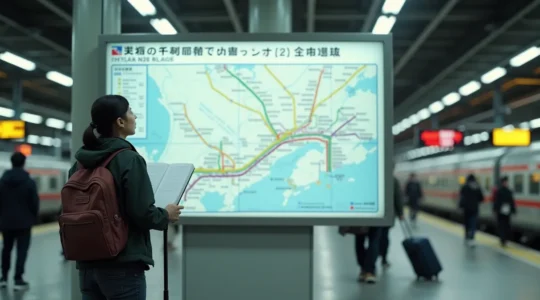
How to Plan a 14-Day Japan Itinerary Without the Overwhelm
Planning a 14-day Japan trip feels complex, but the key isn’t a rigid schedule; it’s mastering the core logistics of travel flow, timing, and packing. Follow the classic “Golden Route” (Tokyo to Kyoto) for a streamlined flow and simplified luggage…
Read more