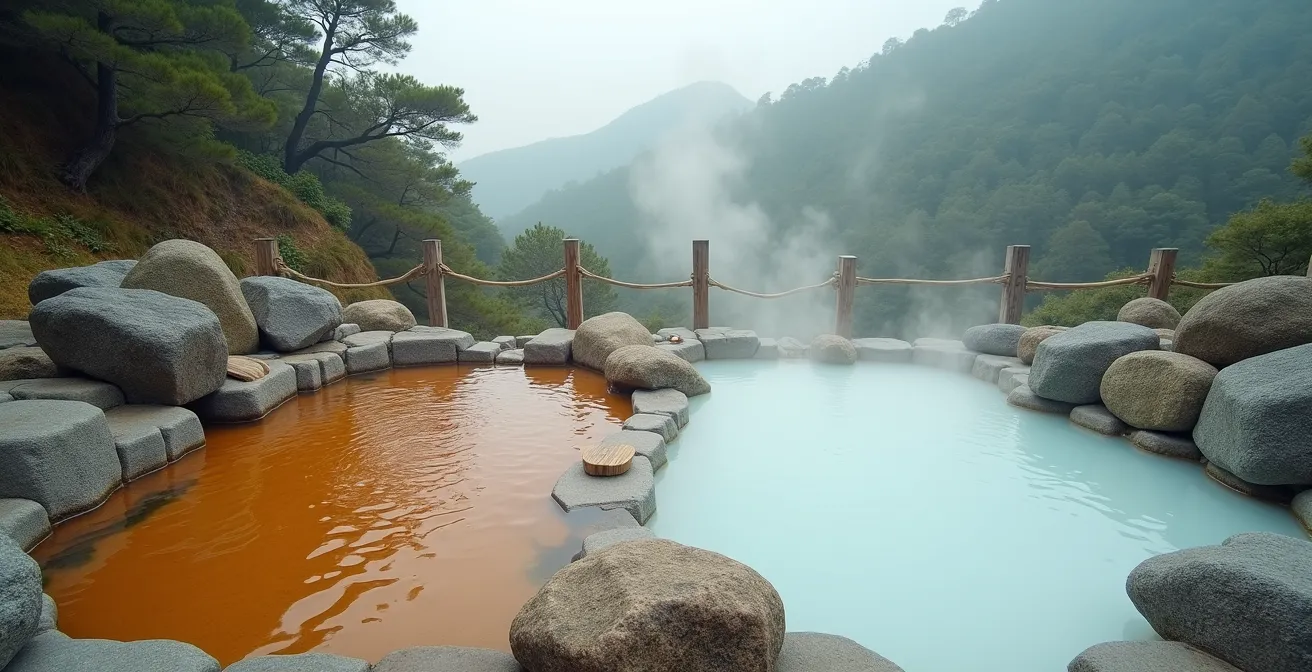
The true healing power of onsen water is determined by its specific mineral chemistry (sulfur vs. iron) and pH level, not just its temperature.
- Sulfur-rich, acidic waters are highly effective for chronic joint pain and skin conditions, acting as a natural anti-inflammatory agent.
- Gentler alkaline or iron-rich waters are better for improving circulation, relieving general fatigue, and are safer for sensitive skin.
Recommendation: Choose your onsen destination based on its water profile to match your specific health needs—Kusatsu for targeted therapy, Beppu for holistic variety.
For those living with chronic pain or the persistent aches that accompany aging, the search for relief is a constant journey. Many turn to the simple comfort of a hot bath, a universally acknowledged method for soothing sore muscles. This approach, while pleasant, often only scratches the surface of what’s possible. It rests on the common assumption that heat alone is the primary healing agent. However, the ancient practice of balneotherapy—the treatment of disease by bathing, particularly in mineral-rich waters—suggests a much deeper and more complex mechanism at play.
What if the true key to unlocking profound, lasting relief from muscle pain wasn’t just about the temperature of the water, but about its very composition? The secret lies in a form of biochemical synergy, where specific minerals like sulfur and iron interact directly with the body’s systems. This guide moves beyond the generic advice to explore the science behind Japan’s legendary onsen. We will delve into how the pH, mineral content, and even the surrounding rituals of bathing work in concert to create a powerful therapeutic experience. By understanding these principles, you can transform a simple soak into a targeted treatment for your specific ailments.
This article provides a comprehensive roadmap for your healing journey. We will examine the science of different water types, compare legendary onsen towns, and decode the cultural etiquette to ensure you can fully and respectfully immerse yourself in this time-honored wellness tradition. Let’s explore how to choose the right water for your body.
Summary: Sulfur or Iron: Which Water Type Heals Muscle Pain Best?
- Cover or Skip: Can You Enter Therapeutic Onsen With Small Tattoos?
- Long Soak or Repeated Dips: What Is the Best Method for Circulation?
- Why Do Japanese Drink Coffee Milk After a Hot Bath?
- Beppu or Kusatsu: Which Onsen Town Offers the Ultimate Healing Tour?
- Acidic or Alkaline: Which Water Is Safe for Sensitive Skin?
- Why Must You Cleanse Before Entering the Sacred Grounds?
- Why Is Hakata Ramen So Creamy and Why Does It Smell Strong?
- Dinner Times and Curfews: How to Survive Ryokan Schedules?
Cover or Skip: Can You Enter Therapeutic Onsen With Small Tattoos?
One of the most common anxieties for international visitors to Japanese onsen is the historical taboo against tattoos, traditionally associated with organized crime. For travelers seeking therapeutic waters, the fear of being turned away can be a significant barrier. However, the landscape is rapidly changing. As Japan welcomes more international tourists, many onsen, particularly in larger resort towns, have adopted more lenient policies. For instance, according to 2025 data, there are now over 100 tattoo-friendly spots in Beppu alone, indicating a major shift in accessibility.
The primary concern is not just access, but whether covering a tattoo impacts the healing process. The therapeutic benefits of onsen rely heavily on percutaneous absorption, the process by which minerals penetrate the skin. A waterproof patch creates a barrier, preventing this vital exchange. Therefore, for a small tattoo, you face a choice: cover it to gain access to a wider range of facilities, or seek out a fully tattoo-friendly onsen to ensure your entire body benefits from the mineral-rich water.
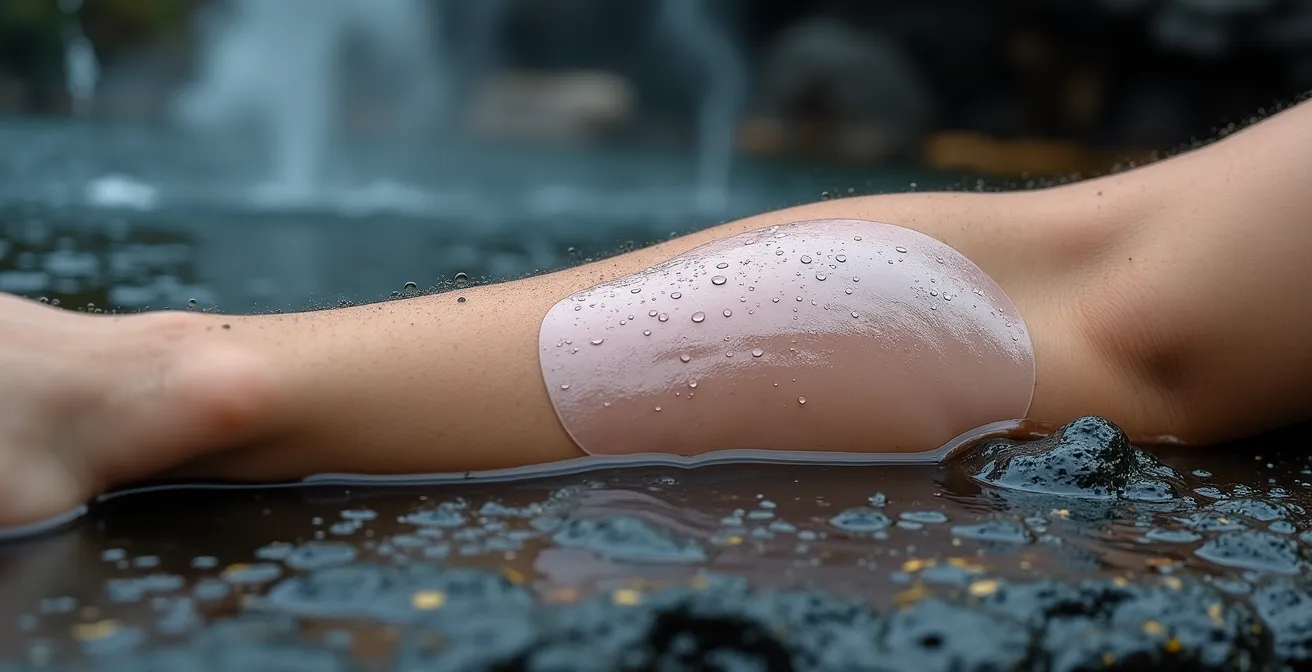
As seen in the image, the patch effectively seals the skin. For those with extensive body art, booking a private onsen, or “kashikiri-buro,” is often the best solution, offering complete privacy and unrestricted mineral absorption. For smaller tattoos, a growing number of establishments allow entry if the tattoo can be covered by one or two standard-sized patches. Ultimately, the best approach is to research and contact facilities in advance to understand their specific rules.
Here are the primary options available for tattooed visitors:
- Visit fully tattoo-friendly establishments that openly welcome all guests.
- Use waterproof patches or bandages at facilities that permit coverage for small tattoos.
- Book private onsen rooms (kashikiri-buro) for exclusive, private use.
- Contact facilities directly in advance to inquire about their specific tattoo policies.
- Visit during off-peak hours if this is suggested by the establishment as a way to be discreet.
Long Soak or Repeated Dips: What Is the Best Method for Circulation?
Once you’re in the water, the question becomes how to bathe for maximum therapeutic effect. Is it better to endure a long, continuous soak or to practice repeated short dips? While a lengthy soak may feel relaxing, the traditional and scientifically supported method for boosting circulation and avoiding overheating is repeated bathing. This practice, a cornerstone of the Toji (therapeutic bathing) tradition, involves alternating short soaks with periods of rest outside the tub. This allows the body to cool down, preventing the light-headedness or excessive strain on the cardiovascular system that can come from prolonged heat exposure.
The Toji tradition identified five key therapeutic elements that work in synergy: the pharmacological effects of the minerals, the thermal effect of the heat, the buoyancy effect for joint relief, the hydrostatic pressure on the body, and the calming environmental effect. Repeated dipping optimizes these elements. Short soaks raise the body temperature and increase blood flow, while the rest periods allow the circulatory system to adapt. For optimal benefit, research from 2024 shows optimal spa therapy involves 15-20 minute sessions at a water temperature of 35-38°C (95-100°F). Anything hotter or longer can become counterproductive for some individuals, especially older adults.
The gentle, rhythmic increase and decrease in body temperature from this method acts as a workout for your blood vessels, improving their elasticity and promoting better overall circulation. This approach respects the body’s limits while maximizing the health benefits. As the Hakone Japan Tourism Board noted in its “Health Benefits of Onsen Study”:
The combination of temperature, minerals, mental state, and ease of movement in the water helped relieve different kinds of pain.
– Hakone Japan Tourism Board, Health Benefits of Onsen Study
Why Do Japanese Drink Coffee Milk After a Hot Bath?
Stepping out of an onsen, you’ll often see locals heading to a vintage-style vending machine to grab a small glass bottle of chilled coffee milk. This post-bath ritual is more than just a nostalgic tradition; it’s rooted in the physiological needs of the body after a hot soak. The intense heat of the onsen induces significant sweating, leading to a loss of fluids and electrolytes. Furthermore, the body burns calories to regulate its temperature, leading to a drop in blood sugar. The classic coffee milk is a simple, effective, and culturally ingrained solution to this.
The “milk” part provides hydration and some fats, while the “coffee” and sugar offer a quick energy boost to counteract the potential for post-bath lethargy or a sudden drop in blood pressure. It’s a perfect, quick-acting recovery drink. This principle of rapid replenishment is supported by modern science, even if the traditional choice isn’t a high-tech sports drink. For example, related studies show deep-ocean mineral water provides a 3% faster hydration recovery compared to regular water, highlighting the body’s need for more than just plain fluid after exertion. The minerals and sugars in post-bath drinks serve a similar purpose.
So, while it may seem like a simple treat, drinking coffee milk is an intuitive part of the therapeutic ritual. It addresses the body’s need to restore fluids, sugar, and electrolytes, completing the cycle of healing and relaxation that the onsen initiates. It’s a small, delicious step that helps stabilize the body and prolong the feeling of well-being. For a more substantial replenishment, many turn to another Japanese classic: a hearty bowl of ramen.
Beppu or Kusatsu: Which Onsen Town Offers the Ultimate Healing Tour?
When planning a therapeutic trip to Japan, two names inevitably rise to the top: Beppu and Kusatsu. While both are legendary onsen towns, they offer vastly different experiences tailored to different healing goals. Choosing between them depends entirely on whether you are seeking a targeted, potent treatment for a specific issue or a broad, holistic “systemic reset.” Kusatsu, located in the mountains of Gunma Prefecture, is famous for its extremely acidic sulfurous water. It’s a compact, traditional town focused on potent, curative bathing for skin ailments and joint pain. Its iconic “Yumomi” ritual, where large paddles are used to cool the hot spring water, speaks to its focus on concentrated therapy.
Beppu, on the other hand, is a sprawling coastal city in Oita Prefecture, often described as the “onsen capital” of Japan. Its claim to fame is variety. As the Beppu Tourism Board highlights, Beppu’s onsens are known for relieving fatigue, reducing stress, and alleviating joint pain, providing deep physical and mental relaxation through its diverse water types. Beppu is a destination for those who want to experience a wide spectrum of balneotherapy, from mineral-rich water soaks to unique sand baths, steam baths (“mushiyu”), and even therapeutic mud baths (“doroyu”).
The following table breaks down the key differences to help you decide which town aligns with your wellness objectives.
| Feature | Beppu | Kusatsu |
|---|---|---|
| Water Types Available | 7 out of 10 Japanese onsen types | High acidity sulfur springs (pH 1.2-2.1) |
| Number of Springs | Over 2,000 natural hot springs | Concentrated in central area |
| Specialty Treatments | Sand baths, steam baths, mud baths | Yumomi water cooling ritual, focused therapy |
| Best For | Full body system reset, variety seekers | Targeted skin/joint issues |
| Atmosphere | Sprawling, entertainment-focused | Compact, traditional |
In essence, if you have a specific, stubborn condition like severe psoriasis or rheumatoid arthritis, the potent, acidic waters of Kusatsu may offer a more focused treatment. If your goal is to de-stress, experience a variety of healing methods, and address a range of general aches and pains, the sheer diversity of Beppu provides an unparalleled opportunity for a complete wellness tour.
Acidic or Alkaline: Which Water Is Safe for Sensitive Skin?
The question of sulfur versus iron water is often a question of pH. Onsen waters in Japan range dramatically from highly acidic to gently alkaline, and this chemical property is the single most important factor in determining its effect on the skin and body. For those with sensitive skin, the answer is not as simple as one being “safer” than the other; rather, they are suited for entirely different therapeutic purposes. Highly acidic waters, typically rich in sulfur and hydrogen sulfide, are renowned for their powerful sterilizing and anti-inflammatory properties. For example, Tamagawa Onsen in Akita boasts Japan’s most acidic water (pH 1.2) and operates as a medical treatment destination with a nurse on staff. Its water acts like a natural chemical peel, making it effective for treating bacterial skin infections, psoriasis, and atopic dermatitis. However, this same potency can be irritating to healthy or sensitive skin, often causing a tingling or stinging sensation.
The effectiveness of these waters for deeper issues is also well-documented. For chronic conditions like arthritis, the sulfur content is key. A 2016 study found that sulfur-rich mineral baths led to 81% of participants with hip osteoarthritis achieving Minimal Clinically Important Improvement. This demonstrates that the benefits of acidic, sulfurous water go far beyond the skin’s surface.
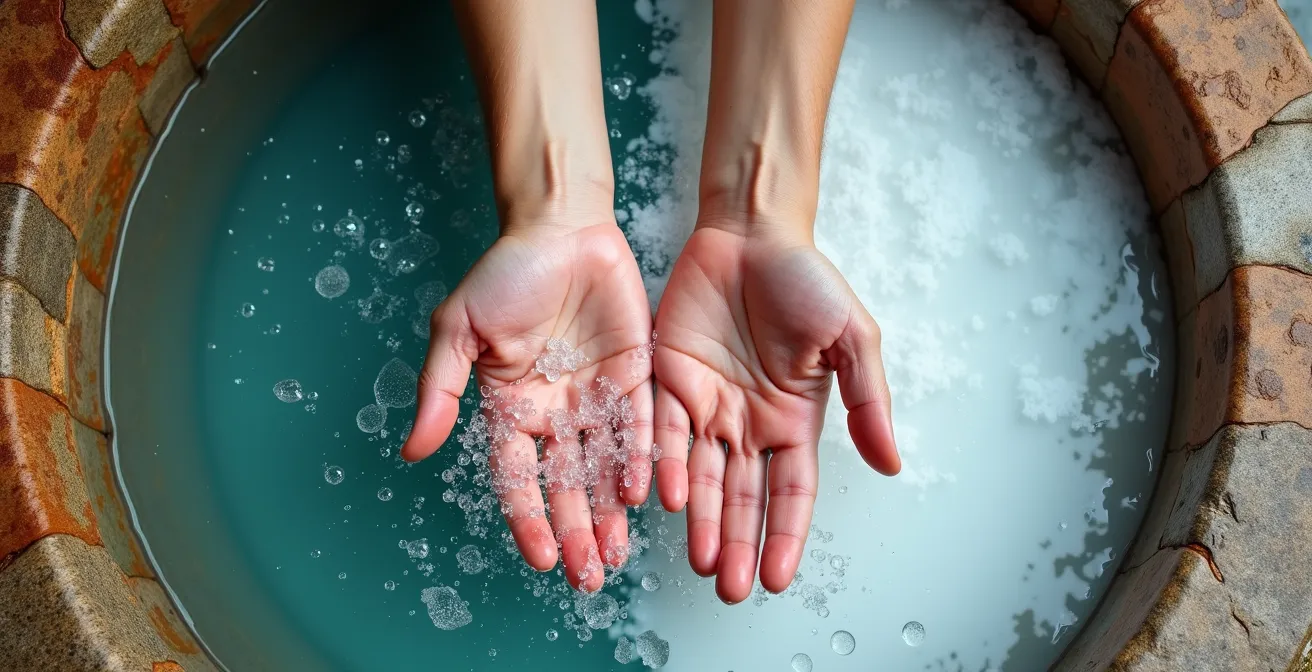
Conversely, alkaline waters, often called “bijin-no-yu” or “waters of the beautiful,” have a softening effect on the skin. Their higher pH helps to gently dissolve and wash away excess sebum and dead skin cells, leaving the skin feeling smooth and supple. These waters are generally much gentler and are the preferred choice for those with dry, delicate, or easily irritated skin. They are less about treating a specific ailment and more about promoting overall skin health and a radiant complexion. Therefore, if your goal is to soothe inflammation or treat a skin condition, acidic water is your medicinal tool. If you seek gentle cleansing and beautification, alkaline water is your safe haven.
Why Must You Cleanse Before Entering the Sacred Grounds?
The pre-onsen cleansing ritual is an unskippable and deeply significant part of the experience. To a first-time visitor, it might seem like a simple matter of hygiene, and that is certainly a primary component. The shared nature of the baths requires every person to be scrupulously clean before entering to maintain the purity of the water for everyone. This involves sitting on a low stool at the provided washing stations and thoroughly scrubbing and rinsing the entire body with soap. It is not a quick shower; it is a deliberate and complete cleanse.
However, the ritual goes beyond mere physical cleanliness. In Shinto, Japan’s indigenous religion, water is a powerful agent of purification. The act of washing before entering the onsen, a gift from nature, is also a form of spiritual cleansing. It is an act of respect for the water, the facility, and the other bathers. It signifies leaving the dirt and worries of the outside world behind before entering a space of healing and tranquility. This is why the area is not just a “shower area” but is considered part of the sacred grounds of the bathhouse.
Failing to wash properly is the most serious breach of onsen etiquette. It’s crucial to follow the established procedure to show respect and ensure a comfortable experience for all. This therapeutic ritual is the first step in preparing both mind and body for the healing to come.
Your Action Plan: The Pre-Onsen Cleansing Protocol
- Sit on a stool at the washing stations and thoroughly wash your entire body with soap.
- Rinse completely to ensure all soap, shampoo, and other body products are removed.
- Perform ‘kakeyu’ by using a bucket to pour hot water over your body, starting with your feet and moving up, to acclimatize to the bath’s temperature.
- Tie up long hair securely to prevent it from touching the communal bath water.
- Leave your large bath towel in the changing room; you may only bring the small modesty towel with you into the bathing area.
Why Is Hakata Ramen So Creamy and Why Does It Smell Strong?
The connection between a rejuvenating onsen soak and a steaming bowl of Hakata-style ramen may not be immediately obvious, but it is a deeply rooted part of the post-bathing ritual for many. The signature creaminess and potent aroma of Hakata (or Tonkotsu) ramen comes from boiling pork bones for many hours, sometimes even days. This long, slow process breaks down the collagen, marrow, and fat from the bones, emulsifying it into a rich, opaque, and deeply savory broth. This process is a culinary parallel to how onsen water gets its power: time and heat extracting essential elements.
The resulting broth is not only delicious but also incredibly nutritious, making it the ideal recovery meal after an onsen. The intense sweating in a hot spring depletes the body of sodium and calories. The salty, rich tonkotsu broth serves to replenish these lost nutrients almost instantly. More fascinating is the mineral connection. Just as onsen water is prized for its geological mineral content, the bone broth itself is a mineral powerhouse. A well-made tonkotsu broth can contain up to 19 different minerals including calcium, sodium, and sulfur, mirroring the composition of the very waters you just soaked in. It’s a perfect example of closing the therapeutic loop through nutrition.
So, the strong smell is the sign of a properly made, long-simmered broth rich in dissolved solids and minerals. For the onsen-goer, it’s the smell of recovery. Eating this ramen is not just a meal; it’s the final, nourishing step in the systemic reset initiated by the hot spring, ensuring the body is replenished from the inside out.
Key Takeaways
- True onsen healing is a synergy of water chemistry (minerals and pH), heat, and hydrostatic pressure, not just temperature alone.
- Acidic, sulfur-rich waters are best for targeted treatment of joint pain and skin conditions, while alkaline waters are superior for gentle skin softening.
- The therapeutic ritual—including pre-cleansing, repeated dipping patterns, and post-bath nutritional replenishment—is as crucial as the water itself for maximizing benefits.
Dinner Times and Curfews: How to Survive Ryokan Schedules?
For many Western travelers, the rigid schedules of a traditional Japanese inn, or ryokan, can feel restrictive. An early check-in, a fixed dinner time often as early as 6 PM, and a curfew can seem antithetical to a relaxing vacation. However, it’s essential to reframe this structure not as a set of rules to “survive,” but as the final, integral component of the therapeutic ritual. The ryokan schedule is meticulously designed to work in harmony with the body’s natural rhythms and to maximize the healing effects of the onsen.
The typical schedule encourages a pre-dinner soak to wash away the travel fatigue and open up the pores. The early, multi-course kaiseki dinner is intentionally served at that time for a specific reason. As the Traditional Ryokan Association explains, “Early, multi-course kaiseki dinners optimize digestion before bed, enhancing the body’s overnight repair cycle.” Eating a large meal late at night forces the body to focus on digestion rather than cellular repair during sleep. By finishing the meal early, you allow your body to fully enter a state of rest and recovery overnight, amplifying the anti-inflammatory and muscle-relaxing benefits of the onsen soaks.
The schedule is a blueprint for optimal well-being. Waking early for a final morning bath before breakfast invigorates the body for the day ahead. By aligning your activities with this time-tested rhythm—sightseeing in the morning, checking in by mid-afternoon, and embracing the early evening meal and rest—you are not just following rules. You are fully participating in a holistic wellness system designed over centuries to promote a profound systemic reset.
- Check in by 3-4 PM to allow time for a relaxing pre-dinner onsen session.
- Plan your main sightseeing activities for the morning hours before your check-in time.
- Take your first onsen bath before the kaiseki dinner, which is typically served between 6 and 7 PM.
- Enjoy a second, gentle soak after dinner to aid digestion and promote restful sleep.
- Wake up early (around 5-6 AM) to enjoy a peaceful and invigorating morning onsen before breakfast.
By understanding the science behind the water and the wisdom behind the rituals, you can now plan a trip that goes beyond simple relaxation. The next step is to choose a destination and ryokan that aligns with your specific health goals, using this knowledge as your guide to craft a truly transformative healing experience.