The secret to a great izakaya night isn’t just what you order, but understanding it’s a social performance with an unwritten script.
- Rules like the otoshi charge and pouring sake for others are about hospitality and group bonding, not hidden fees or strict protocol.
- Pacing your orders in waves and matching the room’s energy (nigiyaka) are key to fitting in and enjoying the night like a local.
Recommendation: Think of yourself as a participant, not just a customer. Engage with the flow, and you’ll unlock an authentic Japanese social experience.
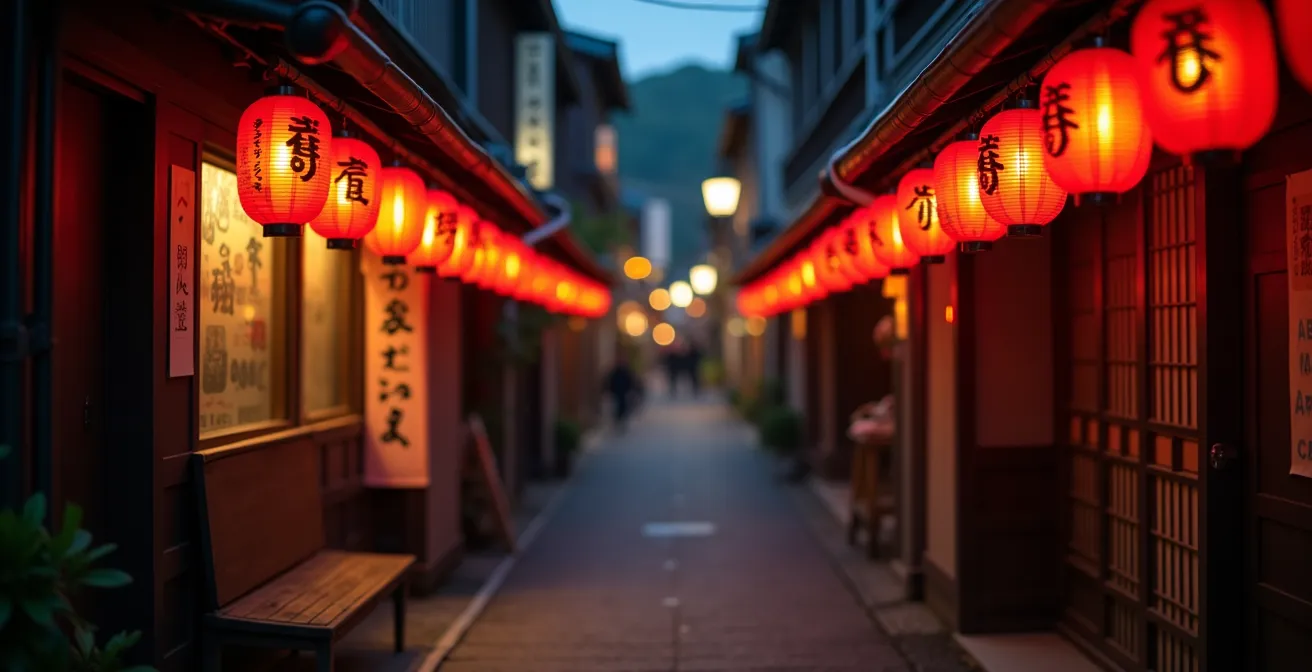
Walk into any bustling Japanese city after 6 PM, and you’ll be drawn in by the warm glow of red lanterns, the sound of laughter, and the irresistible smell of grilled food. You’ve found an izakaya. But this isn’t just a bar or a restaurant; it’s the beating heart of Japan’s social nightlife, a place where friends and colleagues gather to unwind. For an outsider, the lively chaos can feel intimidating. There seems to be an unwritten code of conduct that everyone but you understands.
Many guides will give you a simple list of dos and don’ts, treating the experience like a test you can pass or fail. But that approach misses the point entirely. An izakaya experience isn’t about rigid rules; it’s about participating in a shared social ritual. The key isn’t to memorize a script but to understand the rhythm and flow of the performance. It’s about recognizing that everything, from the small appetizer you didn’t order to the way you pour a drink for a friend, is part of a collective act of unwinding and connecting.
This guide is your backstage pass. We’re going to decode that unwritten script. Forget fear of making a mistake. Instead, we’ll explore the social logic behind the customs, so you and your friends can step into any izakaya not as tourists, but as confident participants ready to eat, drink, and laugh like locals. We’ll cover the flow of the evening, from the first drink to the final, satisfying dish.
To help you master this social art form, we’ve broken down the key moments of an izakaya evening. The following sections will guide you through each part of the experience, explaining the ‘why’ behind every custom so you can navigate your night with confidence and fun.
Summary: Cracking the Unwritten Code of Japan’s Izakaya
- Why Is There a Cover Charge on My Bill for Food I didn’t Order?
- All at Once or Bit by Bit: How to Pace Your Izakaya Orders?
- Why You Never Pour Your Own Sake in a Group Setting?
- Noisy or Rowdy: How Loud Can You Be Before It Is Too Much?
- Sumimasen! When Is It Okay to Shout for the Waiter?
- When Is the Best Time to Strike Up a Conversation at an Izakaya?
- Nonbei Yokocho: How to Find the Tiny Bars Beside the Train Tracks?
- Takoyaki or Okonomiyaki: Which Kansai Soul Food Should You Try First?
Why Is There a Cover Charge on My Bill for Food I didn’t Order?
The first surprise for many visitors arrives with the first round of drinks: a small, delicious-looking dish you never asked for. A few hours later, the second surprise comes with the bill, where you see a small “table charge” or otoshi (お通し). It’s easy to assume this is a tourist trap or a hidden fee, but it’s actually the opening act of Japanese hospitality. This small appetizer is a welcoming gesture, something to nibble on while your main orders are being prepared.
Think of it less as a charge and more as an integral part of the izakaya system. Because patrons often linger for hours over drinks, the otoshi is a way for the establishment to ensure a baseline of revenue. In a culture where tipping is not practiced, this charge, which is typically between 300 to 700 yen per person, serves a similar function. It’s also a signal from the kitchen to the staff that your order has been received and is being prepared.
So, what do you do? Embrace it. See it as part of the price of admission to an authentic cultural experience. If you have any food allergies, it’s crucial to politely inform the staff as soon as you’re seated. They can often provide an alternative. While the charge is rarely negotiable, understanding its role as a piece of the hospitality puzzle rather than a sneaky fee is the first step to thinking like a local.
All at Once or Bit by Bit: How to Pace Your Izakaya Orders?
In many Western restaurants, you order everything at once: appetizer, main, and maybe dessert. Trying this at an izakaya is a rookie mistake that disrupts the entire social flow of the evening. The experience is designed to be a leisurely marathon, not a sprint. The key is to order in waves, creating a steady stream of different flavors and textures for your group to share and discuss over several rounds of drinks.
The “unwritten script” for ordering follows a natural progression from light to heavy:
- The Opening Act: Start with drinks for everyone and a few light, quick dishes like edamame, Japanese pickles (tsukemono), or a cold tofu salad. These are meant to be enjoyed while you chat and decide on the next wave.
- The Main Performance: This is where you bring in the stars of the show. Order a variety of items—some grilled (yakitori), some fried (karaage), some sashimi. The golden rule is to order a few dishes at a time. As Japan-guide.com notes, “There is no need to order everything at one go, and it is customary to place multiple orders as the evening proceeds.”
- The Grand Finale (Shime): After a few hours of drinking and grazing, when you feel the night is winding down, it’s time for shime (締め). This is the final, carb-heavy course that “closes the stomach” and signals the end of the session. Typically, this is a shared bowl of rice (like ochazuke) or noodles. Ordering shime too early is like calling for the check before the main course has arrived.
Pacing your orders this way ensures a continuous, shared experience that keeps the conversation and drinks flowing. It’s a dynamic and communal way of dining that is central to the izakaya’s charm.
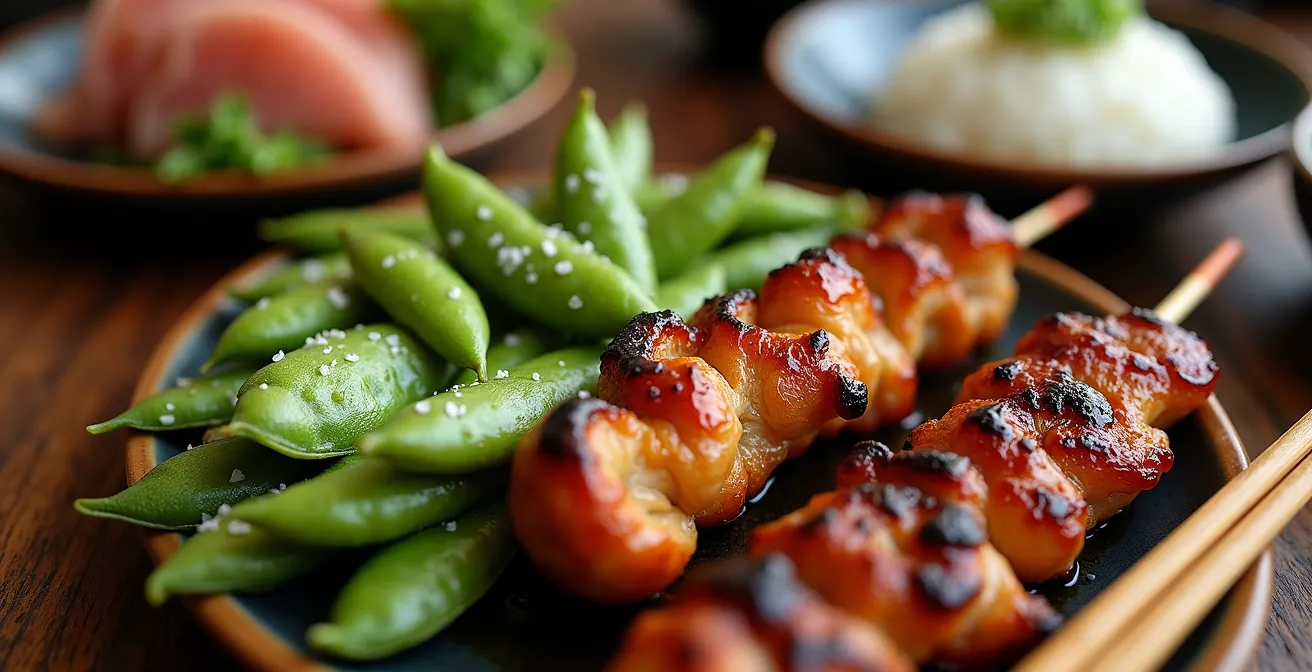
This progression from light starters to heavier grilled items and finally a rice-based dish is the culinary backbone of the izakaya experience. Each wave of food complements the evolving mood of the evening, ensuring the energy never dips.
Why You Never Pour Your Own Sake in a Group Setting?
Here’s one of the most important—and often misunderstood—parts of the izakaya social script. When you’re in a group, you should never pour your own drink, whether it’s sake, beer, or shochu. And just as importantly, you should always keep an eye on your friends’ glasses to make sure they’re never empty. This isn’t about strict, formal etiquette; it’s a powerful act of connection, respect, and camaraderie.
Pouring a drink for someone is a gesture that says, “I’m thinking of you,” and “Let’s keep this great evening going.” It’s a constant, subtle dance of give-and-take that reinforces the group’s bond. When pouring, you should hold the sake flask (tokkuri) or beer bottle with both hands to show respect. Likewise, when someone is pouring for you, you should lift your glass off the table and hold it with both hands—one supporting the base—as a sign of gratitude.
This ritual is especially important when interacting with older members of your group or a host. Keeping their cup full is a sign of refined consideration. What if you’ve had enough? Simply leave your glass full. This politely and discreetly signals that you don’t need a refill. Pouring for yourself, on the other hand, subtly suggests you are outside the group dynamic, which can come across as a bit aloof. It breaks the shared experience that is so central to the izakaya vibe.
Noisy or Rowdy: How Loud Can You Be Before It Is Too Much?
Step inside a popular izakaya, and the first thing you’ll notice is the energy. It’s loud, it’s boisterous, and it’s full of life. This is no place for quiet, intimate conversation. In Japanese culture, the izakaya often functions as a “social steam valve”—a place to decompress and let loose after a long, structured workday. Hearty greetings, laughter, and animated chatter are all part of the package.
However, there’s a fine line between contributing to the lively atmosphere and being disruptive. The key is understanding the difference between two Japanese concepts: nigiyaka (賑やか) and urusai (煩い). Nigiyaka describes a lively, bustling, positive energy—the collective hum of people having a good time. This is the goal. Urusai, on the other hand, means annoying, obnoxious noise that disrupts the experience for others. Shouting across the room, getting into loud arguments, or bothering other tables would be considered urusai.
The best strategy is to “read the room.” Match the energy level of the establishment. In a tiny, 10-seat bar in a quiet alley, a more subdued tone is appropriate. In a large, multi-level izakaya packed with office workers, you can and should be more boisterous. Your group’s laughter and animated conversation should add to the collective *nigiyaka* of the room, blending into the soundscape rather than standing out from it. It’s about being part of the party, not becoming the entire party yourself.
Sumimasen! When Is It Okay to Shout for the Waiter?
In many Western cultures, shouting for a waiter is considered rude. In a bustling izakaya, it’s often standard practice. Yelling a loud, clear “Sumimasen!” (Excuse me!) is a perfectly acceptable way to get a server’s attention when you want to place another order. However, this is another part of the script that requires a bit of nuance. It’s not a free pass to be demanding.
The “Sumimasen!” call is best used in larger, louder establishments where the staff is constantly moving. It’s a tool to cut through the noise. But in smaller, quieter izakayas or when you are sitting at the counter, a more subtle approach is better. Simply making eye contact with a staff member and giving a slight nod or raising your hand is often all it takes. This shows a level of awareness and respect for the more intimate atmosphere.
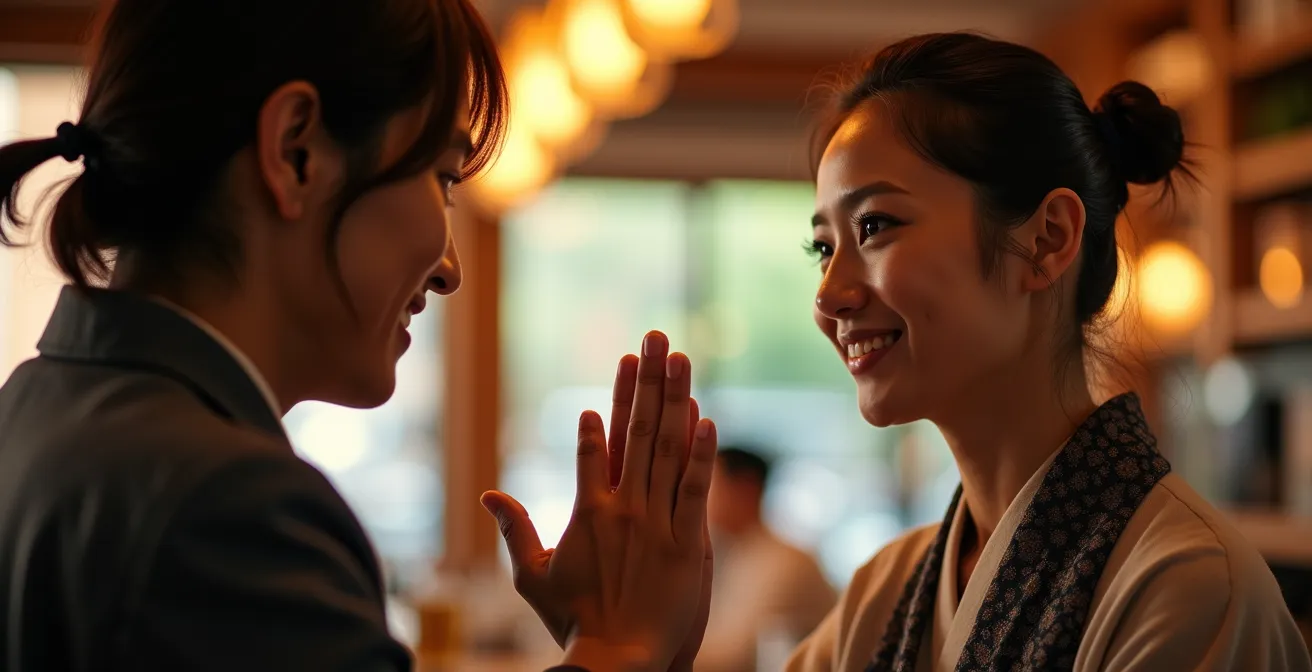
Many modern izakayas also have a call button (yobidashi botan) on the table. If you see one, this is always your best first option. When it comes to the bill, you can either say “Okanjo onegaishimasu” (Check, please) or use a universal hand gesture: making an “X” with your index fingers. One final tip: payment is almost always made at the register near the exit, not at the table. The server will either bring you the bill or a small token to take to the cashier.
When Is the Best Time to Strike Up a Conversation at an Izakaya?
Izakayas are inherently social spaces, and with the right approach, they can be fantastic places to interact with locals. The “when” and “how” are crucial. Trying to chat with a group of office workers at a private table might not go over well, but there’s one spot that is practically designed for social interaction: the counter.
Choosing counter seats immediately signals you’re open to conversation, whether it’s with the chef (taisho) preparing food right in front of you or the person sitting next to you. As Yasuhiro, founder of MagicalTrip, points out in his guide, “Counter seats are prime spots for enjoying conversations with chefs and watching food preparation.” It’s dinner and a show, with built-in opportunities for connection.
The key is to start small and read the social cues. Don’t launch into your life story. A simple compliment about the food—”Kore, oishii desu ne!” (This is delicious!)—can be a great icebreaker. Asking the chef for a recommendation (“Osusume wa nan desu ka?“) shows respect for their expertise. If the person next to you makes eye contact and smiles, they’re likely open to a chat. If they’re engrossed in their phone or a book, it’s best to give them their space. The ultimate friendly gesture? Offering to pour them a drink (“Ippai douzo?“). It’s a classic move that says, “Welcome to the conversation.”
Your Action Plan: Striking Up a Conversation
- Choose your spot wisely: Always opt for counter seats to maximize your chances of social interaction.
- Start with a compliment: A simple “This is delicious!” directed at the chef is the perfect, low-risk opening.
- Ask for guidance: Inquire about the chef’s sake recommendation (“Osusume no nihonshu wa?”) to show respect and open a dialogue.
- Read body language: Open posture and eye contact are an invitation; focused attention on a phone or book is a clear “do not disturb” sign.
- Make the ultimate friendly move: Offering to pour a drink for your neighbor is the classic way to turn a stranger into a temporary friend.
Nonbei Yokocho: How to Find the Tiny Bars Beside the Train Tracks?
For the most atmospheric and authentic izakaya experience, you need to venture into a yokocho (横丁), or “side alley.” These narrow, lantern-lit laneways, often crammed with tiny, counter-only bars, are a throwback to post-war Japan. They are intimate, a bit gritty, and bursting with character. Many of the most famous yokocho are found tucked away near major train stations, sometimes directly underneath the elevated tracks.
A classic example is Tokyo’s Yurakucho Gādo Shita (literally “under the guardrail”), a lively district of izakayas and yakitori joints nestled beneath the train tracks. Here, the chatter of patrons mixes with the rhythmic rumble of trains passing overhead, creating a uniquely urban and nostalgic atmosphere. These are the places you see in movies, filled with smoke from the grills and the warm glow of red paper lanterns (akachochin).
Finding these hidden gems is part of the adventure. Instead of relying on a map, use your senses. When you’re near a major station, look for clusters of those iconic red lanterns. Follow the clouds of steam and the delicious smell of grilling meat wafting from narrow alleys. Be prepared for tight quarters; many of these bars seat fewer than ten people, so be mindful of your space. There’s often an implicit “one drink, one food item” minimum to ensure a fair turnover in such limited spaces. Exploring a yokocho is a step back in time and a deep dive into the soul of Japan’s drinking culture.
Key Takeaways
- The otoshi cover charge is a standard part of izakaya hospitality, not a hidden fee.
- Order food in successive waves (light to heavy), ending with a carb dish known as shime to signal the end of the meal.
- Always pour drinks for others in your group and never for yourself; it’s a fundamental act of social bonding.
Takoyaki or Okonomiyaki: Which Kansai Soul Food Should You Try First?
As the night wears on and your group is looking for one more satisfying dish, you’ll often face a classic dilemma, especially in izakayas with a Kansai (Osaka-area) flair: takoyaki or okonomiyaki? Both are iconic “soul foods,” but they serve very different roles in the social flow of an izakaya evening. Choosing the right one depends on your group’s mood and momentum.
Takoyaki (たこ焼き) are small, spherical dumplings filled with diced octopus, battered and fried. They come in a batch of six or eight, are easy to share, and are perfect as a quick, hot snack between drinks. They don’t interrupt the flow of conversation or drinking. Okonomiyaki (お好み焼き), on the other hand, is a large, savory pancake filled with cabbage and your choice of meat or seafood, grilled and topped with a variety of sauces. It’s a much more substantial, meal-like dish that requires sitting down and sharing with chopsticks. It can slow the pace of the evening, shifting the focus from drinking to eating.
As this comparative analysis of tavern food shows, the choice impacts the social dynamic.
| Aspect | Takoyaki | Okonomiyaki |
|---|---|---|
| Serving Style | Quick, shareable balls (6-8 pieces) | Large, meal-like pancake to share |
| Eating Speed | Fast snack between drinks | Slower, more committed dining |
| Best Drink Pairing | Crisp beer or highball | Shochu or robust sake |
| Social Factor | Easy to share, minimal commitment | Can become group DIY activity |
| Ordering Flow Impact | Doesn’t interrupt drink flow | Can slow down ordering pace |
Some izakayas even offer a DIY okonomiyaki experience where your group cooks it together on a griddle built into your table. This turns the meal into a fun, collaborative, and sometimes messy event—a perfect example of a shared group activity. So, the choice is yours: takoyaki for a quick and easy shared snack, or okonomiyaki for a more committed, hands-on group meal.
By understanding that an izakaya is a stage for social interaction, you and your friends are now equipped to do more than just eat and drink. You’re ready to participate, connect, and create a memorable night out, all while feeling perfectly in tune with the local rhythm.