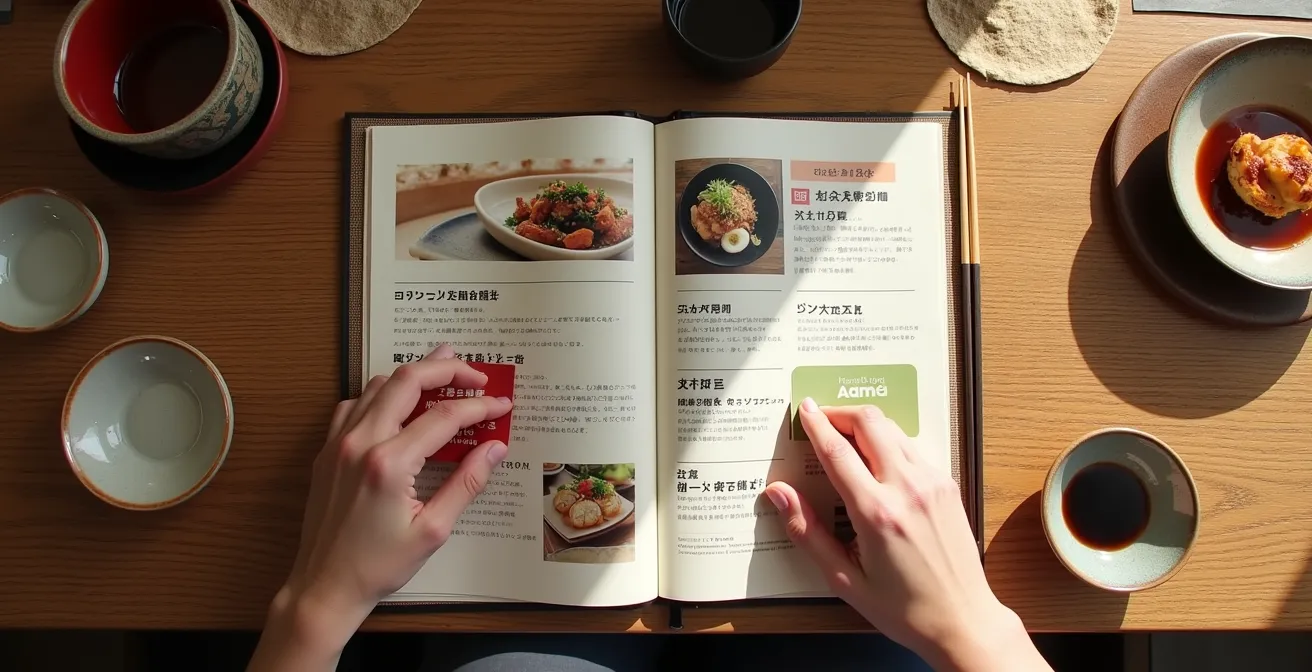
For travelers with food allergies, Japan presents a unique challenge where simple translation is not enough. The key to eating safely isn’t just showing a card, but understanding the rigid, systematic nature of Japanese culinary culture. This guide provides a strategic framework, explaining why issues like hidden dashi, regional flavor differences, and a ‘no-customization’ policy exist, empowering you to proactively plan your meals and avoid dangerous situations.
The thought of Japan conjures images of vibrant food markets, steaming bowls of ramen, and exquisitely prepared sushi. For any foodie, it’s a dream destination. But for those of us navigating food allergies—whether to gluten, seafood, nuts, or soy—that dream can quickly become a source of anxiety. The language barrier is an obvious hurdle, but the true challenge lies deeper, in a culinary philosophy that is fundamentally different from the West’s emphasis on customization.
Many guides will advise you to carry a translation card, and while this is an essential first step, it is often insufficient. You will encounter polite refusals, confusing responses, and hidden ingredients in dishes you thought were safe. This happens not out of unwillingness, but because of a system built on precision, tradition, and pre-set components. The standard advice fails because it doesn’t address the underlying cultural and operational realities of the Japanese kitchen.
But what if the key to eating safely wasn’t just about communicating your restrictions, but about understanding the system you’re navigating? This guide shifts the perspective from reactive defense to proactive strategy. We will deconstruct the core principles of Japanese dining, from the ubiquitous dashi stock to the logic behind set menus. By understanding the ‘why’ behind the challenges, you can learn to anticipate them, choose your restaurants and dishes strategically, and transform your journey from a stressful ordeal into a delicious adventure.
This article breaks down the essential strategies for a safe and enjoyable culinary experience in Japan. We will explore the hidden pitfalls in common ingredients, the correct etiquette for communicating your needs, and how to leverage Japan’s unique food culture, from regional specialties to convenience store treasures, to your advantage.
Summary: A Strategic Guide to Eating in Japan With Allergies
- Why Is Dashi Stock the Hidden Enemy for Vegetarians?
- How to Use Printable Allergy Cards to Communicate With Chefs?
- Kansai vs. Kanto Flavors: Which Region Fits Your Palate Better?
- The ‘Set Menu’ Trap: Why Customization Is Often Refused?
- When to Eat Lunch to Avoid the 12 PM Salaryman Rush?
- Tofu and Zen: Where to Try Monk’s Cuisine Without a Reservation?
- Healthy or processed: Can You Maintain a Balanced Diet on Konbini Food?
- Tonkotsu vs. Miso: Which Ramen Style Define Each Prefecture?
Why Is Dashi Stock the Hidden Enemy for Vegetarians?
The single most pervasive and misunderstood ingredient in Japanese cooking is dashi. This savory stock is the foundation of countless dishes, from miso soup and noodle broths to simmering sauces and vegetable preparations. For vegetarians and those with fish allergies, it represents a significant, often invisible, threat. The “culinary default” in most kitchens is a dashi made from katsuobushi (bonito fish flakes) or niboshi (dried sardines), meaning even a simple vegetable dish may not be truly vegetarian.
This isn’t an optional ingredient; it’s the bedrock of umami, the fifth taste that defines Japanese flavor profiles. As a result, traditional Japanese cooking relies heavily on dashi stock, and many chefs may not even consider it a “fish” ingredient in the same way they would a fillet of salmon. They see it as a fundamental flavor base. This is why simply asking “Does this have fish?” can be met with a “no,” even if the dish is swimming in bonito-based dashi.
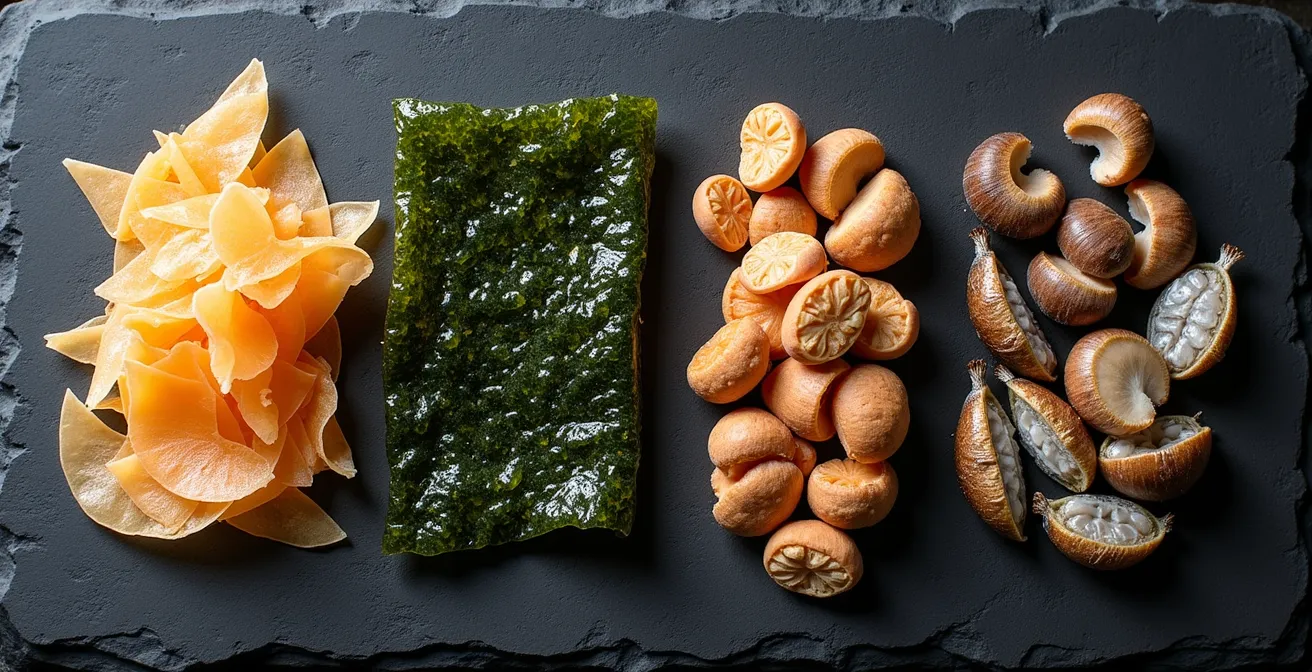
While vegetarian dashi made from kombu (kelp) or shiitake mushrooms exists, it is far less common in standard restaurants. You must be extremely specific when inquiring. Asking “Kore ni wa dashi ga tsukawarete imasu ka?” (Is dashi used in this?) is the first step, followed by specifying your need to avoid katsuobushi and niboshi. Being aware of this hidden enemy is the first critical step in building a safe eating strategy.
How to Use Printable Allergy Cards to Communicate With Chefs?
An allergy card is your single most important tool, but its effectiveness depends entirely on how and when you use it. Simply handing it over after you’ve ordered is often too late. The key is to present it with respect and at the right moment, treating it as a request for cooperation rather than a demand for service. This requires understanding and observing cultural etiquette to ensure your message is received clearly and positively. Companies like Equal Eats and SelectWisely offer excellent, professionally translated cards that clearly list allergens and explain the risk of cross-contamination.
The goal is to give the staff the opportunity to assess their capabilities before committing. Many small kitchens with pre-made sauces and broths simply cannot safely accommodate complex restrictions. A polite refusal is not a rejection of you, but an honest admission of their limitations—and it’s a crucial piece of safety information. Watching for polite but firm phrases like “chotto muzukashii” (it’s a bit difficult) is vital. This is your cue to thank them and either leave or ask if another, simpler dish might be possible.
Action Plan: The Proper Etiquette for Using Your Allergy Card
- Present Early: Hand your card to the host or server as you are being seated, before you even look at the menu.
- Use Polite Language: When presenting the card, say “Yoroshiku onegaishimasu” (I’m in your care / Thank you for your help).
- Observe the Reaction: Watch the staff’s body language and listen for polite refusal phrases. If they take the card to the chef and return with an apology, accept it gracefully.
- Have a Backup: If your request is declined, be prepared to politely leave. Don’t try to negotiate, as this can create pressure to serve you unsafely.
- Digital Reinforcement: Keep a digital copy of your card and an album of ingredient photos on your phone. Google Lens can also be a lifesaver for translating daily specials or ingredient lists.
By approaching communication as a respectful dialogue, you turn a simple translation tool into a powerful strategic instrument for assessing a restaurant’s safety before you dine.
Kansai vs. Kanto Flavors: Which Region Fits Your Palate Better?
Japan is not a monolith of flavor. The country boasts distinct regional cuisines, and understanding these differences can be a strategic advantage for travelers with allergies. The two most prominent culinary regions are Kanto (the eastern region including Tokyo) and Kansai (the western region including Osaka and Kyoto). Their differing flavor profiles create different risk landscapes for specific allergies.
The Kanto style is characterized by a strong, salty flavor, relying heavily on dark soy sauce (shoyu). This makes the region a higher-risk area for those with wheat and soy allergies. In contrast, the Kansai style favors a lighter, more subtle flavor profile that highlights the natural taste of ingredients, often by using a more prominent dashi base. Consequently, this region can pose a greater challenge for those with fish and seafood allergies. These are generalizations, of course, but they provide a valuable framework for planning your itinerary.
Other regions present their own unique challenges. Kyushu is known for a sweeter soy sauce, while Okinawan cuisine has its own distinct ingredients. As noted by The Tokyo Chapter in their guide on food allergies, “Peanuts are used more often in Okinawan cuisine,” a critical warning for those with nut allergies. By researching the culinary tendencies of the prefectures you plan to visit, you can better anticipate the hidden allergens you are likely to encounter.
| Region | Flavor Profile | Common Allergens | Risk Level |
|---|---|---|---|
| Kanto (Tokyo area) | Saltier, shoyu-heavy | High wheat and soy content | High for gluten/soy allergies |
| Kansai (Osaka/Kyoto) | Lighter, dashi-focused | High fish content | High for fish/seafood allergies |
| Kyushu | Sweeter soy sauce | More additives | Variable allergen risk |
| Okinawa | Unique local cuisine | Frequent peanut use | High for nut allergies |
The ‘Set Menu’ Trap: Why Customization Is Often Refused?
One of the most common points of frustration for travelers with allergies is the refusal to customize dishes. This is not a sign of poor service; it’s a feature of systemic rigidity built around efficiency and consistency, particularly with teishoku (set menus). Teishoku are balanced, pre-planned meals where each component is carefully chosen and often prepared in batches. Asking to remove one element or substitute another disrupts the entire system, which a small, busy kitchen is not equipped to handle.
Many restaurants, especially popular lunch spots, ramen shops, and tempura counters, specialize in a very limited menu. They have perfected their one or two signature dishes and do not have the ingredients or processes to deviate from them. The ‘no substitutions’ rule is a sign of a kitchen focused on doing one thing perfectly, and from a safety perspective, their honesty is a gift. Forcing the issue creates a risk of mistakes and cross-contamination.
Learning to spot the “red flags” of a non-customizable restaurant can save you time and prevent awkward encounters. These signs indicate a business model built on volume and speed, where individual requests are simply not feasible.
- Food models outside: If they only display set menus, that’s likely all they offer.
- Ticket machines (kenbaiki): These vending machines at the entrance are a clear sign that the menu is fixed.
- Very short menus: A restaurant with only a handful of items has a highly specialized kitchen.
- Visible small kitchens: Limited space means limited ability to handle special preparations safely.
Instead of fighting the system, the best strategy is to seek out establishments that are better suited for accommodations, such as izakayas with a la carte menus or restaurants that require reservations, as they can plan ahead for your needs.
When to Eat Lunch to Avoid the 12 PM Salaryman Rush?
In Japan, timing is everything. This is especially true when it comes to dining out with food allergies. The period between 12:00 PM and 1:00 PM is a “danger zone” for allergy requests, as restaurants are flooded with office workers (salarymen) looking for a quick, cheap, and standardized lunch. During this peak rush, kitchen staff are under immense pressure, working at maximum speed to turn tables. Their focus is on efficiency, not on carefully considering a complex dietary restriction.
During this hour, your request for a special preparation is more likely to be refused, misunderstood, or accidentally mishandled. The risk of cross-contamination skyrockets as staff rush to assemble dozens of identical set menus. Therefore, strategic timing is one of your most powerful safety tools. By shifting your meal times, you can interact with a calmer, more attentive staff who have the mental bandwidth and physical space to address your needs properly.
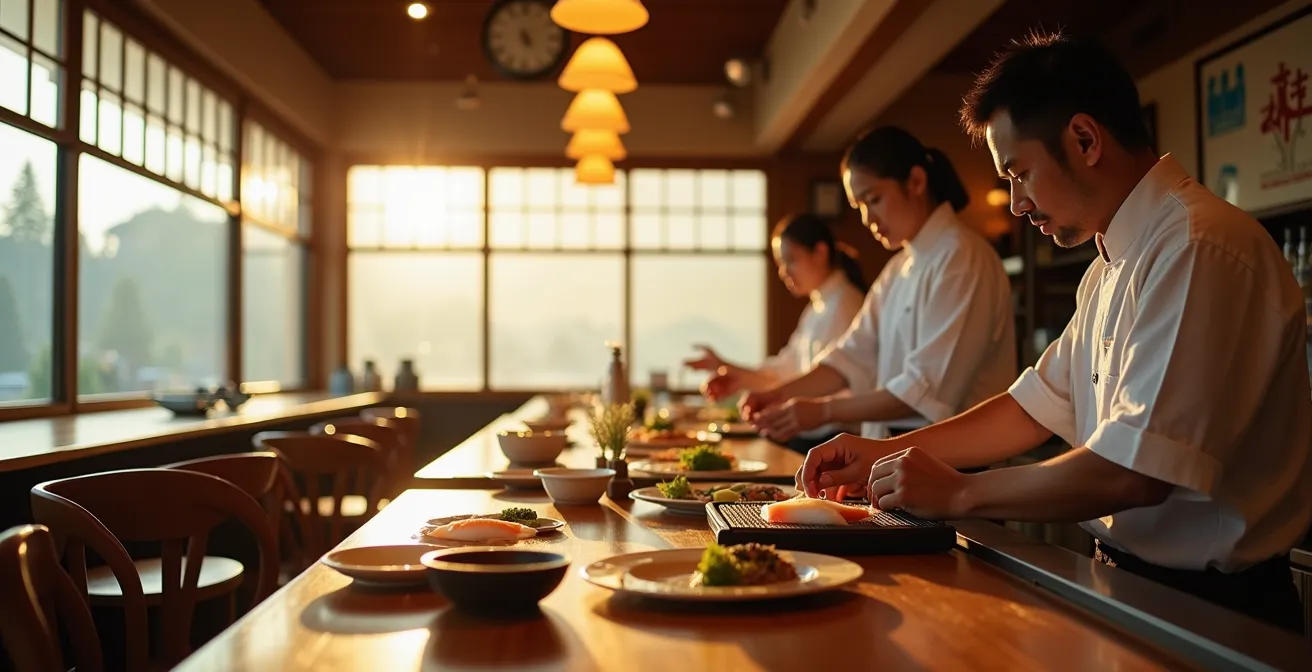
The ideal window for lunch is between 11:00 AM and 11:45 AM, just as restaurants open and before the chaos begins. Alternatively, a late lunch after 1:30 PM can also work, though be aware that many smaller establishments close between lunch and dinner service (typically from 2:00 PM to 5:00 PM). Applying this same logic to dinner, aiming to dine early (around 6:00 PM) can also lead to a safer, more relaxed experience. As one analysis notes, timing your meals strategically can improve safety by giving you access to a less-stressed kitchen.
Tofu and Zen: Where to Try Monk’s Cuisine Without a Reservation?
For vegetarians and those with multiple restrictions, shojin ryori, or traditional Buddhist monk cuisine, can seem like a safe haven. This culinary tradition is inherently vegetarian and focuses on simple, balanced meals made from seasonal vegetables, tofu, and rice. Finding a restaurant specializing in shojin ryori can be a wonderful and culturally rich experience, offering a respite from the constant vigilance required elsewhere. Many of these restaurants are located near temples and can often be enjoyed without a reservation, especially for lunch.
While not necessarily ‘foolproof,’ one wonderful type of cuisine to seek out is shojin ryori (traditional Buddhist food). A typical shojin ryori meal is virtually certain to be vegetarian, though it’s not always strictly vegan.
– Boutique Japan, Traveling to Japan with Food Allergies and Dietary Restrictions
However, “safe” does not mean you can let your guard down entirely. Modern interpretations and hidden ingredients can still pose a risk. It’s crucial to be aware of potential allergens that are common in this style of cooking. Even in a vegetarian context, allergens like wheat, soy, and sesame are frequently used. Verifying the type of dashi is still essential; it should be kombu or shiitake-based, but you must always confirm.
Be particularly mindful of these common ingredients in shojin ryori:
- Fu: Decorative pieces of dried wheat gluten, often found floating in soups.
- Yuba: “Tofu skin” or soy milk skin, a very common protein source.
- Goma-dare: Sesame sauce, used as a dressing for vegetables (goma-ae).
- Eggs or Dairy: While traditionally absent, some modern or temple-lodging interpretations may include them.
Shojin ryori offers a fantastic option, but it requires the same level of diligent communication as any other meal. Always present your allergy card and confirm the ingredients.
Healthy or processed: Can You Maintain a Balanced Diet on Konbini Food?
Japanese convenience stores, or konbini, are a traveler’s best friend. They are clean, ubiquitous, and stocked with a surprising variety of food options. For those with allergies, they can be a reliable source of safe meals, provided you know what to look for. Japan has mandatory labeling laws for packaged foods, which can be a huge help. In fact, a list of 7 allergens must be labeled by law in Japan, as they are classified as causing severe reactions. These include shrimp, crab, wheat, buckwheat, egg, milk, and peanuts. An additional 21 items are recommended for labeling.
Using a translation app like Google Lens on packaging is essential. You can quickly scan ingredient lists for your specific allergens. However, for a quicker and lower-stress experience, it’s wise to have a “safe list” of items that are generally free from common allergens. Simple, whole-food items are always your best bet. A perfectly ripe banana, a cup of fresh-cut fruit, or a bag of plain edamame can be a lifesaver.
Some reliable options often found in konbini include:
- Plain “shio” (salt) onigiri: Rice balls with a simple salted filling are usually the safest choice, but always double-check for hidden dashi or soy sauce.
- Hard-boiled eggs: Often sold peeled and ready to eat.
- Plain potato chips: Verify the oil type and check for added flavorings.
- Yogurt and milk drinks: A good option if you do not have a dairy allergy.
You can even find specific allergy-friendly products if you look closely. For example, some brands like S&B offer pre-packaged curry that is explicitly labeled as free from all major allergens. With careful label reading, konbini can provide a balanced and safe source of nutrition throughout your trip.
Key Takeaways
- Understanding Japan’s ‘no-customization’ culture is key; it’s a sign of a systematic, not an unwilling, kitchen.
- Dashi (fish stock) is a ‘culinary default’ in countless dishes, requiring specific questioning beyond just “does this contain fish?”.
- Strategic timing is a powerful tool: avoid the 12-1 PM lunch rush to get more attentive service for your allergy requests.
Tonkotsu vs. Miso: Which Ramen Style Define Each Prefecture?
A trip to Japan feels incomplete without a bowl of ramen. However, this beloved dish is an allergen minefield, with complex broths and toppings that vary immensely by style and region. Understanding the fundamental differences between major ramen types is the first step toward finding a bowl you can safely enjoy. Each style—Tonkotsu, Miso, Shoyu, and Shio—has a different base, which corresponds to a different set of allergen risks.
Tonkotsu, famous in Kyushu, has a rich, creamy broth made from simmering pork bones for hours; it sometimes contains dairy for added creaminess. Miso ramen, a specialty of Hokkaido, uses a fermented soybean paste, making it a risk for soy allergies. Shoyu (soy sauce) and Shio (salt) are the other two main types, both typically featuring pork and/or chicken broth but with different primary flavorings that carry wheat, soy, and fish-based ingredients. Cross-contamination is also a major concern, as most ramen shops cook all their noodles in the same water.
Finding truly allergy-friendly ramen is challenging, but not impossible. A growing number of specialty shops are beginning to cater to dietary needs. For example, some shops like SORANOIRO in Tokyo are known to offer gluten-free options such as brown rice noodles. Your best bet is to research these dedicated shops in advance. For a standard ramen-ya, the complexity of the broth makes it one of the most difficult dishes to navigate safely, and it should be approached with extreme caution.
| Ramen Style | Pork | Dairy | Soy | Wheat | Fish | Sesame |
|---|---|---|---|---|---|---|
| Tonkotsu | Yes | Sometimes | Yes | Yes | Sometimes | Often |
| Miso | Often | Sometimes | Yes | Yes | Sometimes | Often |
| Shoyu | Often | No | Yes | Yes | Often | Sometimes |
| Shio | Sometimes | No | Sometimes | Yes | Often | Sometimes |
Navigating Japan’s food scene with allergies is a challenge, but it is one that can be overcome with the right knowledge and strategy. By moving beyond simple translation and developing a deeper understanding of the culinary systems at play, you can make informed, safe choices. Use this guide to plan ahead, communicate effectively, and turn your focus from what you must avoid to the many delicious experiences you can safely enjoy.