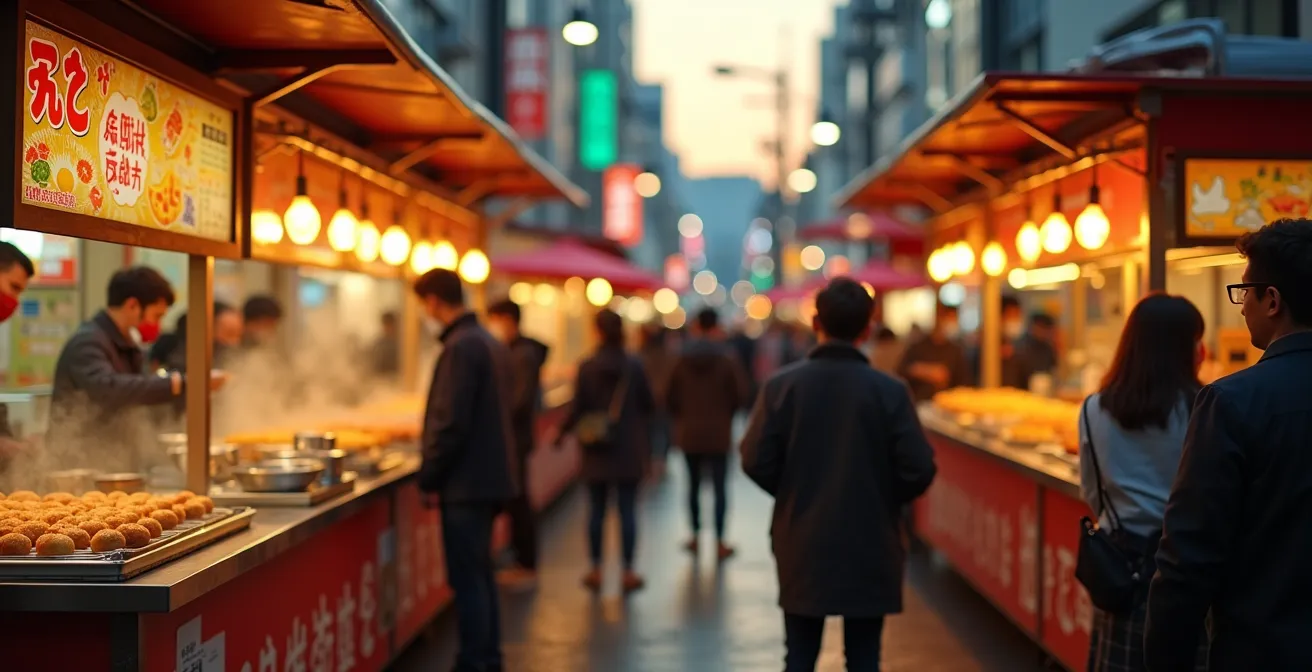
Most people think ‘kuidaore’ just means ‘eat until you drop,’ but that’s only half the story. The true spirit of Osaka’s food obsession is a form of joyful rebellion. It’s an entire culture built on challenging the formal, reserved norms of the rest of Japan. From haggling for discounts to laughing out loud at comedy shows, every unique Osaka quirk finds its ultimate expression in its loud, unapologetic, and delicious food scene.
Alright, let’s talk about Osaka! You’ve probably heard the term ‘kuidaore’, which everyone translates as “to eat oneself into bankruptcy.” And sure, that’s the literal meaning, but it barely scratches the surface. To truly get Osaka, you have to understand that this isn’t just about gluttony; it’s a philosophy. It’s the city’s heart and soul served on a paper plate. While Tokyo is often seen as the polished, orderly face of Japan, Osaka is its loud, hilarious, and fiercely independent cousin who’s always ready for a feast.
Most guides will give you the standard checklist: eat takoyaki, see the castle, visit Universal Studios. But they miss the magic. They don’t connect the dots between the city’s obsession with food and its other bizarre and wonderful traits. Why do Osakans stand on the ‘wrong’ side of the escalator? Why is it the only place in Japan where you can haggle? Why is it the nation’s comedy capital? These aren’t separate quirks; they are all ingredients in the same vibrant cultural stew that makes kuidaore possible.
So, forget the simple definition. We’re going on a deeper dive. This isn’t just a food tour; it’s a cultural safari. We’re going to unravel the ‘why’ behind the ‘what.’ We’ll explore how Osaka’s history as a city of merchants, its rebellious spirit, and its love for a good laugh all simmer together to create the most incredible food culture on the planet. Get ready to understand why in Osaka, spending all your money on food isn’t just an indulgence—it’s the only way to live.
In this guide, we’ll explore the unique cultural pillars that hold up Osaka’s legendary kuidaore spirit. From its peculiar social rules to its bustling underground mazes, you’ll see how everything in this city ultimately revolves around a good meal and a good time.
Contents: The Full Osaka Experience
- Right vs Left: Why Does Osaka Stand on the Wrong Side of the Escalator?
- Can You Haggle? Why Osaka Is the Only Place to Negotiate Prices?
- Manzai: Why Is Osaka Considered the Funniest City in Japan?
- Umeda Dungeon: How to Not Get Lost in the Underground Malls?
- Obachan Culture: Why Will Older Ladies Give You Candy in Osaka?
- Standing Left or Right: How to Adapt to Regional Escalator Rules?
- Eat and Walk: Is It Rude to Walk While Eating Street Food in Osaka?
- Glico Man Sign: Why Is This Runner the Symbol of Osaka?
Right vs Left: Why Does Osaka Stand on the Wrong Side of the Escalator?
One of the first things you’ll notice in Osaka is a simple, visual act of rebellion: people stand on the right side of the escalator, leaving the left lane open for walkers. This is in direct contrast to Tokyo and most of the world, where standing on the right is the norm. It might seem like a small detail, but it’s the perfect introduction to Osaka’s unique identity. It’s a city that proudly does things its own way. A recent survey even confirmed this, showing that 67.7% of Osaka residents stand on the right, a practice that defines the entire Kansai region.
But why? The most common theory points to a specific moment in history. According to a study by KCP International Japanese Language School, this regional habit was solidified during the 1970 Osaka World Expo. To handle the massive international crowds, the city adopted the “stand on the right” convention, which was more common globally at the time. Tokyo never hosted such a large-scale international event early on, so its convention, influenced by samurai wearing swords on their left, never changed. After the Expo, Osaka just… kept it. This small act of non-conformity is a daily reminder that Osaka dances to its own beat.

This isn’t just about escalator mechanics; it’s a symbol of the city’s character. It tells you that you are in a place that values practicality and its own history over conforming to a national standard. This mindset is the fertile ground from which the unapologetic, anything-goes spirit of kuidaore grows. It’s the first clue that in Osaka, the rules are a little different, and usually, a lot more fun.
Can You Haggle? Why Osaka Is the Only Place to Negotiate Prices?
In most of Japan, trying to negotiate a price is considered rude. But in Osaka, it’s practically a sport! This isn’t just tolerated in some places; it’s expected. This unique cultural trait stems directly from Osaka’s history as Japan’s preeminent merchant city. For centuries, this was where the nation’s rice and goods were traded, creating a culture where business, negotiation, and a sharp sense of value were ingrained in the local DNA. This “Merchant’s DNA” is still palpable today, especially in the lively shopping arcades and electronics districts.
This commercial heritage directly fueled the city’s food scene. As the Japan National Tourism Organization notes, wealthy merchants used restaurants as their boardrooms, conducting business over elaborate meals. This constant demand for high-quality dining pushed chefs to innovate, constantly refining their cuisine to impress discerning clients. Food wasn’t just sustenance; it was part of the deal. This deep-rooted connection between commerce and cuisine is why Osakans have an incredible appreciation for good food at a fair price—and aren’t afraid to ask for it.
Of course, you can’t haggle everywhere. It’s a no-go in department stores or restaurants. But in flea markets, certain electronic shops in Den Den Town, or with street vendors in Shinsaibashi, a friendly negotiation is part of the experience. It’s a conversation, a game, and a way to connect with the seller. This lively, transactional energy is the complete opposite of the quiet, formal shopping experience you’ll find elsewhere, and it’s another key ingredient in the city’s boisterous, kuidaore-loving character.
Action Plan: Your Guide to Haggling in Osaka
- Start with a connection: Begin with a friendly “Konnichiwa!” and a smile to build rapport before talking business.
- Ask politely: Use the key phrase “Chotto makete kureru?” (Can you give me a small discount?) to open negotiations.
- Know your location: Focus your efforts at flea markets, independent electronics shops, and some street stalls. Avoid department stores and convenience stores.
- Respect the boundaries: Never attempt to haggle over food at restaurants or in formal retail settings.
- End gracefully: Whether you get a discount or not, accept the vendor’s final offer with a smile and a thank you (“Arigato gozaimasu!”).
Manzai: Why Is Osaka Considered the Funniest City in Japan?
If food is Osaka’s body, then comedy is its soul. The city is the undisputed home of Manzai, a traditional style of stand-up comedy featuring a hilarious duo: the goofy, idiotic *boke* and the sharp, deadpan *tsukkomi* who tries to correct him, often with a swift smack of a paper fan. This fast-paced, slapstick humor is the heartbeat of Osaka’s entertainment scene, and its influence is everywhere, shaping the way people talk, interact, and even think.
The epicenter of this comedy explosion is Yoshimoto Kogyo, an entertainment powerhouse founded in Osaka over a century ago. This single company is a cultural behemoth, and as Osaka.com reports, it represents over 6,000 comedians, singers, and actors. They are the ones who perfected the modern Manzai format and, as Wikipedia contributors note, introduced it to Tokyo audiences back in 1933, forever associating the art form with the city and its distinctive Kansai dialect. This is why you’ll see comedy theaters packed every night of the week and why Osakans seem to have a natural gift for witty banter and a quick comeback.
This love for laughter is not just confined to the stage. It spills out into the streets, shops, and restaurants. Osakans are known for being more direct, expressive, and approachable than their Kanto counterparts. They love a good joke and aren’t afraid to laugh out loud. This atmosphere of lightheartedness and fun creates the perfect environment for kuidaore. Eating in Osaka is rarely a quiet, solitary affair. It’s a social, boisterous, and joyful experience, often shared with friends over a chorus of “Oishii!” and a round of laughter. The city’s funny bone is directly connected to its stomach.
Umeda Dungeon: How to Not Get Lost in the Underground Malls?
Welcome to the “Umeda Dungeon.” This is the affectionate nickname for the vast, labyrinthine network of underground shopping malls connecting JR Osaka Station, Umeda Station, and several department stores. It’s a city beneath the city, a sprawling maze of shops, restaurants, and endless corridors that can disorient even the most seasoned traveler. Getting lost here isn’t a possibility; it’s a rite of passage. But this “joyful chaos” is also a core part of the Osaka experience—a sensory overload that perfectly mirrors the overwhelming abundance of the kuidaore philosophy.
The dungeon is a testament to Osaka’s knack for packing as much life as possible into every square meter. It’s not just a transit hub; it’s a destination in itself, filled with some of the city’s best food and shopping. The sheer scale can be intimidating, but there is a method to the madness. The entire complex is unofficially divided into zones, each with its own character and, crucially, its own color-coded signage. Learning to recognize these zones is the key to survival.
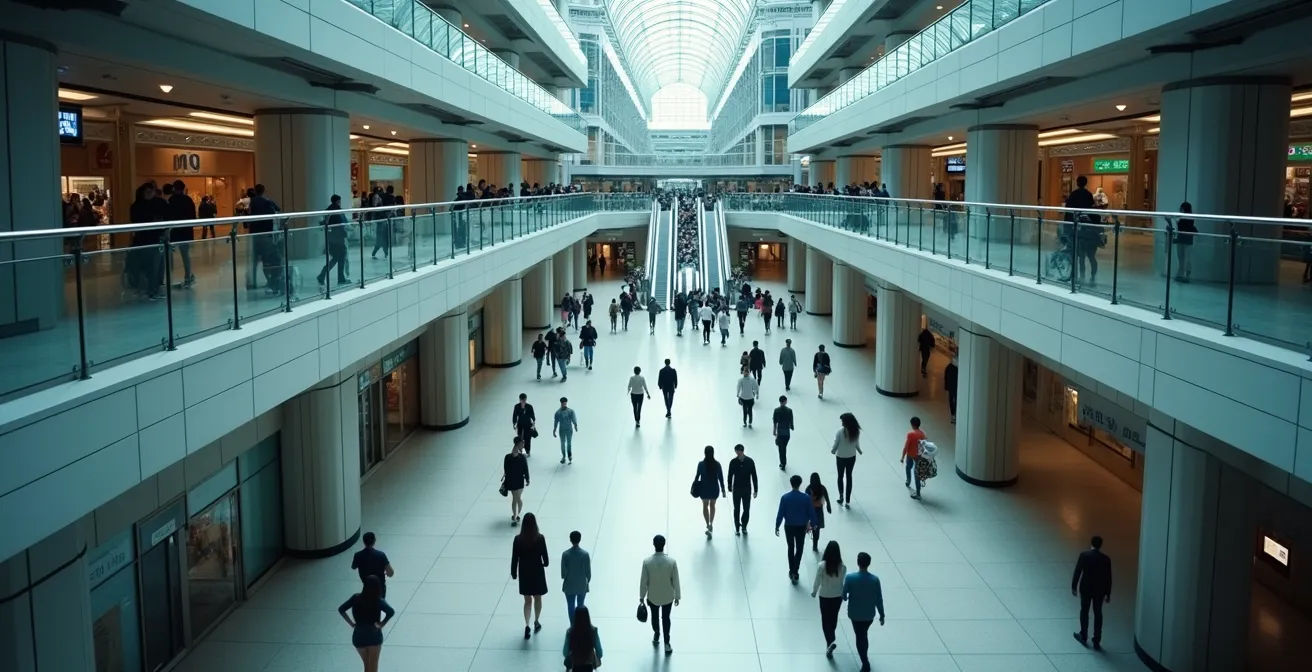
Navigating this underground world is an adventure. You might be searching for a specific train line and stumble upon a tiny bar serving incredible kushikatsu, or get turned around looking for a department store and discover a standing-sushi joint packed with locals. The Umeda Dungeon embodies the spirit of kuidaore: a journey where the detours are often more rewarding than the destination. To help you on your quest, here’s a basic map to the main territories of this subterranean kingdom.
This table, based on information from KCP International, can serve as your treasure map to navigate the underground labyrinth.
| Zone | Key Landmark | Main Features | Navigation Tip |
|---|---|---|---|
| JR Zone | JR Osaka Station | Department stores, restaurants | Follow green JR signs |
| Hankyu Zone | Hankyu Department Store | Fashion, luxury goods | Look for maroon colored signs |
| Hanshin Zone | Hanshin Department Store | Food floor, local specialties | Blue signs mark this area |
| Whity Umeda | Underground shopping street | Restaurants, cafes, shops | Central connecting pathway |
Obachan Culture: Why Will Older Ladies Give You Candy in Osaka?
Amidst the loud markets and neon-drenched streets, you’ll encounter one of Osaka’s most charming and unique cultural phenomena: the Osaka Obachan. These are the city’s spirited, stylish, and incredibly friendly older ladies, often spotted with brightly colored clothes and a leopard-print accessory or two. But their most defining characteristic is the seemingly endless supply of candy, or *ame-chan*, they carry in their purses, ready to distribute to friends, acquaintances, and sometimes, complete strangers.
If an Obachan offers you a piece of candy, it’s not a random act. It’s a form of communication—a social lubricant that breaks the ice and fosters a sense of community. In a city that values directness and warmth over formal politeness, offering an *ame-chan* is like saying, “Hey, we’re friends now!” or “You look like you could use a little pick-me-up.” It’s a small gesture of kindness that encapsulates the city’s open and sociable nature. This is the human-to-human connection that forms the very social fabric of Osaka.
This “candy culture” is the micro-version of the city’s macro-philosophy. Just as kuidaore is about the joy of sharing food, the Obachan’s candy is about the joy of a shared moment. It’s a reminder that in Osaka, human connection is prized. These women are the unofficial ambassadors of the city’s spirit—gregarious, a little bit cheeky, and overwhelmingly generous. So if a lady in a fabulous leopard-print scarf offers you a sweet, take it with a smile and a bow. You’ve just participated in one of Osaka’s most authentic and heartwarming traditions.
Standing Left or Right: How to Adapt to Regional Escalator Rules?
As we’ve seen, Osaka’s “stand on the right” escalator rule is a clear marker of its distinct identity. But this is just one of many regional differences that set the Kansai region (centered around Osaka) apart from the Kanto region (centered around Tokyo). Adapting to these unwritten rules is key to navigating Japan like a pro and truly appreciating the country’s incredible diversity. What’s considered normal in Tokyo might seem strange in Osaka, and vice versa. It’s a tale of two Japans, and the differences are fascinating.
The contrast goes far beyond escalators. It’s woven into the pace of life, communication styles, and even the way people queue for a train. Tokyoites are often perceived as more reserved, formal, and purposeful, rushing through stations in orderly lines. Osakans, on the other hand, are known for being more direct, casual, and social. Their walking pace is more relaxed, and their approach to life is generally more flexible and boisterous. This isn’t a judgment of one being better than the other; they are simply two different expressions of Japanese culture, shaped by centuries of distinct history and social development.
Understanding these nuances will profoundly enhance your travel experience. It allows you to switch gears, appreciate the local customs, and connect more deeply with the people you meet. Whether it’s the friendly chaos of an Osaka market or the quiet efficiency of a Tokyo subway, each region offers a unique rhythm. The following table, compiled from various etiquette guides, highlights some of the key differences you’ll encounter between Japan’s two major cultural hubs.
This comparative overview helps illustrate the cultural divide between Japan’s two main regions.
| Aspect | Kansai (Osaka) | Kanto (Tokyo) |
|---|---|---|
| Escalator Side | Stand on right | Stand on left |
| Communication Style | Direct, friendly, casual | Polite, reserved, formal |
| Walking Pace | Relaxed, social | Fast, purposeful |
| Train Boarding | More flexible queuing | Strict line formation |
| Dialect | Kansai-ben (casual) | Standard Japanese |
Eat and Walk: Is It Rude to Walk While Eating Street Food in Osaka?
In Osaka, the streets are your dining room. With food stalls everywhere, from the famous Dotonbori to the sprawling Kuromon Ichiba Market, you’ll be tempted to grab a steaming hot takoyaki or a crispy kushikatsu and continue your stroll. But hold on! While Osaka is the capital of street food, there’s a crucial piece of etiquette to know: walking while eating, known as *aruki-gui*, is generally considered rude, even here. It’s seen as messy and inconsiderate to other pedestrians in crowded areas.
So how do you enjoy the endless street food bounty? You embrace the art of ‘tachigui’, which literally means “stand-eating.” This is the socially acceptable way to enjoy your snack. The proper etiquette is to buy your food, step to the side of the stall or a designated eating area, and enjoy it right there. This keeps the sidewalks clean and foot traffic flowing. Many vendors will have a small space and a trash can for this exact purpose. It’s a system that allows for maximum food enjoyment with minimum social disruption, especially in places like Kuromon Market, which sees more than 23,000 people visiting daily.
This ‘Street Food Samurai Code’ is simple to follow and shows respect for the local culture. It’s about finding a moment of delicious pause amidst the wonderful chaos. Here’s the drill:
- Buy your food from the vendor with a smile.
- Find a spot near the stall, out of the main flow of foot traffic.
- Stand and savor every single bite. This is your kuidaore moment!
- Dispose of all your trash in the bins provided by the vendor. Never leave it for someone else.
- Once you’re finished, move on to the next stall for your next culinary adventure.
By following this simple practice, you’re not just eating; you’re participating in the culture of kuidaore respectfully. You’re part of the rhythm of the city, not an obstacle to it.
Key Takeaways
- Kuidaore is more than just eating; it’s a cultural philosophy of joyful, unapologetic indulgence that defines Osaka.
- Osaka’s unique customs, like standing on the right side of escalators and haggling, stem from its history as a rebellious and merchant-driven city.
- The city’s love for Manzai comedy and its friendly, direct social culture are deeply intertwined with its boisterous and social dining scene.
Glico Man Sign: Why Is This Runner the Symbol of Osaka?
Towering over the Dotonbori canal, arms raised in victory, is the single most iconic image of Osaka: the Glico Man. This colossal neon sign of a runner crossing a finish line is more than just an advertisement; it’s the city’s heartlight, a symbol of energy, endurance, and the triumphant spirit that fuels the kuidaore culture. You haven’t truly been to Osaka until you’ve stood on Ebisu Bridge and struck the “Glico Man Pose” for a photo. But why this runner? What does he represent?
The sign was first erected in 1935 by the food company Ezaki Glico. As Snow Monkey Resorts explains, the running man was chosen to represent the energy and health the company claimed were in its caramel candy, which was sold with the slogan “300 Meters on a Single Piece.” It was a brilliant piece of marketing that has since become a beloved cultural landmark. According to PlanMyJapan, the current sign, the sixth version unveiled in 2014, uses almost 150,000 LED lights to create animated backgrounds that change with the seasons and for special events.
The running man was designed to represent energy and health — two qualities the company claimed were found in their signature caramel candy. Since then, the sign has been updated six times, adapting with the times while keeping its signature pose: a victorious runner crossing the finish line.
– Snow Monkey Resorts, The Glico Man Sign History
The Glico Man perfectly embodies the spirit of Osaka. He is dynamic, colorful, and relentlessly optimistic. He represents the energy you need to power through a kuidaore food marathon and the victorious feeling of finding that perfect bowl of ramen. The sign has become such a familiar beacon that it serves as a popular meeting point for locals and tourists alike, a constant presence in the ever-shifting landscape of Dotonbori. It’s a symbol of a city that’s always running, always innovating, and always celebrating.
Frequently Asked Questions About Osaka’s Culture
Why does Osaka stand on the right while Tokyo stands on the left?
One popular theory is that Osaka adopted this convention for the 1970 World Expo to accommodate international visitors, and the practice simply stuck. Tokyo, without a similar large-scale early event, retained its historical custom of standing on the left.
How do I remember which side to stand on?
The easiest way is to just observe what everyone else is doing! But a fun mnemonic can help: “In Osaka, you’re RIGHT to be different.” This little trick can save you from blocking traffic on a busy escalator.
What about other Japanese cities?
Outside of the Tokyo (Kanto) and Osaka (Kansai) regions, most of Japan tends to follow Tokyo’s lead and stands on the left. However, in some smaller cities or regions, there may not be a strictly enforced rule, so observation is always your best bet.