Japanese Cuisine
Japanese cuisine extends far beyond sushi and tempura. It represents a complex tapestry of regional traditions, social customs, and dining philosophies that have evolved over centuries. For travelers, understanding this culinary landscape means unlocking authentic experiences that go beyond tourist-oriented restaurants—from the respectful silence of a high-end omakase counter to the boisterous energy of an Osaka street food stall.
Navigating Japan’s food culture can feel intimidating at first. The unspoken rules, the specialized vocabulary, the seemingly impenetrable world of exclusive establishments—all can create barriers for curious visitors. Yet this rich dining ecosystem becomes remarkably accessible once you understand its underlying logic. This comprehensive overview introduces you to the essential dining styles, etiquette fundamentals, and regional variations that define Japanese cuisine, giving you the confidence to eat your way through Japan with both respect and adventure.
Navigating the Diverse Food Landscape Safely
Japan’s culinary scene presents unique challenges for travelers with dietary restrictions or allergies. Unlike many Western countries, ingredient transparency isn’t always straightforward, and many traditional preparations contain hidden components that might surprise you.
Understanding Hidden Ingredients and Allergens
Japanese cuisine relies heavily on fundamental ingredients that appear across countless dishes. Dashi, the umami-rich stock that forms the backbone of Japanese cooking, typically contains bonito flakes (fish) and kombu (seaweed), making many seemingly vegetarian dishes unsuitable for strict vegetarians. Soy sauce appears in unexpected places, posing challenges for those with wheat allergies. Even dishes that seem safe often contain mirin (rice wine), fish-based seasonings, or traces of seafood.
Allergy cards—printed cards in Japanese explaining your dietary restrictions—have become invaluable tools for travelers. These cards clearly communicate your needs without language barriers, though they work best in restaurants accustomed to customization rather than traditional establishments with fixed preparations.
Regional Specialty Variations
Japan’s geography creates distinct regional food cultures. What constitutes “normal” in Tokyo might be entirely different in Osaka, Kyoto, or Hokkaido. Understanding these variations helps you anticipate what you’ll encounter and avoid disappointment with fixed menus that don’t accommodate substitutions. In traditional regional restaurants, the chef’s interpretation of local specialties is considered the authoritative version—requesting modifications can be perceived as disrespectful to their expertise.
Quick Service Dining: Speed, Efficiency and Etiquette
Japan has perfected the art of fast, affordable dining without sacrificing quality. Standing noodle shops, automated ordering systems, and specialized quick-service restaurants form an essential part of daily food culture, offering remarkable value for travelers on any budget.
Using the Ticket Machine System
Many affordable restaurants use ticket vending machines (shokken) rather than traditional ordering. Before entering, you purchase a meal ticket from the machine near the entrance, then hand it to staff who prepare your order. These machines typically display photos, making selection easier even without Japanese literacy. The system eliminates language barriers and speeds up service—once you sit down, your food often arrives within minutes.
This efficiency comes with its own etiquette. Speed eating isn’t considered rude in these establishments; in fact, lingering occupies seats that others are waiting for. The social contract is simple: order, eat, leave. During lunch hours near business districts, you’ll see office workers finish a bowl of ramen in under ten minutes.
Soba Versus Udon: Understanding the Difference
Standing noodle shops typically specialize in either soba (buckwheat noodles) or udon (thick wheat noodles), though some offer both. Soba has a nutty, earthy flavor and firmer texture, while udon is mild and chewy. The choice often comes down to personal preference and regional tradition—Tokyo favors soba, while Osaka leans toward udon.
The slurping debate resolves itself once you understand the purpose: slurping noodles aerates them, cooling the broth and enhancing flavor perception. It’s not just acceptable—it’s the traditional technique for proper enjoyment. After finishing, return your tray to the designated return station, a small gesture of consideration that maintains the efficient flow of these bustling establishments.
Elevated Dining Experiences: Omakase and Traditional Restaurants
At the opposite end of the spectrum from quick-service dining lies Japan’s world of exclusive, high-end traditional restaurants. These establishments represent the pinnacle of culinary artistry but operate under rules that can seem mysterious to outsiders.
Accessing Exclusive Traditional Dining
The concept of “Ichigen-san okotowari” (no first-time customers) protects the intimate atmosphere of traditional restaurants while ensuring guests understand and respect established customs. These establishments don’t accept walk-ins or direct reservations from unknown guests. Instead, you must be introduced by an existing patron or book through a hotel concierge who maintains relationships with these restaurants.
This system isn’t about elitism—it’s about mutual trust. The restaurant trusts that referred guests will honor their reservation, understand appropriate behavior, and appreciate the experience being offered. In return, guests receive exceptionally personalized service from the nakai-san (server in traditional establishments) who may remember your preferences across multiple visits.
Omakase Sushi: The Chef’s Pacing and Protocol
Omakase means “I’ll leave it up to you”—the chef selects and paces your meal based on the day’s finest ingredients and their professional judgment. This requires surrendering control and trusting the chef’s expertise. The chef’s pacing is deliberate: each piece of sushi is served at the optimal moment, considering temperature, texture, and flavor progression.
Traditional etiquette includes specific rules: eat each piece immediately when served, never mix wasabi into soy sauce (the chef has already applied the appropriate amount), and use either chopsticks or clean hands—both are acceptable. Your hands are actually preferable for sushi, as they don’t compress the delicate rice. Ordering drinks between courses is perfectly acceptable, though the chef may pause service while you sip, maintaining the careful progression they’ve orchestrated.
The cost of these experiences reflects not just ingredients but the chef’s decades of training and the scarcity of seats. Dress code expectations vary but lean conservative—think business casual at minimum, avoiding strong fragrances that might interfere with the delicate aromas.
Social Dining and Izakaya Culture
For a more relaxed, social dining experience, izakaya—Japanese gastropubs—offer the perfect balance of quality food, drinks, and convivial atmosphere. Understanding izakaya customs helps you navigate what can initially seem like a confusing ordering process.
The Otoshi Fee and Ordering Rhythm
When you sit down at an izakaya, you’ll automatically receive a small appetizer (otoshi or tsukidashi) and be charged for it—typically a few hundred yen. This isn’t a scam; it’s a table charge tradition that covers the service and allows you to start nibbling while you decide what to order. Think of it as a cover charge combined with a small first course.
Ordering follows a different rhythm than Western restaurants. Rather than ordering your entire meal upfront, izakaya culture involves ordering several small plates or dishes at a time, then adding more throughout the evening as the mood strikes. This gradual approach matches the social, extended nature of izakaya dining—you’re not just eating, you’re settling in for the evening.
Sake Etiquette and Group Dynamics
When drinking sake in groups, never pour your own drink—this is a fundamental aspect of Japanese drinking culture. You pour for others, and they pour for yours. This reciprocal gesture facilitates social bonding and ensures no one’s glass sits empty. To call staff, use the call button at your table, or say “sumimasen” (excuse me). Shouting or snapping fingers is considered rude, though izakaya are generally boisterous environments where moderate noise levels are expected and welcomed.
Budget-Friendly Excellence: Convenience Stores and Street Food
One of Japan’s most pleasant surprises is the exceptional quality available at the lowest price points. Convenience stores (konbini) and street food vendors offer experiences that rival sit-down restaurants in many other countries.
Maximizing Konbini Quality
Japanese convenience stores—primarily 7-Eleven, Lawson, and FamilyMart—stock fresh, high-quality prepared foods that go far beyond typical gas station offerings. Rice balls (onigiri), sandwiches, bento boxes, and hot counter items like fried chicken provide nutritionally balanced meals at remarkably low prices. The secret is rapid turnover: popular items are restocked multiple times daily, ensuring freshness.
Seasonal limited editions create a constant rotation of new products, making konbini exploration an ongoing adventure. Late-night safety is excellent—these stores serve as well-lit, staff-monitored havens throughout the night. Payment logistics are straightforward, and many now accept international credit cards and electronic payment systems.
Street Food Safety and Etiquette
Street food and yatai (food stalls) offer delicious quick bites, but come with their own considerations. Burning your mouth is a real risk with items like takoyaki (octopus balls) and yakitori (grilled skewers)—they’re served piping hot. Give them a moment to cool.
Double dipping is universally frowned upon when food is shared. The standing versus walking debate has clear rules: eating while standing near the vendor is acceptable, but walking while eating is generally considered poor etiquette, particularly in more traditional neighborhoods. The price-quality relationship at street vendors is generally excellent, though tourist-heavy areas sometimes inflate prices for lower quality—observe where locals eat.
Regional Food Cultures: From Osaka to Hokkaido
Japan’s regional diversity creates distinct food cultures with their own specialties, customs, and social norms. Osaka, often called “Japan’s kitchen,” exemplifies this regional character.
Osaka’s food culture is loud, friendly, and unpretentious—a stark contrast to Tokyo’s more reserved dining atmosphere. Locals embrace interaction with vendors and other diners. Small cultural differences extend to everyday life: stand on the right side of escalators in Osaka (the left in Tokyo), a detail that marks you as either local or observant. While bargaining isn’t common in modern Japan, Osaka maintains more of this merchant culture than other regions. The city’s strong comedy tradition (many of Japan’s famous comedians are from Osaka) infuses casual dining with humor and banter.
The regional diversity of ramen provides another lens into local food culture. Hakata’s tonkotsu (pork bone broth) is rich and creamy, Sapporo’s miso-based ramen offers complexity and heartiness suited to Hokkaido’s cold climate, while Tokyo’s shoyu (soy sauce) ramen provides a lighter, more delicate option. Tourist-oriented ramen shops near major stations often sacrifice authenticity for convenience—seek out shops filled with locals, even if it means a short wait.
Japanese cuisine rewards curiosity and respect. The dining styles range from three-minute standing soba to three-hour omakase experiences, from convenience store rice balls to exclusive ryotei requiring introductions. What unites them is an underlying philosophy: attention to ingredients, respect for tradition, and consideration for others sharing the space. By understanding these fundamentals—the reasons behind the etiquette, the logic of different dining formats, and the regional variations—you transform from a nervous tourist into a confident participant in one of the world’s most sophisticated food cultures. Each meal becomes not just sustenance but a window into Japanese values, creativity, and craftsmanship.
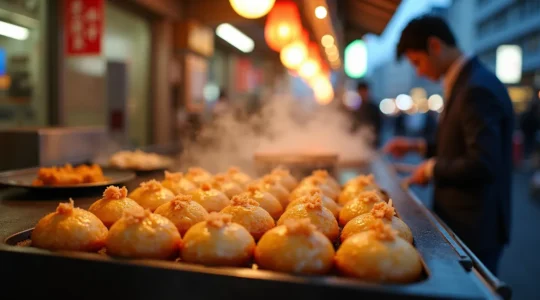
Takoyaki or Okonomiyaki: Which Kansai Soul Food Should You Try First?
The real choice isn’t just between takoyaki and okonomiyaki; it’s about mastering the unspoken rules of hygiene and respect that define Osaka’s food culture. Eating street food in Osaka involves specific techniques, like poking takoyaki to release steam and using…
Read more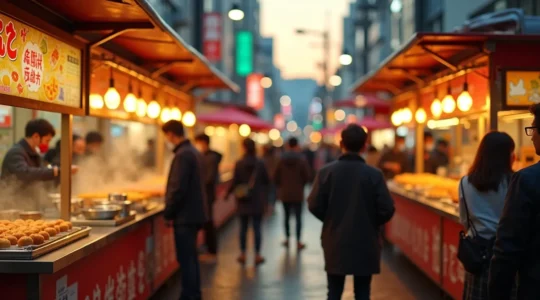
Kuidaore: Why Spending All Your Money on Food Is the Osaka Way?
Most people think ‘kuidaore’ just means ‘eat until you drop,’ but that’s only half the story. The true spirit of Osaka’s food obsession is a form of joyful rebellion. It’s an entire culture built on challenging the formal, reserved norms…
Read more
7-Eleven or Lawson: Which Konbini Has the Best Egg Sandwich?
Frankly, the debate over the best konbini egg sandwich misses the entire point. Real mastery lies in strategic eating, using nutritional labels and seasonal cycles to your advantage. Success means navigating unspoken rituals for ordering hot food and using essential…
Read more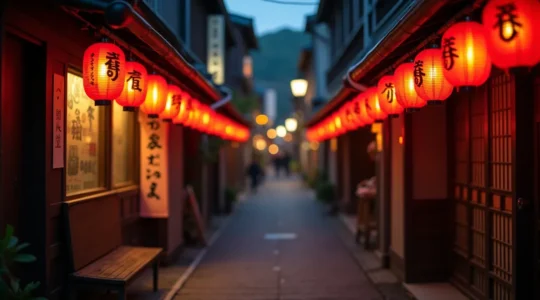
Ordering Yakitori and Sake: Cracking the Unwritten Code of Japan’s Izakaya
The secret to a great izakaya night isn’t just what you order, but understanding it’s a social performance with an unwritten script. Rules like the otoshi charge and pouring sake for others are about hospitality and group bonding, not hidden…
Read more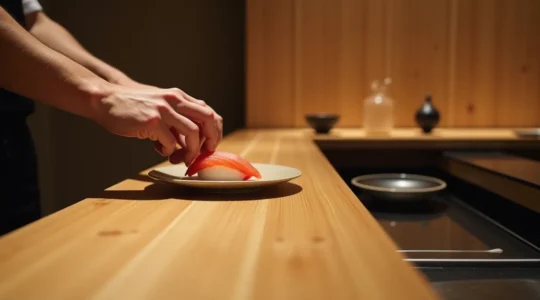
How to Behave at a High-End Omakase Counter Without Tension
The ritual of an omakase counter is not meant to intimidate; it is the framework designed to help you fully appreciate the chef’s art. Each rule of etiquette exists to preserve the sushi’s perfect temperature, texture, and seasoning. Trusting the…
Read more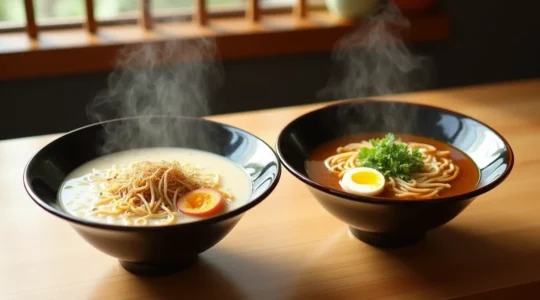
Tonkotsu vs. Miso: Which Ramen Style Defines Each Prefecture?
The true difference between Tonkotsu and Miso ramen isn’t just the ingredients; it’s the story of the prefecture simmered into the broth. Creamy Tonkotsu is the result of a precise, high-temperature emulsification process perfected in the port city of Hakata….
Read more
Entering the Hidden World of Referral-Only Ryotei Restaurants
Accessing Kyoto’s elite ryotei isn’t about finding a loophole; it’s about understanding you are entering a centuries-old ecosystem of trust. The ichigen-san okotowari (first-timers refused) policy is not elitism, but a system to protect the quality of service and atmosphere…
Read more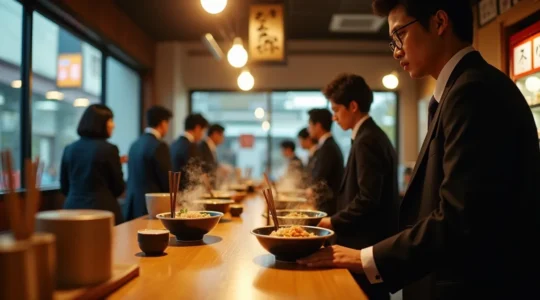
How to Order at Standing Noodle Bars Like a Salaryman
In summary: Master the ticket machine by defaulting to the top-left button (usually the most popular dish). Eat quickly and leave; the entire process from order to exit should take 5-10 minutes. Lingering disrupts the system. Choose soba for sustained…
Read more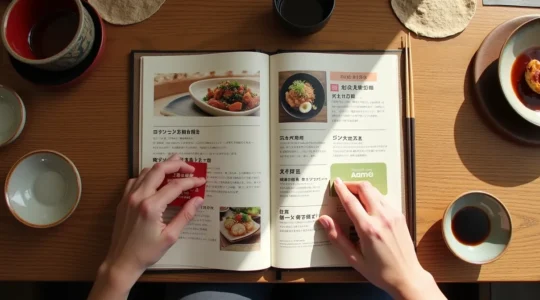
Navigating Japanese Menus With Allergies: A Survival Strategy
For travelers with food allergies, Japan presents a unique challenge where simple translation is not enough. The key to eating safely isn’t just showing a card, but understanding the rigid, systematic nature of Japanese culinary culture. This guide provides a…
Read more