Japan Culture Insights
Japan presents travelers with a fascinating paradox: a nation where cutting-edge technology coexists seamlessly with centuries-old traditions, where neon-lit streets give way to tranquil temple gardens, and where a simple gesture like a bow carries layers of unspoken meaning. For visitors unfamiliar with these cultural codes, this richness can feel overwhelming—even intimidating. The fear of committing an etiquette mistake or misunderstanding a sacred ritual often prevents travelers from fully immersing themselves in experiences that could transform their journey from mere sightseeing into genuine cultural connection.
Understanding the foundational elements of Japanese culture isn’t about memorizing rigid rules or achieving perfection. Rather, it’s about recognizing the thoughtfulness embedded in daily interactions, the spiritual significance behind seemingly simple rituals, and the respect that forms the bedrock of Japanese society. This cultural awareness opens doors—sometimes literally—to experiences that remain closed to those who approach Japan as passive observers. From the proper angle of a bow to the symbolic meaning of water at a shrine entrance, from the philosophy underlying exceptional hospitality to the artistic discipline of geisha, these insights empower you to engage with Japan on its own terms.
The following sections explore the essential cultural touchpoints every traveler should understand: the sacred spaces that define Japanese spirituality, the physical language of respect that governs social interactions, the philosophy of service that creates unforgettable hospitality, the purification practices that connect body and spirit, and the living traditions—from sumo to festivals to geisha culture—that continue to thrive in modern Japan.
Sacred Spaces: Understanding Temples and Shrines
One of the most common sources of confusion for first-time visitors centers on religious sites. Japan’s spiritual landscape is shaped by two distinct traditions that have coexisted for over a millennium, and distinguishing between them fundamentally changes how you approach and interact with these spaces.
The Essential Distinction Between Temples and Shrines
Temples are Buddhist establishments, typically featuring ornate roofs with curved eaves, meditation halls, and the presence of statues depicting Buddha or bodhisattvas. Their names often end in suffixes like “-ji” or “-dera” (Sensoji, Kinkakuji). In contrast, shrines are Shinto sites dedicated to kami—spirits or deities associated with natural elements, ancestors, or concepts. The most recognizable marker of a shrine is the torii gate, a freestanding gateway that marks the transition from the mundane to the sacred. Shrine names typically end in “-jinja” or “-taisha.”
This distinction matters beyond mere architectural appreciation. The etiquette, the purpose of your visit, and the rituals available differ significantly. At temples, you might observe monks chanting sutras or participate in meditation sessions. At shrines, you’ll encounter purification fountains, offering boxes for coins, and the practice of clapping to summon the kami’s attention. Understanding which type of site you’re entering prevents awkward mistakes and demonstrates cultural awareness that locals genuinely appreciate.
Observing Versus Participating in Rituals
A critical decision every visitor faces is whether to actively participate in religious practices or maintain a respectful observer role. Neither choice is inherently wrong, but each carries different expectations. If you choose to make an offering, purchase an amulet for protection, or write a wish on an ema (wooden plaque), you’re temporarily stepping into a participant role—one that requires following the prescribed sequences correctly.
For those uncertain about participation, observation is entirely acceptable and often preferable to performing a ritual incorrectly. Position yourself to the side of the main worship area, keep your voice low, refrain from pointing or invasive photography, and watch how locals approach the space. Many temples welcome visitors to experience the atmosphere without engaging in Buddhist practices, while shrines generally encourage participation in basic rituals like purification and offerings regardless of personal belief. The key distinction lies in approaching with sincerity and respect rather than treating sacred rituals as photo opportunities or tourist checkboxes.
The Art of the Bow: Mastering Physical Respect
If Japan had a physical grammar, the bow would be its most versatile punctuation mark—a gesture that can express greeting, gratitude, apology, or respect depending on its depth, duration, and context. For travelers, mastering even the basics of bowing etiquette dramatically improves interactions and signals cultural awareness.
Hierarchy and Angles: The Unspoken Language
Japanese bowing operates on a spectrum of formality, with the angle of your bow communicating the depth of respect or deference. A casual greeting bow involves a slight nod of approximately 15 degrees—appropriate for shopkeepers, passersby, or informal encounters. The standard respectful bow at roughly 30 degrees suits most service interactions, thanking hotel staff, or expressing appreciation. The deepest bow, approaching 45 degrees or more, conveys profound apology, gratitude, or respect for someone of significantly higher status, though tourists rarely need to employ this level.
The complexity emerges not from memorizing exact angles but from reading context. When a hotel concierge bows deeply to you upon arrival, a respectful 30-degree bow in return acknowledges their service without attempting to out-bow them (which can create awkward exchanges). Think of it like adjusting your voice volume to match a conversation’s formality—you wouldn’t whisper in a casual chat or shout during a serious discussion.
Common Mistakes to Avoid
Several bowing errors repeatedly trip up well-intentioned visitors. The handshake-bow hybrid creates the most awkward moments—attempting both simultaneously results in an uncomfortable dance. Japanese people familiar with Western customs may extend a hand first; take their lead. If they bow, bow in return. Hand placement matters: keep your hands at your sides for men, or lightly clasped in front for women during formal bows. Avoid the temptation to bow while holding shopping bags, phones, or coffee cups—this dilutes the gesture’s sincerity.
The phenomenon of over-bowing occurs when visitors, eager to show respect, initiate overly deep bows in casual situations or engage in a bowing loop—repeatedly returning each bow until someone finally breaks the cycle. A simple rule prevents this: match or slightly exceed the depth of the bow directed at you, then stop. One well-executed bow beats three hasty, awkward ones. Finally, timing matters as much as technique. A bow should be deliberate, not rushed. Pause at the deepest point for a beat before rising—this momentary stillness distinguishes a meaningful gesture from a mere nod.
Omotenashi: The Philosophy Behind Japanese Hospitality
Many languages have a word for hospitality, but Japanese possesses a concept that transcends simple customer service. Omotenashi represents a philosophy of wholehearted service that anticipates needs before they’re expressed, eliminates the transactional nature of the guest-host relationship, and treats service itself as an art form deserving of mastery.
Unlike Western service models where efficiency and friendliness reign, omotenashi prioritizes attentiveness and perfection. The ryokan owner who remembers your dietary preferences from a conversation months ago, the restaurant staff who silently replaces your chopsticks when they roll off the table before you notice, the shop clerk who wraps your purchase with origami-like precision despite a long queue—these aren’t isolated acts of exceptional service but everyday manifestations of omotenashi. This cultural value explains why tipping is unnecessary and potentially offensive in Japan: implying that excellent service requires additional payment suggests it isn’t the default expectation.
As a recipient of omotenashi, you play a role in this cultural exchange. Responding with genuine appreciation, patience, and respect completes the dynamic. The server who appears reserved or minimizes small talk isn’t being cold; they’re maintaining professional boundaries and avoiding the presumption of forced familiarity. Misinterpreting this restraint as unfriendliness misses the point—omotenashi shows care through actions and attention to detail, not through chatty interactions. When you recognize the extraordinary effort behind seemingly simple gestures and acknowledge it with sincere thanks (a heartfelt “arigato gozaimasu” works wonders), you participate in a cultural value that has shaped Japanese society for centuries.
Purification Rituals: Water, Symbolism, and Sequence
At the entrance of virtually every Shinto shrine, you’ll encounter a temizuya—a stone basin filled with water and accompanied by long-handled ladles. This isn’t a decorative water feature or a wishing well, but the gateway to sacred space through physical purification. Understanding the ritual’s symbolism and proper sequence transforms what might seem like an arbitrary tradition into a meaningful practice that prepares both body and spirit for entering the presence of kami.
Water in Shinto cosmology possesses inherent purifying properties, capable of washing away spiritual impurities accumulated through daily life. The ritual follows a specific sequence that must be completed with the water from a single ladleful—a practice that emphasizes mindfulness and intentionality. The correct steps are:
- Take the ladle with your right hand and fill it with fresh water from the basin
- Pour water over your left hand, then switch the ladle to your left hand
- Pour water over your right hand
- Transfer the ladle back to your right hand, pour water into your cupped left palm
- Bring the water to your mouth, rinse quietly, and spit discreetly to the side (never back into the basin)
- Rinse your left hand once more with the remaining water
- Tilt the ladle vertically to let the last drops clean the handle, then return it face-down
Common errors include drinking the water (it’s for rinsing only, and hygiene concerns make actual consumption inadvisable), touching the ladle to your lips, or skipping the ritual entirely. While shrines won’t deny entry to those who bypass purification, doing so is analogous to entering someone’s home without removing your shoes when explicitly asked—technically possible, but culturally tone-deaf. The entire sequence takes perhaps 30 seconds but signals that you understand the threshold you’re crossing.
Experiencing Japan’s Living Traditions
Beyond temples and etiquette fundamentals, Japan’s cultural identity continues to flourish in living traditions that blend ancient ritual with contemporary practice. Two experiences—sumo wrestling and matsuri festivals—offer dramatically different but equally authentic windows into this dynamic cultural landscape.
Sumo Wrestling: More Than a Sport
Sumo transcends athletic competition, functioning as a Shinto ritual where every gesture carries symbolic weight. The salt wrestlers throw before each match purifies the ring. The exaggerated stomping (shiko) drives evil spirits from the clay platform. Even the topknot hairstyle connects to samurai traditions. For spectators, understanding this ritualistic dimension enriches what might otherwise seem like a brief, explosive collision between large men.
Attending a tournament requires advance planning—tickets for major Tokyo tournaments sell out rapidly, particularly for lower, closer seating sections. The arena experience includes specific etiquette: avoid walking in front of seated spectators during bouts, remain quiet during the pre-match rituals, and understand that the elaborate ceremony before each match often lasts longer than the actual wrestling. For a more intimate experience, morning practice sessions (asageiko) at stables welcome respectful observers who arrive early, remain silent, and follow the stable’s guidelines. The ranking system—from lowly jonokuchi to grand champion yokozuna—isn’t mere sports statistics but a rigid hierarchical structure that governs every aspect of a wrestler’s life, from where they sit to who eats first.
Matsuri: Festival Energy and Participation
Japan’s festival calendar erupts with thousands of matsuri annually, ranging from intimate neighborhood celebrations to massive urban spectacles drawing millions. These events blend Shinto rituals, community bonding, spectacular performances, and sensory overload into experiences that reveal Japan’s more exuberant, chaotic side.
Practical preparation matters significantly. Major festivals require booking accommodation months in advance, as entire neighborhoods fill completely. Dress for comfort and crowds—temperatures during summer festivals can be punishing, making heatstroke prevention essential through hydration, sun protection, and knowing when to retreat to shade. The portable shrines (mikoshi) carried through streets aren’t parade floats but sacred objects housing kami; giving them space, not blocking their path, and never touching them uninvited shows proper respect.
Many festivals welcome visitor participation in folk dances, which typically involve simple, repetitive movements easily learned by watching locals. Festival food from street stalls is generally safe, though sticking to fully cooked items and vendors with visible queues of locals provides additional assurance. The chaotic energy, the thundering drums, the crowds pressed together chanting in unison—matsuri offer a counterbalance to Japan’s reputation for restraint, revealing the communal joy and spiritual connection that pulse beneath everyday formality.
The World of Geisha: Artistry and Misconceptions
Few aspects of Japanese culture suffer from more persistent misunderstanding than geisha. These artists represent years of rigorous training in traditional performing arts—classical dance, shamisen music, tea ceremony, conversation, and games—yet Western imagination frequently reduces them to outdated stereotypes. Understanding what geisha actually are, how their world functions, and proper etiquette for those fortunate enough to encounter them corrects these misconceptions while deepening appreciation for a living art form.
Geisha are not courtesans, nor have they ever been. They are professional entertainers whose skills create an atmosphere of refined hospitality at exclusive gatherings. The confusion partially stems from the existence of separate historical professions and from Western wartime misunderstandings. A genuine geisha undergoes years of training, first as a maiko (apprentice geisha in Kyoto) distinguished by elaborate hairstyles, long swinging sleeves, and ornate decorations, before transitioning to the more understated elegance of a fully-fledged geisha.
The economic reality of geisha culture shocks many visitors. A single kimono ensemble can cost tens of thousands of dollars. An evening of entertainment (ozashiki) at a traditional ochaya (tea house) starts at several hundred dollars per person, operates on an invitation or introduction system, and requires navigating complex social protocols. For most travelers, the realistic geisha experience involves respectfully observing maiko in Kyoto’s Gion district during evening hours as they move between appointments. Proper manners during these encounters include:
- Never blocking their path or delaying them—they’re working professionals on a schedule
- Asking permission before photographing, and accepting “no” gracefully
- Maintaining respectful distance rather than treating them as theme park characters
- Distinguishing actual maiko from tourists in rental kimono by observing details: authentic maiko wear traditional hairstyles (not wigs), elaborate obi tied in distinctive styles, and distinctive makeup
Geisha can work well into their senior years, with retirement more often determined by personal choice than age limits. Their value actually increases with experience, as mastery of conversation, artistic refinement, and understanding of human nature deepen over decades. Recognizing geisha as dedicated artists preserving traditional culture—rather than exotic curiosities—represents the first step toward genuine appreciation of their craft.
The cultural insights presented here represent starting points rather than exhaustive expertise. Each element—from the angle of a bow to the symbolism of purification water, from the silence of omotenashi to the roar of matsuri crowds—invites deeper exploration. Japan rewards those who approach with humility, curiosity, and respect, offering layers of meaning that reveal themselves gradually to attentive observers. Your journey into Japanese culture begins not with perfect execution of every custom but with the sincere intention to understand and honor the traditions that continue to shape one of the world’s most distinctive societies.
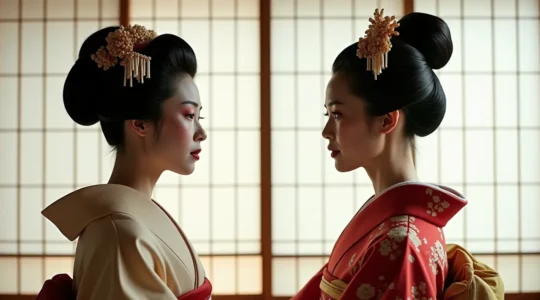
Geiko or Maiko? A Guide to Decoding the Subtle Differences
Distinguishing a maiko from a geiko is not about a simple visual checklist, but about reading a rich symbolic language of artistic mastery and status. A maiko’s vibrant, elaborate appearance signifies her apprenticeship, with every detail, from a trailing obi…
Read more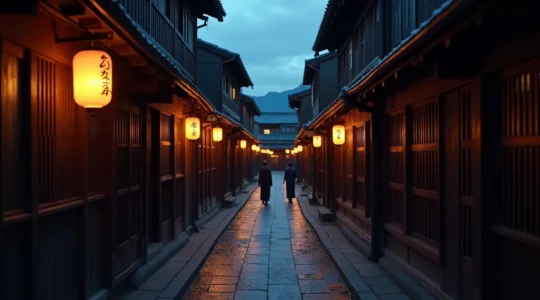
Gion’s Photography Ban: The Hard Line Between Public Streets and Private Lives
The new signs in Gion aren’t just about banning photos; they are a community’s last resort to reclaim human dignity from tourists treating entertainers like wildlife. The ban targets specific private residential roads as a response to years of escalating…
Read more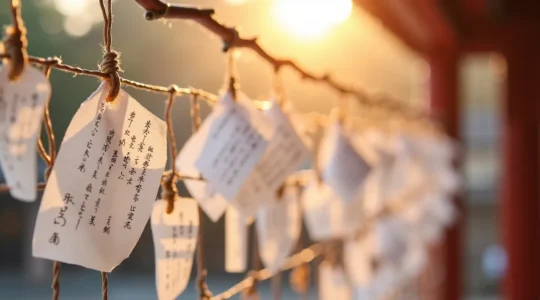
Omikuji Fortune: What to Do If You Draw a ‘Bad Luck’ Slip?
Contrary to the sinking feeling it causes, drawing ‘bad luck’ (凶, kyō) at Senso-ji Temple isn’t a curse; it’s a rare invitation to participate in an authentic purification ritual that most tourists miss. Senso-ji intentionally maintains a historically authentic, high…
Read more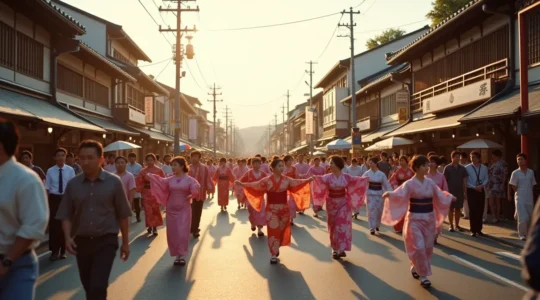
Gion vs. Awa Odori: A Strategic Guide to Choosing and Conquering Japan’s Greatest Summer Festivals
The choice between Gion and Awa Odori is a choice of participation: Gion is a majestic spectacle to be observed, while Awa Odori is an explosive dance you’re invited to join. Gion Matsuri demands logistical mastery for viewing its colossal…
Read more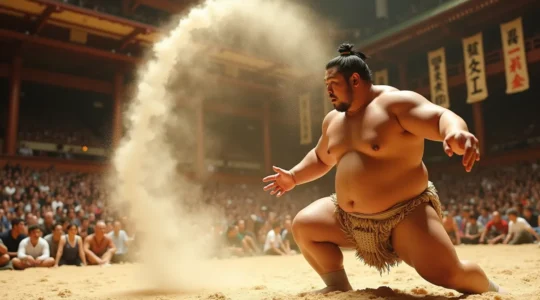
Box Seat or Chair? A Strategic Guide to Watching Sumo Without Leg Pain
In summary: Choosing the right seat involves a trade-off between the traditional atmosphere of floor-based box seats and the physical comfort of Western-style chair seats. Tickets for popular weekend matches sell out almost instantly; securing them requires a clear strategy…
Read more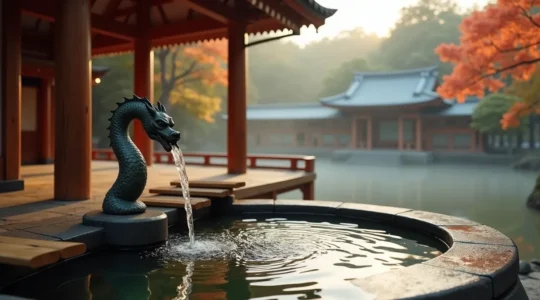
How to Use a Chozuya for Purification Without Looking Clumsy
In summary: The chozuya ritual is a symbolic act of purification required before entering the sacred space of a shrine. Use a single ladle of water to cleanse your left hand, then your right hand, then your mouth (indirectly), and…
Read more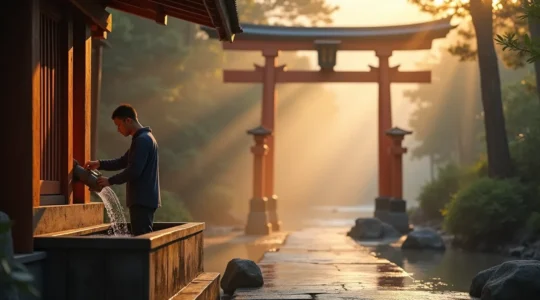
What to Do at a Shrine: The 2-Bow, 2-Clap, 1-Bow Rule Explained
In summary: The first step to showing respect is learning to distinguish a Shinto shrine (marked by a torii gate) from a Buddhist temple (marked by a larger, house-like sanmon gate). Before approaching the main hall, you must perform a…
Read more
Anticipating Needs: How Omotenashi Redefines Luxury Service
Omotenashi is not about being friendly; it’s a professional discipline where intentional distance and mutual respect create a flawless guest experience. True Omotenashi is proactive, anticipating needs before they are verbalized, rather than just reacting to requests. Excellence is driven…
Read more
When to Bow: Decoding the Angles for Business and Socializing
In summary: Bow depth is a precise language: a casual 15-degree bow is for greetings, while a 45-degree bow is required for apologies. Hand position is not arbitrary; it is gender-specific to convey formal respect (men at sides, women clasped…
Read more
How to Experience Zen Silence in Kyoto’s Crowded Temples
The frustration of seeking tranquility in Kyoto’s crowded temples stems from a tourist’s approach focused on sight alone. This guide reframes your visit through the eyes of a historian and pilgrim, revealing that true silence isn’t found by avoiding people,…
Read more