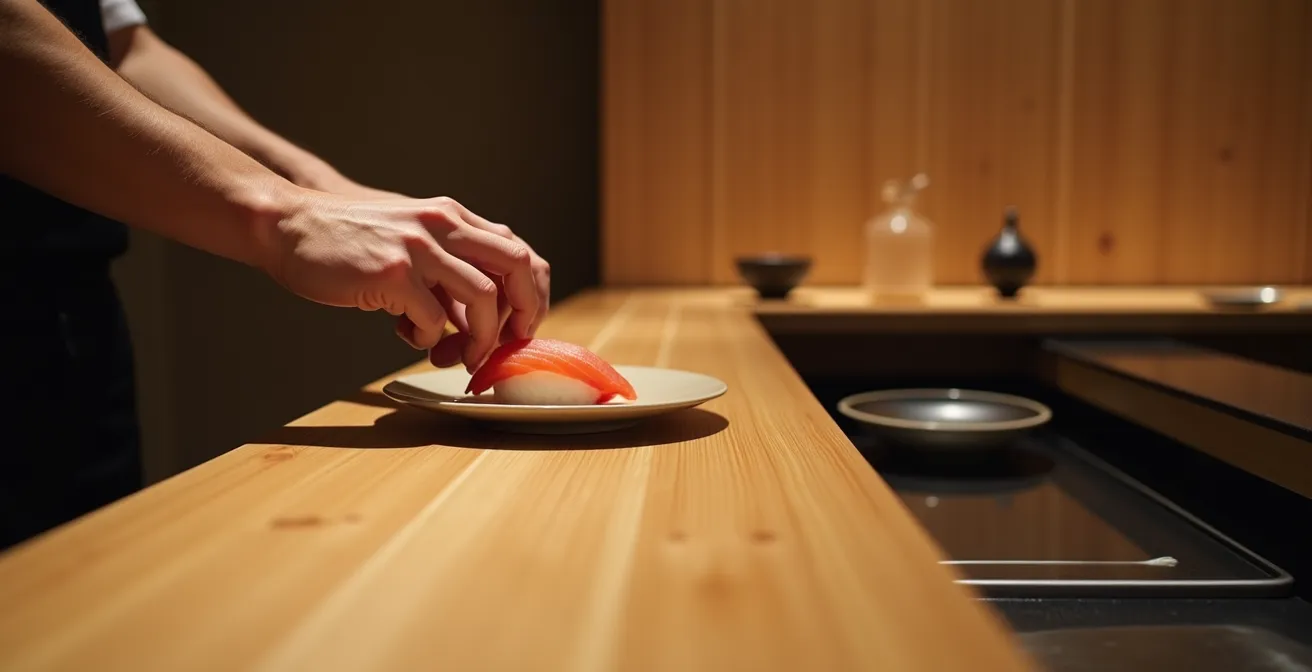
The ritual of an omakase counter is not meant to intimidate; it is the framework designed to help you fully appreciate the chef’s art.
- Each rule of etiquette exists to preserve the sushi’s perfect temperature, texture, and seasoning.
- Trusting the chef (omakase means “I leave it up to you”) is the core principle, from seasoning to the order of service.
Recommendation: Approach the experience not as a test of your knowledge, but as a culinary dialogue where your role is to mindfully enjoy each piece as the artist intended.
Stepping into a high-end sushiya can feel like entering a sacred space. The hushed tones, the focused movements of the itamae (sushi chef) behind a polished wooden counter, the quiet anticipation of the other diners—it all contributes to an atmosphere of profound respect. For many, this reverence can be tinged with anxiety. You’ve heard the whispers of unspoken rules: don’t add extra wasabi, eat the nigiri immediately, never dip the rice in soy sauce. These directives, often presented without context, can feel like a minefield of potential faux pas, turning a coveted dining experience into a source of tension.
But what if these “rules” are not rules at all? What if they are invitations—invitations to experience the sushi exactly as the chef, in a moment of extreme culinary precision, intended for you? Omakase etiquette is not a list of restrictions designed to make you feel inadequate. It is a shared language, a set of graceful gestures that allow you to participate in the art form and receive the full sensory impact of the chef’s creation. It is about shifting your mindset from a fear of “doing it wrong” to an active appreciation of “experiencing it right.” The goal is not to avoid insulting the chef, but to honor the meticulous craft that goes into every single piece.
This guide demystifies the traditions of the omakase counter by exploring the logic and philosophy behind them. By understanding the “why,” you will not only dine with confidence but also deepen your connection to the food and the artist who prepared it. We will journey through each stage of the meal, from the timing of your first bite to the final, symbolic piece, transforming you from an intimidated observer into a knowledgeable participant.
Summary: Mastering the Omakase Counter Experience
- Why You Must Eat the Sushi Immediately When It Hits the Plate?
- Dip or No Dip: Why Adding Wasabi Is an Insult to the Chef?
- Hand or Chopstick: Which Is the Correct Way to Eat Nigiri?
- Sake or Tea: What Should You Drink to Cleanse Your Palate?
- When Does the Omakase Actually End (The Tamago Signal)?
- Why Do Some Kyoto Restaurants Refuse First-Time Customers?
- The ‘Cold’ Service Myth: Why Professionalism Means Distance?
- Navigating Japanese Menus With Allergies: A Survival Strategy
Why You Must Eat the Sushi Immediately When It Hits the Plate?
The moment the itamae places a piece of nigiri on your plate or directly onto the counter, a clock starts ticking. This is not for dramatic effect; it is a matter of preserving the perfect sensory integrity of the sushi. The chef has served the piece at its peak, a fleeting harmony between the warmth of the seasoned rice and the cool, precise temperature of the fish (neta). This delicate balance is the heart of exceptional nigiri. Any delay compromises this perfection.
The ideal is to consume the piece as soon as it is served. Some experts specify that optimal sushi temperature balance lasts within 20 seconds. After this window, the rice begins to cool and harden, and the fat in the fish can change texture. As demonstrated in high-end restaurants like TAKU, the chef adjusts each piece moment-by-moment, ensuring the rice is never too warm and the fish never too cold. Taking photos, engaging in a long conversation, or simply hesitating breaks this carefully crafted thermal and textural contrast.
Think of it as receiving a perfectly timed gift. The chef’s work is complete only when you take that bite and experience the union of flavors and temperatures as intended. Eating immediately is the highest form of respect you can show for this precision, signaling that you are an active and engaged participant in the culinary dialogue.
Dip or No Dip: Why Adding Wasabi Is an Insult to the Chef?
The small bowl of soy sauce and mound of wasabi at an omakase counter can be a source of confusion. The instinct for many is to create a slurry for dipping. However, in a high-end sushiya, this is considered a significant misstep. The reason is simple: the sushi has already been perfectly seasoned by the one person who knows best—the chef. It arrives as a complete and balanced work of art.
As the editorial team at FlipJapanGuide explains, the process is meticulous. The chef applies precisely what is needed for that specific cut of fish. This is not a one-size-fits-all approach; a fatty piece of otoro will receive a different treatment than a leaner piece of akami.
Most omakase chefs will brush the piece with a perfectly balanced amount of their own soy sauce blend (called nikiri) and place a tiny amount of fresh wasabi under the fish before serving it. It arrives fully seasoned.
– FlipJapanGuide Editorial Team, What Is Omakase Sushi? Guide To Japan’s Ultimate Food Experience
The chef’s custom-brewed soy sauce, known as nikiri, is often infused with dashi, mirin, and sake, and is far more nuanced than standard commercial soy sauce. Adding more soy sauce would be like adding salt to a dish before tasting it at a fine dining restaurant—it presumes the chef’s seasoning is inadequate. The same principle applies to wasabi; a sliver of real, freshly grated wasabi is placed between the fish and rice, calibrated to complement, not overpower, the neta.
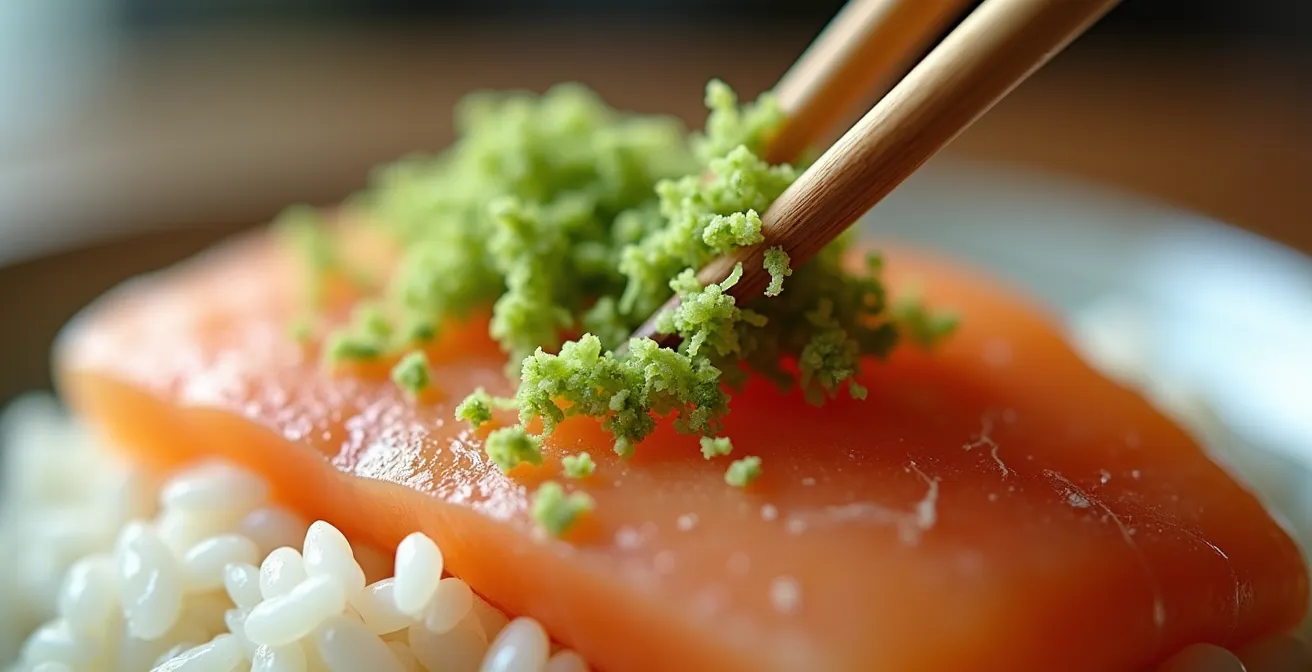
By trusting the chef’s palate, you are acknowledging their expertise and allowing the specific qualities of each fish to shine. The only exception is if the chef explicitly invites you to add a touch of soy sauce, which may occasionally happen with certain pieces.
Hand or Chopstick: Which Is the Correct Way to Eat Nigiri?
This is one of the most common questions, and the answer reveals much about the structure of nigiri itself. While both methods are acceptable, using your hands is often preferred and recommended by sushi masters for a very practical reason: it protects the integrity of the rice. The rice in high-quality nigiri is molded with just enough pressure to hold its shape, but remains light and airy, with individual grains intact. Clumsy chopstick handling can easily cause the delicate structure to collapse.
As top omakase chefs told the Michelin Guide, the hand-to-mouth method is a gentle and direct way to enjoy nigiri as it was intended. They suggest diners use their hands because the rice is so gently formed. This also facilitates the proper eating technique: turning the piece upside down to ensure the fish, not the rice, makes first contact with your tongue. This delivers the primary flavor of the neta directly to your palate. Submerging the absorbent rice in soy sauce (if you are ever instructed to dip) would make it oversalted and cause it to fall apart.
To eat nigiri with your hands properly, follow these steps:
- Pick up the nigiri with your thumb and middle finger on the sides, and your index finger on top of the fish.
- If dipping is required, gently turn the piece so only the fish side touches the soy sauce.
- Place the nigiri in your mouth, fish-side down on your tongue.
- Consume it in one single bite to experience the complete harmony of flavors and textures.
Chopsticks are not forbidden; they are simply reserved for other items. They are the correct tool for eating sashimi (sliced raw fish without rice) and for picking up slices of gari (pickled ginger) to cleanse your palate between courses.
Sake or Tea: What Should You Drink to Cleanse Your Palate?
What you drink during an omakase experience is as important as how you eat. The wrong beverage can easily overpower the delicate, nuanced flavors of the fish that the chef has worked so hard to highlight. The primary goal of your drink should be to cleanse and reset your palate between courses, preparing it for the next piece in the progression. Heavy, flavorful drinks like beer, cocktails, or bold red wines are generally discouraged as they will linger and interfere with the sushi.
The most respectful and effective choices are those that complement without competing. Green tea, sake, and water are the classic and recommended pairings. Each serves a slightly different but valuable function. This pairing guide helps clarify their roles in the meal.
As this comparative analysis of omakase beverages shows, the choice of drink serves a specific function.
| Beverage | Function | When to Drink | Effect on Palate |
|---|---|---|---|
| Green Tea (Agari) | Neutral reset | Between different fish types | Cleanses without flavor interference |
| Sake | Flavor enhancement | With specific pairings | Complements and enhances fish umami |
| Water | Pure cleanser | Throughout meal | Most respectful, neutral option |
| Beer/Cocktails | Not recommended | Avoid during omakase | Overpowers delicate fish flavors |
While sake can beautifully enhance the umami of certain fish, the safest and most traditional choice is green tea or water. A special tea, called agari, is often served at the end of the meal. This is more than just a final drink; it is a symbolic ritual that aids digestion and signals the conclusion of the savory portion of the experience, preparing you for the sweet finale.
When Does the Omakase Actually End (The Tamago Signal)?
An omakase meal follows a deliberate narrative arc, a “theatrical flow” that moves from lighter white fish to richer, oilier fish, and finally to a conclusion. Knowing when this performance is over can be confusing for first-timers. Traditionally, the signal for the end of the main courses is the serving of tamagoyaki, a sweet, layered Japanese omelet. Its slightly sweet flavor serves as a bridge between the savory courses and dessert, acting as a final, delicate bite.
When the cast-iron-like block of tamago appears, it signifies that the chef’s planned progression is complete. It is a moment of closure, often showcasing a different kind of skill from the chef, as a perfect tamagoyaki is a point of pride. However, traditions evolve, and some modern sushiya may use other signals. A simple temaki (hand roll) or a bowl of miso soup can also serve as the concluding piece.
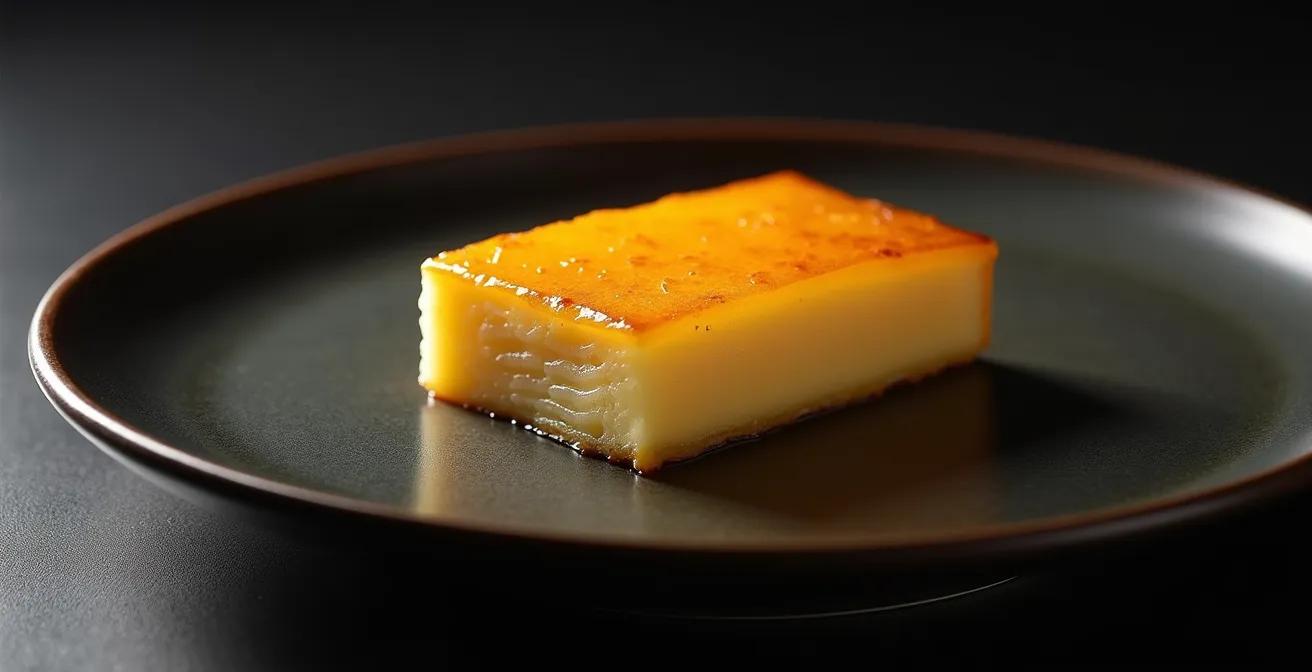
After this final planned piece, the chef will often ask, “Would you like anything else?” This is your opportunity. It is not a test. You can politely decline or request an encore of your favorite piece from the meal. Once you have finished, the correct way to express your gratitude is with the phrase, “Gochisousama deshita,” which translates to “Thank you for the feast.” It is a comprehensive expression of appreciation for the food, the preparation, and the hospitality.
Why Do Some Kyoto Restaurants Refuse First-Time Customers?
One of the most intimidating traditions, particularly in historic cities like Kyoto, is the policy of ichigen-san okotowari, which translates to “first-time customers refused.” This is not a gesture of snobbery but a deeply rooted cultural and economic practice. These exclusive establishments operate on a foundation of trust and established relationships, often built over generations. A referral from a regular patron (joren-san) acts as a voucher of good character, assuring the restaurant that the new guest will understand and respect its unique atmosphere and customs.
The economic reality is also a major factor. As the Michelin Guide points out, these elite restaurants are incredibly small operations. With extremely limited seating—often just 8 to 12 counter seats—and ingredients sourced daily to match the exact number of reservations, a single no-show can result in a significant financial loss and wasted precious ingredients. The referral system protects these small businesses from the devastating impact of last-minute cancellations. It ensures a dining room filled with trusted guests who value the experience, creating an intimate and reliable atmosphere for both the chef and the patrons.
For a foreign visitor, gaining access requires strategy and respect for this system. Here are some effective approaches:
- Book through the concierge of a high-end hotel, who often has established relationships with such restaurants.
- Use a specialized reservation platform designed for tourists that partners with these exclusive venues.
- Request an introduction from a Japanese business associate or a friend who is a regular patron.
- Build a relationship by first visiting for a more accessible lunch service, if one is offered.
The ‘Cold’ Service Myth: Why Professionalism Means Distance?
The service style at a high-end sushiya can sometimes be misinterpreted by Western diners as cold or distant. The chef is focused, the interactions may be minimal, and there isn’t the constant check-in one might be used to. This is not a lack of hospitality; it is the very essence of Omotenashi, the Japanese philosophy of service that is about anticipating needs without being intrusive. The “distance” is a profound form of respect.
The core idea of Omotenashi is to create a seamless and tranquil environment where the diner can focus entirely on the culinary experience without distraction. The chef’s concentration is on the food, and their silence allows you to concentrate on the flavors, textures, and aromas before you. It is a quiet confidence that the experience they are providing speaks for itself.
Omotenashi is the art of anticipating needs without intrusion. The ‘distance’ is a form of respect for the diner’s space and focus, not coldness.
– Japanese Dining Etiquette Expert, Japanese Dining Etiquette: What to Expect at an Omakase Restaurant
Furthermore, this professional distance is not always permanent. For regular patrons, the relationship evolves. As trust and familiarity grow over repeat visits, the service often becomes warmer and more personal. The chef may begin to remember your preferences, engage in more conversation about the sourcing of the fish, and a genuine dialogue about the craft can emerge. The initial formality is a foundation upon which a deeper, more personal relationship can be built, rewarding loyalty and sincere appreciation.
Key takeaways
- Omakase etiquette is not about restrictive rules but about mindful actions that enhance your appreciation of the chef’s art.
- Each piece of sushi is served in its final, perfected state; your role is to trust the chef’s seasoning and timing.
- Clear and advance communication, especially regarding allergies or seeking access to exclusive venues, is a fundamental sign of respect.
Navigating Japanese Menus With Allergies: A Survival Strategy
For those with food allergies, an omakase experience, where the menu is entirely in the chef’s hands, requires careful and proactive communication. An allergy is a serious safety concern, and it must be handled with the utmost respect for both your well-being and the chef’s ability to accommodate you. Simply showing up and announcing a severe allergy is not only dangerous but also puts the restaurant in an impossible position. Due to the nature of omakase, substitutions are extremely difficult.
The small scale of these restaurants is a critical factor. As a Michelin guide article on omakase etiquette notes, most omakase restaurants operate with only 8-12 counter seats, and ingredients are procured daily based on that exact number. The menu is a set, seasonal progression. The chef may not have alternative ingredients on hand, and the risk of cross-contamination in such a small, focused kitchen is a serious liability. For this reason, some high-end establishments may politely decline a reservation if they cannot safely accommodate a severe allergy.
To navigate this successfully, a clear protocol is essential. It is your responsibility to provide clear, specific, and timely information to the restaurant so they can make an informed decision about your safety. This is the most respectful approach for everyone involved.
Action Plan: Allergy Communication Protocol for Omakase
- Inform the restaurant of any allergies when making the reservation, not upon arrival.
- Follow up by providing a professionally translated allergy card in Japanese upon arrival.
- Be extremely specific (e.g., ‘allergy to shrimp and crab’ rather than a vague ‘shellfish allergy’).
- Clearly state the severity of the allergy, including any risk of cross-contamination.
- Gracefully accept if a restaurant declines the reservation; they are doing so for your safety.
Armed with this understanding, you are now prepared not just to dine, but to participate in one of Japan’s most revered culinary arts. Embrace the experience with confidence and curiosity, knowing that every gesture is part of a beautiful, shared dialogue.