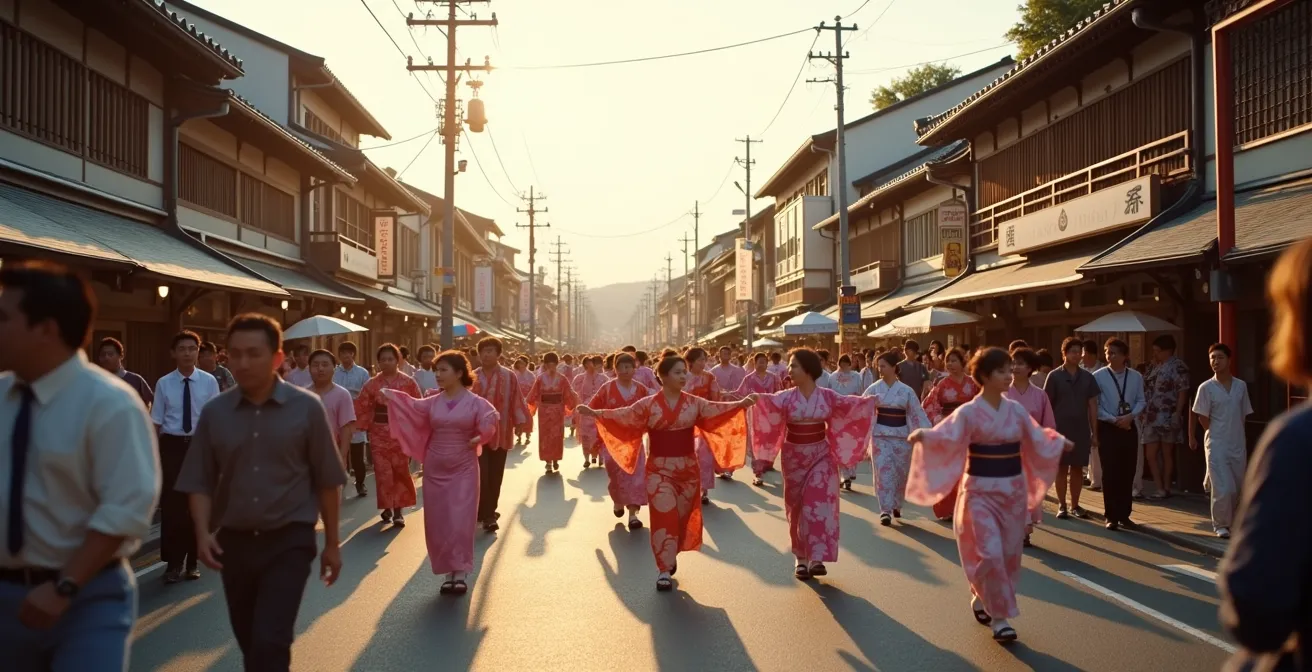
The choice between Gion and Awa Odori is a choice of participation: Gion is a majestic spectacle to be observed, while Awa Odori is an explosive dance you’re invited to join.
- Gion Matsuri demands logistical mastery for viewing its colossal floats in Kyoto’s gridlocked streets, rewarding meticulous planners.
- Awa Odori’s challenge is energetic and immersive, inviting you to learn the dance and join thousands of performers in Tokushima.
Recommendation: For meticulous observers of grand tradition, choose Gion. For active participants seeking exhilarating cultural immersion, choose Awa Odori.
The roar of the crowd, the scent of grilled squid, the vibrant sea of yukatas—nothing compares to the sensory overload of a Japanese summer festival. For the serious culture hunter willing to brave the heat, the choice often boils down to two titans: Kyoto’s stately Gion Matsuri and Tokushima’s explosive Awa Odori. Most guides will tell you one has giant floats and the other is a city-wide dance party. They’ll give you generic advice to “book early” and “drink water.” But they miss the crucial operational intelligence required to truly thrive, not just survive.
These aren’t just events to attend; they are complex logistical operations to navigate. What if the key to choosing wasn’t about which festival is “better,” but which logistical and experiential challenge you’re prepared to conquer? The real question is: are you a master observer orchestrating the perfect viewing spot from the sidelines, or an energetic participant diving headfirst into the heart of the choreographed chaos? This isn’t just a comparison; it’s a festival event coordinator’s playbook to ensure your experience is a triumph, not just a trial.
This guide provides the operational intelligence needed to master both festivals. We’ll break down everything from 8-month booking windows and crowd-evasion tactics to understanding the critical difference in their participation spectrum. Get ready to plan your festival campaign with the precision of a seasoned pro.
Summary: Gion vs. Awa Odori: A Strategic Festival Guide
- 6 Months Out: When Must You Book Hotels for Major Festivals?
- Touch or Watch: Can Tourists Participate in Carrying the Mikoshi?
- Yakisoba and Squid: Is Street Festival Food Safe to Eat in Summer?
- Fan and Water: How to Survive a Japanese Summer Festival Without Fainting?
- Bon Odori: How to Join the Circle Dance If You Don’t Know the Steps?
- Festival or Permanent: Where to Find the Best Yatai Stalls?
- Blue Tarps and Bento: How to Reserve a Spot Without Being Rude?
- Bus or Bike: What Is the Most Efficient Way to See Kyoto?
6 Months Out: When Must You Book Hotels for Major Festivals?
In festival planning, procrastination is the enemy of success. For events on the scale of Gion Matsuri and Awa Odori, the booking window isn’t a suggestion; it’s a hard deadline. Treating accommodation as an afterthought is the first step toward a stressful and overpriced trip. The core principle of your booking strategy should be to secure lodging 8-10 months in advance, especially for hotels located in the festival’s epicenter. This early-bird approach often unlocks better rates and more flexible cancellation policies directly from hotel websites, giving you a crucial strategic advantage.
If you’ve missed the initial window, don’t panic. The next phase of your operational plan begins six months out. This is the time to look at secondary cities. For Awa Odori in Tokushima, this means exploring options in nearby Naruto (a 40-minute train ride) or Takamatsu (one hour by train). This “hub-and-spoke” model not only guarantees a room but also provides a quiet retreat from the festival’s 24/7 energy. According to an Awa Odori accommodation strategy, many spectators stay in these adjacent cities, with some even commuting from Osaka, which is 2.5 hours away. As the date approaches, monitor hotel websites and cancellation aggregators for last-minute openings from tour group block-booking releases.
Your final option, particularly for Gion Matsuri, is to consider a traditional ryokan (Japanese inn). While often booked far in advance, checking availability two weeks out can sometimes yield surprising results, offering a deep cultural immersion away from the noisiest parade zones. This requires diligence but can be a rewarding final move in your accommodation chess game.
Touch or Watch: Can Tourists Participate in Carrying the Mikoshi?
A festival’s character is defined by its “participation spectrum”—the degree to which a visitor can move from passive observer to active participant. Gion Matsuri and Awa Odori exist on opposite ends of this spectrum. Gion Matsuri is, for the most part, a grand spectacle to be watched. The procession of the colossal Yamaboko floats and the carrying of the mikoshi (portable shrines) are highly ritualized events performed by designated neighborhood associations. For tourists, participation is limited to observing from the sidelines, absorbing the immense history and craftsmanship. It’s a profound but largely passive experience.
Awa Odori, conversely, is built on an ethos of radical inclusion. While the main parades feature elite dance troupes (ren), the festival’s true spirit is found in the Niwaka Ren—impromptu dance groups specifically for visitors. Anyone can join. No costume is required (though renting a yukata enhances the fun), and famous troupes offer free 15-minute lessons before the evening parades begin. You simply find one of the designated gathering points and jump in. The energy is infectious, and the barrier to entry is virtually non-existent.
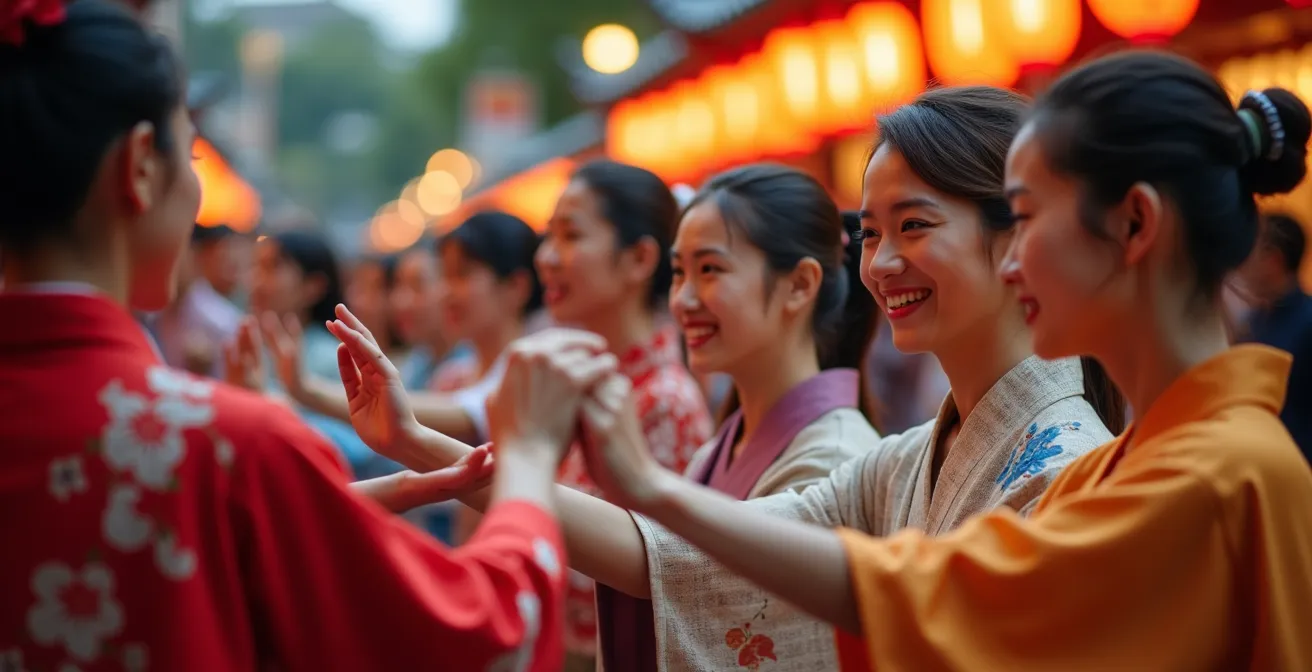
This stark difference is the most critical factor in your decision. Do you want to witness a thousand years of tradition unfold before you like a magnificent tapestry? Choose Gion Matsuri. Do you want to be woven into the fabric of the festival itself, dancing through the streets with thousands of strangers? Choose Awa Odori. One is an act of reverent observation; the other is an act of joyous, chaotic participation.
Yakisoba and Squid: Is Street Festival Food Safe to Eat in Summer?
Navigating festival food (yatai) in Japan’s sweltering summer requires a bit of “culinary triage.” While food safety standards in Japan are exceptionally high, the heat and crowds introduce variables. The key is to make informed choices based on observation. The first rule is simple: follow the locals. A long, fast-moving queue of Japanese festival-goers is the single best indicator of a stall’s quality and safety. It signals high turnover, meaning the food is being cooked fresh and not sitting out.
The second step is to assess the stall’s setup. For grilled items like yakitori (chicken skewers) or ika maruyaki (grilled squid), ensure they are being cooked to order over hot coals. For pre-prepared or cold items, like matcha-flavored treats popular at Gion Matsuri, look for refrigerated display cases. Despite concerns about summer heat, food safety is a point of pride, and a study of the Awa Odori festival notes that with over 1 million visitors attending annually, there are minimal food safety incidents reported. This demonstrates the robustness of the system.
Finally, consider the “depachika” alternative. If the heat and crowds become overwhelming, the basement food halls of major department stores offer a fantastic, air-conditioned alternative. You can buy high-quality bento boxes and snacks to enjoy as a picnic, combining restaurant-quality food with a front-row seat to the festivities. This tactical retreat allows you to refuel in comfort without missing the action.
This table compares some of the food highlights you can expect, helping you plan your culinary attack.
| Festival | Regional Specialty | Food Safety Indicator | Best Time to Eat |
|---|---|---|---|
| Gion Matsuri | Hamo (daggertooth pike conger) | High turnover at established stalls | Early evening (17:00-19:00) |
| Gion Matsuri | Matcha-flavored treats | Refrigerated display cases | Throughout the day |
| Awa Odori | Sudachi-flavored dishes | Local vendors with long queues | After sunset (20:00+) |
| Awa Odori | Tokushima craft beer | Licensed brewery stands | Evening performances |
| Both Festivals | Depachika alternatives | Department store quality control | Midday picnic option |
Fan and Water: How to Survive a Japanese Summer Festival Without Fainting?
Japanese summer is a formidable opponent, with humidity and temperatures often soaring. To a festival event coordinator, managing heat isn’t just about comfort; it’s a critical safety issue. The local population has perfected the art of staying cool, and your first step is to adopt their methods. Forget your standard travel kit; you need a Modern Japanese Festival Survival Kit. This includes cooling body sheets (like Gatsby’s Ice-Type), instant cooling sprays, and a portable misting fan, all readily available at convenience stores and variety shops like Don Quijote for around ¥1000.
Hydration is another area where you should follow local customs. Alternating between water and a Japanese sports drink like Pocari Sweat or Aquarius is essential. These drinks are specifically formulated to replenish the electrolytes lost through heavy sweating. Also, embrace mugicha (roasted barley tea), a caffeine-free, cooling beverage sold everywhere. Your clothing choice is also a factor; a loose-fitting, traditional cotton yukata offers superior airflow compared to the synthetic materials of many athletic wear brands.
The most important tactic, however, is the “strategic retreat.” During peak Gion Matsuri days, when temperatures can reach 35°C, Kyoto’s infrastructure adapts. A study of festival conditions highlights that the city sets up cooling stations and provides free water. Savvy attendees use the vast, air-conditioned underground shopping arcades and covered streets like the Teramachi arcade as transition corridors. As one analysis notes, simply using these passages between viewing spots can reduce direct heat exposure by up to 40%. Plan your day in blocks, with 20-minute AC breaks in a department store basement (depachika) or café between outdoor viewing sessions.
Bon Odori: How to Join the Circle Dance If You Don’t Know the Steps?
The essence of Awa Odori is captured in a line from its traditional song: “The dancers are fools and the watching fools are both fools, so why not dance?” This philosophy of inclusive joy is what makes it one of the most accessible major festivals in Japan. The fear of “not knowing the steps” is the biggest hurdle for most visitors, but the festival is designed to overcome it. The key is the “Three-Song Method,” a simple, observational learning technique that allows anyone to join with confidence.
The process is straightforward. First, find a Niwaka Ren (visitor dance group) and simply watch for one full repetition of the song. Your goal is to identify the basic 4-beat pattern and the core arm and foot movements. During the second repetition, “shadow practice” by subtly mirroring the movements while staying in place. This builds muscle memory without the pressure of performing. By the third repetition, you’ll have the basic rhythm. Step into the circle at a natural break, follow the person in front of you, and embrace imperfection. Enthusiasm is valued far more than precision.
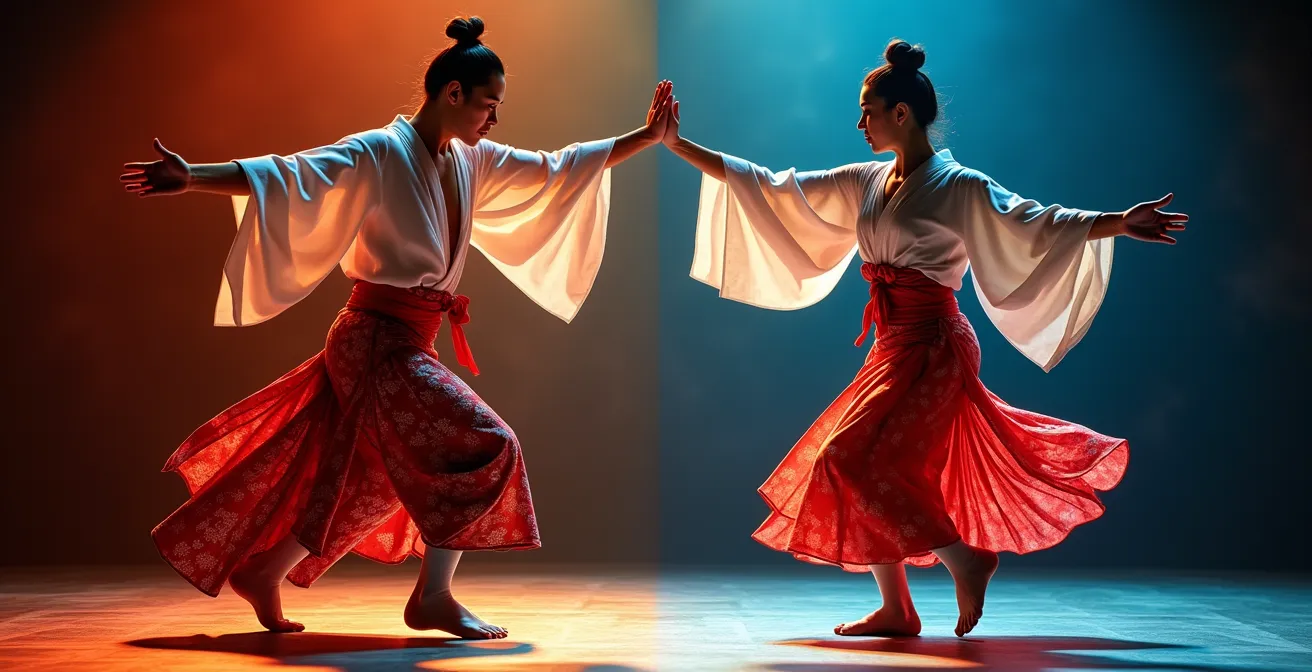
There are two main styles you’ll see: the energetic, low-squatting Otoko Odori (men’s dance) and the graceful, upright Onna Odori (women’s dance). While traditionally gendered, anyone can choose the style they prefer. If you’re still hesitant, remember that you can experience the dance year-round at the Awa Odori Kaikan in Tokushima, where troupes perform daily and are eager to teach visitors the steps in a more controlled environment.
Your Pre-Dance Readiness Checklist: Joining the Awa Odori
- Locate a Niwaka Ren: Identify the designated gathering points for visitor dance groups, usually marked with signs at major intersections in the evening.
- Attend a Free Lesson: Take advantage of the 15-minute tutorials offered by famous dance troupes before the main parade starts.
- Observe the “Three-Song Rule”: Watch one song to learn, mentally rehearse during the second, and confidently join on the third.
- Choose Your Style: Decide whether you’ll try the powerful, low-stance ‘Otoko Odori’ or the elegant, upright ‘Onna Odori’.
- Embrace the Spirit: Remember the festival’s motto. The goal is joyful participation, not perfect technique. Smile and follow the flow!
Festival or Permanent: Where to Find the Best Yatai Stalls?
The yatai, or street food stall, is a cornerstone of the festival experience, but not all yatai are created equal. As an event coordinator, it’s useful to distinguish between the ephemeral festival yatai and their permanent counterparts (found famously in cities like Fukuoka). The experience they offer is fundamentally different, catering to different desires. Festival yatai thrive on high-energy, ephemeral chaos. Their menus are a “greatest hits” of Japanese street food: yakisoba, takoyaki, okonomiyaki. The social dynamic is quick and transactional, designed for a crowd in constant motion. This is the place to soak in the pure, unadulterated festival atmosphere.
Permanent yatai, in contrast, offer an intimate, conversational neighborhood feel. The masters often specialize deeply in a single type of dish, perfecting it over decades. Here, the goal isn’t just to eat, but to build a rapport with the owner and fellow patrons. It’s a slower, more culinary-focused experience. The evolution of yatai during Tokushima’s Awa Odori illustrates this difference perfectly. Over 200 temporary stalls transform the riverside, with operators (often full-time restaurateurs) using the four-day event to test new recipes and generate massive revenue. This business model prioritizes volume and novelty over the long-term relationships of permanent stalls.
So, where should you go? It depends on your mission. If you want to be swept up in the festive whirlwind and sample a wide variety of classic snacks, the festival yatai are your destination. If you are a culinary explorer on a quest for the single best bowl of ramen and a story to go with it, seek out a city’s permanent yatai district on a non-festival day.
| Aspect | Festival Yatai | Permanent Yatai (e.g., Fukuoka) |
|---|---|---|
| Atmosphere | High-energy, ephemeral, festive chaos | Intimate, conversational, neighborhood feel |
| Menu Range | Greatest hits: yakisoba, takoyaki, okonomiyaki | Deep specialization in single dishes |
| Price Point | ¥500-800 per item | ¥800-1500 per dish |
| Social Dynamic | Quick transactions, constant movement | Build rapport with the master over time |
| Best For | Festival atmosphere seekers | Culinary depth explorers |
Blue Tarps and Bento: How to Reserve a Spot Without Being Rude?
Securing a prime viewing spot for a parade like Gion Matsuri’s Yamaboko Junkō is a competitive sport governed by unwritten rules of social etiquette. The iconic blue tarp is the primary tool, but using it incorrectly is a major faux pas. The cardinal rule is one of modesty: never take more space than you need. A tarp of 2 square meters is considered appropriate for a group of four. Sprawling out a massive tarp hours in advance is seen as inconsiderate. Furthermore, a tarp can’t be left unattended; someone from your group must remain physically present to hold the space.
Timing is also crucial. For the Gion Matsuri’s main parade, which starts around 9 AM, arriving at 7 AM is standard. Arriving any earlier to claim a spot is generally frowned upon by locals. A clever alternative strategy is the “second row standing” technique. Let others commit to sitting for hours, then arrive 10-15 minutes before the parade and find a spot to stand directly behind them. You get a great view without the long wait. For those who value certainty over savings, both festivals offer paid seating along the parade routes, which can be reserved in advance through the local tourism association.
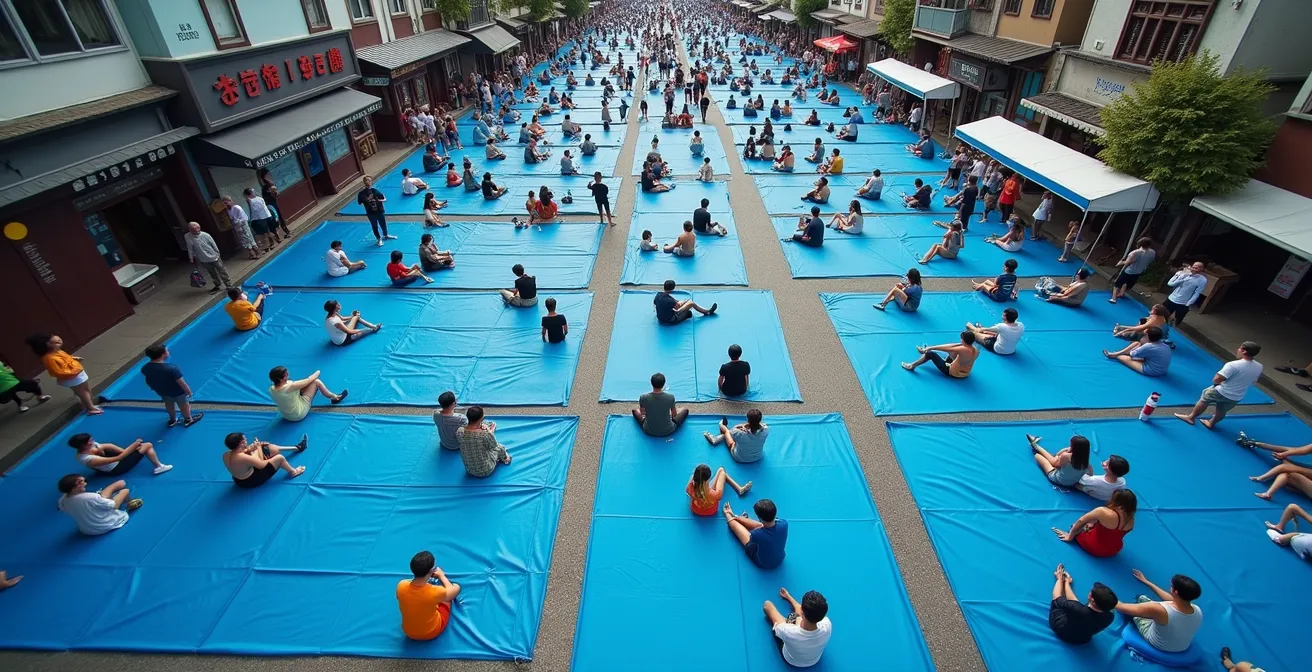
Finally, master the art of navigating through dense, seated crowds. A simple, repeated “Sumimasen” (excuse me) accompanied by a slight bow and a clear intention to pass through an opening is the only acceptable way. Pushing or showing impatience will be met with silent disapproval. Respecting this delicate social choreography is as important as any other part of your festival plan.
Key Takeaways
- Gion vs. Awa Odori: The core choice is between Gion’s magnificent spectacle of observation and Awa Odori’s exhilarating offer of mass participation.
- Plan Ahead, Win the Day: Your festival success is determined months in advance. Securing accommodation 8-10 months out is a non-negotiable first step.
- Embrace Local Survival Tactics: Conquer the summer heat by adopting the Japanese survival kit: cooling wipes, sports drinks, and strategic retreats into air-conditioned spaces.
- Etiquette is Everything: From reserving a viewing spot with a blue tarp to joining a dance circle, understanding and respecting local customs is paramount.
Bus or Bike: What Is the Most Efficient Way to See Kyoto?
During a major festival, a city’s normal transportation logic collapses. In Kyoto during Gion Matsuri, this isn’t just an inconvenience; it’s a state of “festival gridlock” that can derail an entire day if you’re not prepared. The sheer volume of people—as over 1 million people attend Gion Matsuri annually—brings the city center to a standstill. Bus routes are completely rerouted, major subway stations become dangerously overcrowded, and pedestrian-only zones pop up without warning. During peak parade days, attempting to use a bus or bike in the festival core is futile.
The most efficient mode of transport becomes, counter-intuitively, your own two feet. A case study on Gion Matsuri’s transport management found that walking is often 50% faster than any wheeled vehicle within the main festival zone. The winning strategy is the “Perimeter Approach.” Use Kyoto’s excellent subway or train system to travel to a station on the edge of the festival area, such as Kyoto Station or Higashiyama. From there, you walk. But don’t just walk down the main, jam-packed thoroughfares. The real secret is to use the smaller backstreets that run parallel to them, like Pontocho Alley and Kiyamachi-dori, which serve as secret corridors through the chaos.
The dancers are fools and the watching fools are both fools, so why not dance?
– Traditional Awa Odori Song, Awa Odori Festival Traditional Lyrics
This strategic mindset—choosing participation at Awa Odori or mastering observation at Gion—is the ultimate tool in your kit. It transforms you from a mere tourist into a savvy festival operator, capable of navigating the chaos to find the moments of pure, unforgettable magic at the heart of Japan’s summer.
Whether you choose to witness the grandeur of Gion’s floats or lose yourself in the rhythm of the Awa dance, your success hinges on this level of strategic planning. Apply this event coordinator’s mindset to your choice, and you are guaranteed a spectacular and rewarding experience.