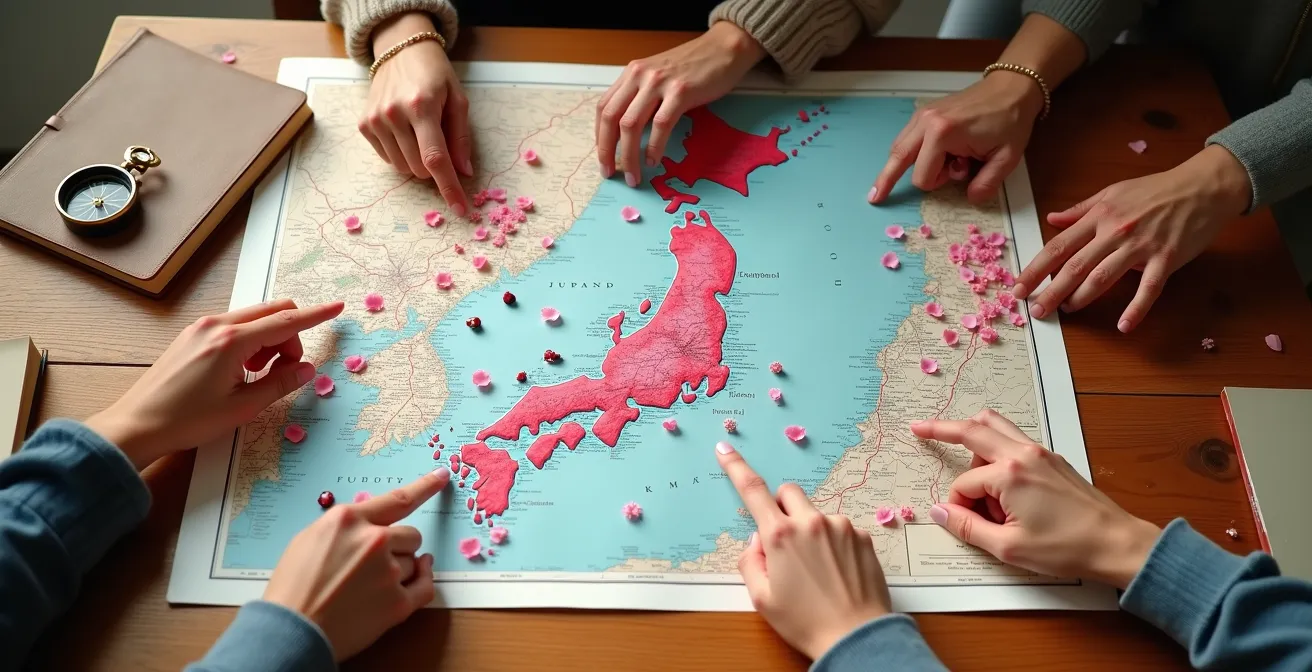
Successfully viewing cherry blossoms isn’t about luck or a perfect forecast; it’s about building a flexible, data-driven itinerary designed to pivot.
- Peak bloom is a volatile, 5-10 day window. Relying on a single location and date is a high-risk strategy.
- Building in contingencies—like knowledge of late-blooming varieties and alternative viewing spots—is non-negotiable.
Recommendation: Choose a centrally located travel hub, like Osaka, and be prepared to travel north or south based on real-time conditions, not just the initial forecast.
The dream is a familiar one: you stand beneath a canopy of pale pink petals, a gentle breeze creates a soft blizzard of blossoms, and you capture that perfect, once-in-a-lifetime photo. The reality for many travelers, however, is a frustrating chase against time, arriving a week too early to see only bare branches, or a few days too late to find petals already carpeting the ground. This anxiety is the core challenge of planning a trip around Japan’s ephemeral cherry blossoms.
Conventional wisdom advises travelers to simply “check the forecast” and book for late March. This approach treats the sakura front as a predictable, monolithic event. As a meteorologist and planner, I can tell you this is a recipe for disappointment. The front’s velocity is variable, influenced by microclimates and sudden weather shifts. A single warm week can accelerate the bloom by days, while a cold snap can stall it completely. Relying on a forecast made months or even weeks in advance is like navigating with an outdated map.
The true key to success lies not in finding a more accurate forecast, but in abandoning the idea of a fixed plan altogether. This guide is built on a different philosophy: contingency planning. We will treat your trip not as a single destination, but as a flexible mission. You will learn to think like a strategist, using geographic arbitrage, phenological diversity, and crowd-management tactics to maximize your chances of witnessing the *mankai* (full bloom), no matter what the weather does. This is how you shift from anxiously hoping for the best to confidently executing a plan designed for reality.
This article provides a complete strategic framework for your mission. We will cover everything from on-the-ground etiquette to high-level seasonal risk assessment, equipping you with the data and contingency plans needed to successfully chase the sakura front.
Summary: A Strategic Guide to Chasing the Sakura Front
- Blue Tarps and Bento: How to Reserve a Spot Without Being Rude?
- Day or Night: Why Is Yozakura Lighting a Completely Different Experience?
- Missed the Somei Yoshino: Where Can You Find Late-Blooming Yaezakura?
- Shinjuku Gyoen or Local River: Where to Avoid the Worst Sakura Crowds?
- What to Do If Rain Washes Away the Blossoms Before You Arrive?
- Cherry Blossoms or Fall Foliage: Which Season Offers Better Value?
- Asakusa or Shinjuku: Which District Matches Your Personality?
- Gion or Awa Odori: Which Summer Festival Is Worth the Crowds?
Blue Tarps and Bento: How to Reserve a Spot Without Being Rude?
Once you’ve located the bloom, the next challenge is securing a space for *hanami* (flower viewing). The iconic image of blue tarps spread under the trees can be intimidating for visitors. The core principle of reserving a spot is active presence. An unattended tarp is considered abandoned. Contrary to the stereotype of the junior employee holding a spot for hours, a survey reveals that only 1.1% of new recruits are ever assigned this task. In reality, groups take turns, ensuring someone is always present.
To participate respectfully, you must follow a clear set of unwritten rules. Arriving very early, typically between 6 and 7 AM on a peak weekend, is standard practice. Lay down your tarp, but only claim the space you realistically need for your group; over-claiming is a significant social faux pas. If you are invited to join another group, always remove your shoes before stepping onto their tarp, just as you would when entering a home.
Finally, the most critical rule is to leave no trace. Japan’s public spaces are famously clean because of a collective commitment to personal responsibility. This is especially true during hanami. Pack your own trash bags and carry all of your garbage with you when you leave. Do not expect to find an abundance of public bins. A successful hanami is not just about enjoying the flowers, but about contributing to the pleasant, respectful atmosphere for everyone. Here are the essentials:
- Arrive early or send a delegate: Especially on weekends, arriving at dawn is necessary to secure a prime spot with a blue tarp.
- One person must always be present: A tarp left unattended is fair game for others or may be removed by park staff.
- Take only what you need: Be modest in the space you claim. A compact area for your group is more respectful than a sprawling, empty tarp.
- Remove your shoes: If you step on anyone else’s picnic sheet, take your shoes off as a sign of respect.
- Pack it in, pack it out: Bring your own trash bags and take every last bit of garbage with you.
By adhering to these simple customs, you transition from a tourist to a respectful participant in one of Japan’s most beloved cultural traditions.
Day or Night: Why Is Yozakura Lighting a Completely Different Experience?
Viewing cherry blossoms is not a singular activity; the experience transforms dramatically after sunset. Daytime hanami is often a bright, festive, family-oriented affair. Parks are filled with the sounds of children playing and large groups enjoying elaborate bento boxes. The beauty is expansive and communal. However, as dusk settles, a completely different mood emerges with *yozakura* (night sakura). It’s a strategic alternative that offers a unique aesthetic and often, a reprieve from the densest daytime crowds.
The change is driven by the lighting. Uplighting on the trees isolates the blossoms against the dark sky, creating an ethereal, almost magical atmosphere. The pale petals seem to float in the darkness, and the experience becomes more intimate and contemplative. Popular spots like Tokyo’s Ueno Park transform from a bustling festival ground into a series of romantic, softly lit vignettes. The focus shifts from the grand landscape to the delicate, transient beauty of the individual flowers, amplified by the dramatic contrast.
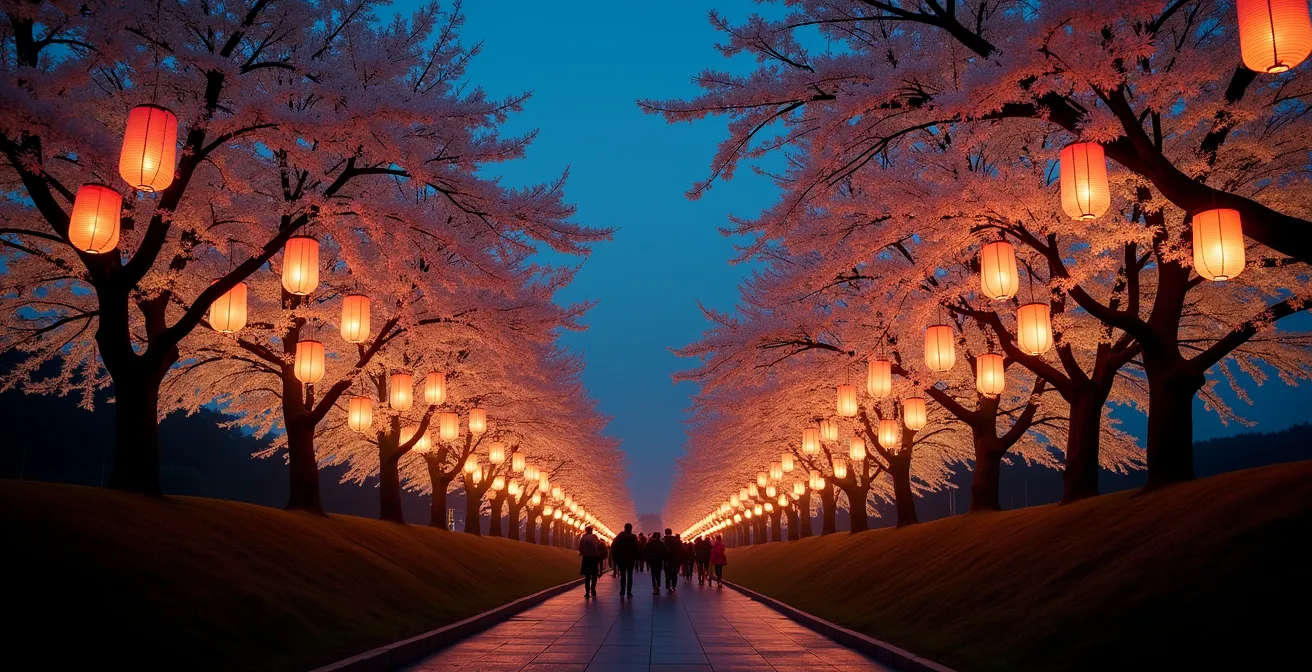
As the illustration shows, the use of traditional paper lanterns and strategic spotlights creates an entirely different visual language. This shift in atmosphere also brings a shift in demographics. The daytime family picnics give way to couples and groups of colleagues unwinding after work. For the traveler, yozakura is more than just a novelty; it’s a second opportunity. If your day was spent battling crowds or traveling, the evening offers a more peaceful and focused way to appreciate the blossoms.
Don’t think of yozakura as a lesser alternative to daytime viewing. It is a distinct and equally profound cultural experience that highlights the fleeting nature of the blossoms in a uniquely poignant way.
Missed the Somei Yoshino: Where Can You Find Late-Blooming Yaezakura?
One of the biggest anxieties for sakura chasers is missing the peak bloom of the most common variety, the Somei Yoshino. This is where a core tenet of our strategy comes into play: phenological diversity. Japan is home to over a hundred varieties of cherry trees, many of which bloom on a different schedule. If you’ve missed the main wave, your trip is not a failure; you simply need to pivot to a different target.
The most important of these are the *Yaezakura*, or double-flowered cherry trees. These varieties, with their lush, multi-layered blossoms, are nature’s own contingency plan. According to seasonal bloom patterns, these can blossom a full 3 to 4 weeks after the Somei Yoshino peak, creating a second chance. This predictable delay allows for a “Baton Pass” strategy. You can follow the Somei Yoshino north through Japan and, if you miss them, effectively turn around and catch the later Yaezakura bloom on your way back south.
This creates a much wider window of opportunity. For example, after the main bloom finishes in Tokyo in late March or early April, you can find stunning Yaezakura in the same city through mid-to-late April. Places like Shinjuku Gyoen in Tokyo are invaluable as they cultivate over 65 different varieties, creating a rolling bloom season that lasts for more than a month. If all else fails, the final frontier is Hokkaido, where the blossoms often don’t peak until early May. This staggered timeline is your greatest asset.
Your Pre-Trip Bloom-Chasing Checklist
- Identify Primary & Secondary Targets: List your must-see Somei Yoshino spots and backup Yaezakura or northern locations.
- Map Your Logistics: Inventory your transport options (e.g., activated JR Pass) and potential day-trip routes from your home base.
- Assess Bloom Cohesion: Check if your target locations have single-variety groves (high risk) or multi-variety parks like Shinjuku Gyoen (low risk).
- Evaluate Emotional Resilience: Identify non-sakura activities (museums, food tours) for each location to ensure trip satisfaction even if the bloom is missed.
- Create a Pivot Plan: Define clear “if-then” scenarios. “If the Tokyo forecast accelerates, then we will immediately day-trip to Utsunomiya (north).”
Instead of seeing a missed peak as a failure, view it as a signal to activate the next phase of your plan, turning your attention to the beautiful and resilient late-bloomers.
Shinjuku Gyoen or Local River: Where to Avoid the Worst Sakura Crowds?
The biggest threat to a serene sakura experience isn’t the weather; it’s the crowds. Famous locations like Ueno Park in Tokyo or the Philosopher’s Path in Kyoto can become so congested that they detract from the beauty of the blossoms. A successful strategy, therefore, must include crowd mitigation. This involves a trade-off between the iconic status of a location and the quality of the experience it offers.
A data-driven comparison reveals clear patterns. The most famous public parks have extreme crowds, especially on weekends, requiring a pre-dawn arrival to secure a spot. In contrast, ticketed gardens and less-famous local spots offer a more controlled environment. This is not just about the number of people, but the nature of the experience.
This table breaks down the strategic trade-offs between different types of viewing locations. As the data from a detailed comparison of Tokyo viewing spots illustrates, timing and location choice are your primary tools for managing crowds.
| Location Type | Peak Crowds | Best Timing | Experience |
|---|---|---|---|
| Famous Parks (Ueno, Yoyogi) | Extreme on weekends | Weekday 7 AM | Festive, competitive |
| Ticketed Gardens (Shinjuku Gyoen) | Managed, capped | Opening time | Controlled, peaceful |
| Local Rivers | Moderate | Anytime weekday | Community-focused |
| Cemetery Parks (Yanaka) | Light | Flexible | Contemplative, quiet |
The “Hidden Gem” strategy involves actively seeking out locations in the latter categories. For instance, Yanaka Cemetery in Tokyo offers a stunning central avenue of cherry trees—the “Sakura-dori”—but without the crowds, as picnicking is not the main activity. This provides all the visual splendor with a peaceful, contemplative atmosphere perfect for photography and quiet appreciation. Choosing a ticketed, managed garden like Shinjuku Gyoen also acts as a crowd-control mechanism, as entry fees and capacity limits create a more pleasant experience than a free-for-all public park.
The goal is to find your personal equilibrium between iconic scenery and comfortable viewing. Often, the most memorable experiences are found along a quiet local river, far from the selfie sticks of the major tourist hubs.
What to Do If Rain Washes Away the Blossoms Before You Arrive?
This is the scenario every sakura chaser dreads: a storm arrives just before you do, stripping the trees bare. From a strategic perspective, this is not the end of the journey. The period immediately after peak bloom, especially after rain, offers its own unique and celebrated forms of beauty. Your contingency plan must include learning to appreciate these alternative phases.
The first is *hanafubuki*, or the “petal blizzard.” A gentle breeze through rain-heavy branches can create a mesmerizing shower of falling petals, an experience many Japanese poets consider the most beautiful moment of the season. It is a powerful, tangible reminder of the transient nature of life, which is the philosophical heart of hanami. Rather than lamenting the absence of a full canopy, the goal is to position yourself to experience this magical, snow-like flurry.
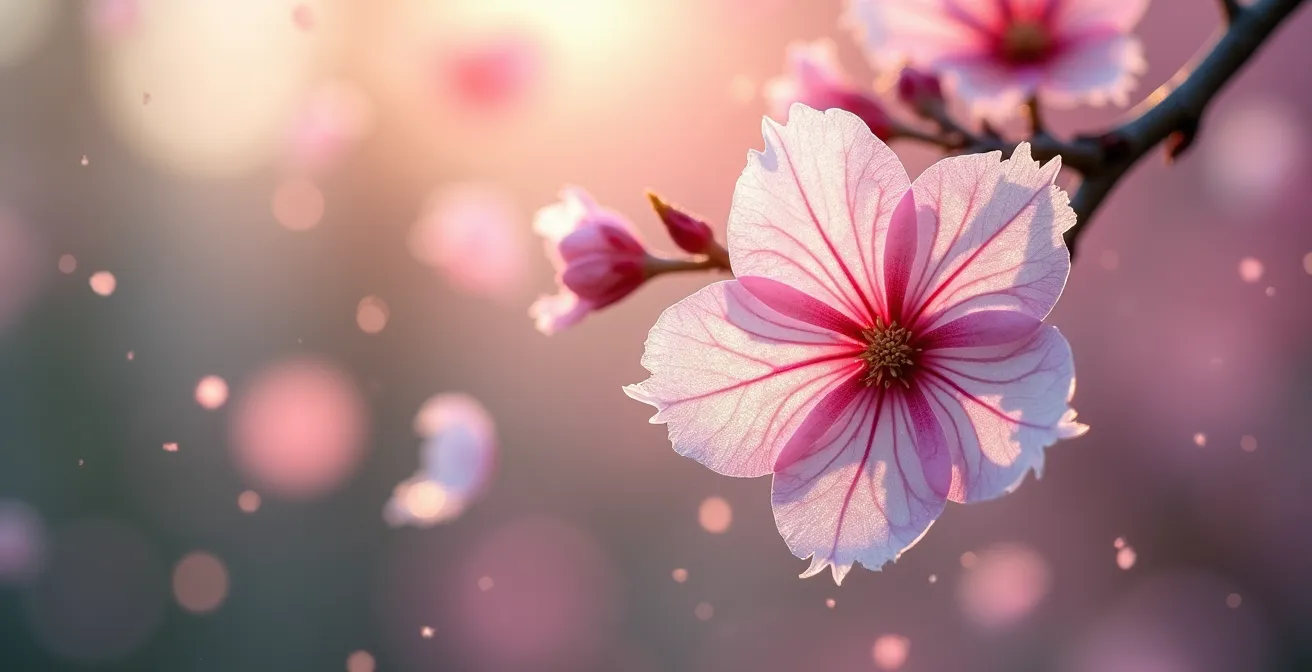
If the petals have already fallen, the next phase to seek is *hana-ikada*, or “flower rafts.” This phenomenon occurs when fallen petals collect on the surface of ponds, castle moats, and quiet rivers, forming dense pink carpets that float on the water. It’s a stunningly beautiful and highly photogenic event in its own right. Furthermore, your rainy-day recovery plan can move indoors. Here are some key pivots:
- Seek the Petal Blizzard: Find a park with a slight breeze and experience the magic of *hanafubuki*.
- Visit a *Depachika*: Head to the basement food halls of major department stores, which will be filled with beautiful sakura-themed sweets and seasonal delicacies.
- Find a Cafe with a View: Many cafes are strategically located with large windows overlooking parks, allowing for a comfortable, indoor hanami experience.
- Hunt for Flower Rafts: Seek out ponds and rivers to witness *hana-ikada*, the beautiful carpets of fallen petals on the water.
- Check Botanical Gardens: Some botanical gardens have greenhouses with protected, climate-controlled environments that may feature cherry blossoms or other beautiful flora.
Ultimately, a successful trip is not defined by seeing every single blossom on the branch, but by appreciating the beauty of the sakura in all its phases, from full bloom to the final, floating petal.
Cherry Blossoms or Fall Foliage: Which Season Offers Better Value?
For the strategic traveler, choosing a season is an exercise in risk management. Both spring’s cherry blossoms (*sakura*) and autumn’s foliage (*koyo*) are stunning, but they present vastly different logistical challenges and risk profiles. Understanding these differences is crucial for managing expectations and deciding which gamble you’re more comfortable taking.
The primary factor is the length of the peak viewing window. Cherry blossoms are notoriously fleeting. The *mankai* (peak bloom) in any given city lasts for a very short period, making it a high-stakes endeavor. Fall foliage, by contrast, is a much more forgiving pursuit. The colors change gradually and the peak viewing season can last for several weeks, offering significantly more flexibility.
This higher risk in spring translates directly into higher costs and lower flexibility. The short, high-demand window for sakura causes accommodation and flight prices to skyrocket. This comparative table, informed by data on seasonal travel trends, starkly illustrates the trade-offs a planner must consider. The insights from a detailed seasonal comparison make the choice clear from a risk perspective.
| Factor | Sakura (Spring) | Koyo (Fall) |
|---|---|---|
| Peak Window | 5-10 days | 3-4 weeks |
| Predictability | Low – weather dependent | High – gradual change |
| Crowd Density | Extreme, stationary | Moderate, mobile |
| Booking Flexibility | Last-minute required | Months in advance possible |
| Cost Premium | 200-300% normal rates | 150-200% normal rates |
From a purely logistical and financial standpoint, autumn offers better value. The longer season and higher predictability reduce the stress of planning and the risk of complete disappointment. However, there is an undeniable magic to the sakura season. The “chase” itself is part of the appeal for many. As one expert notes, the fast-moving sakura front creates a beautiful wave you can follow across the country. The decision ultimately comes down to your personal tolerance for risk versus reward. Are you seeking a beautiful, relatively relaxed trip, or are you energized by the challenge of a high-stakes, ephemeral event?
Choosing spring is choosing to embrace the chaos. If you do, you must commit to the flexible, contingency-based approach outlined in this guide to mitigate the inherent risks.
Asakusa or Shinjuku: Which District Matches Your Personality?
While the personality of a district is important, a more strategic question for a sakura chaser is: which district provides the best logistical base for contingency operations? Your choice of accommodation is not just about atmosphere; it’s about building “geographic arbitrage” into your plan. The right home base acts as a force multiplier, giving you the flexibility to pivot quickly as bloom conditions change on the ground.
For example, an analysis of travel patterns reveals that Osaka can be a more strategic entry point and base than Tokyo for some itineraries. Its central location allows a traveler to strike north towards Kyoto or south towards Wakayama with equal ease, responding to real-time bloom reports. This flexibility is your most powerful tool. Within a city like Tokyo, the same logic applies. A base in Shinjuku, for instance, offers more than just access to Shinjuku Gyoen’s diverse cherry tree collection. It is a major transportation hub with direct train lines, like the Odakyu Line to Hakone, allowing for easy day trips to chase mountain sakura if you arrive too early for the city’s main bloom.
An Asakusa base, while rich in traditional culture, offers a different set of contingencies. It provides quick access to the Sumida River for boat-based viewing and is a short trip from the quieter, less-crowded Yanaka area. The key is to analyze your district not just for its sights, but for its escape routes. A well-placed base supports your ability to improvise. Your district-based contingency plan should look something like this:
- Shinjuku Base (Early Bloom): Utilize major rail hubs to take a day trip to warmer coastal areas like Atami or Izu.
- Shinjuku Base (Late Bloom): Access Shinjuku Gyoen’s 65+ varieties, which provide a rolling bloom season.
- Asakusa Base (Rainy Day): Explore the extensive covered Nakamise-dori shopping arcade and Senso-ji Temple.
- Asakusa Base (Overcrowded): Escape to the nearby, peaceful Yanaka district for a more contemplative experience.
- Universal Strategy: Keep a Japan Rail Pass activated for spontaneous, longer-distance day trips north or south to chase the front.
Think of your hotel not as a final destination, but as a launchpad. Its value is measured by the number of options it gives you when your initial plan needs to change.
Key Takeaways
- Embrace Flexibility: Treat your itinerary as a set of options, not a fixed schedule. A central base and a rail pass are your best tools.
- Plan for Contingencies: Your plan must include what to do if you’re too early, too late, or if it rains. Know your late-blooming varieties and alternative spots.
- Manage Crowds Strategically: Avoid the biggest crowds by visiting famous spots on weekday mornings or prioritizing ticketed gardens, local rivers, and yozakura (night viewing).
Gion or Awa Odori: Which Summer Festival Is Worth the Crowds?
While this guide focuses on spring, valuable lessons for managing the sakura season can be drawn from Japan’s other major cultural events, like its famous summer festivals. The strategies used to navigate massive events like Kyoto’s Gion Matsuri are directly applicable to the challenges of hanami. The core lesson is to focus on the ancillary events, not just the single peak moment.
Just as savvy festival-goers often skip the main parade in favor of smaller, more atmospheric neighborhood processions, a smart sakura chaser will look beyond the five most famous parks. The Gion Matsuri’s month-long schedule teaches that the “event” is a season, not a single day. Similarly, the sakura season is distributed across hundreds of temples, riverside paths, and local parks, each offering a beautiful and often less crowded experience. The distributed nature of cherry trees across the entire country gives you a flexibility that a single-venue festival does not.
Ultimately, this comes down to a cold, hard assessment of probabilities. The data is stark: the peak sakura bloom window is a mere 5 to 10 days on average for the main Somei Yoshino variety. In contrast, the fall foliage season offers a peak color window of three to four weeks. This single metric from meteorological analysts quantifies the immense pressure of the spring season. Acknowledging this high-risk, high-reward reality is the first step toward building a successful strategy. You are not planning a relaxing vacation; you are planning a logistical operation to intercept a fast-moving, ephemeral target.
With a mindset focused on flexibility, contingency, and strategic risk-taking, you can move beyond simply hoping to see the blossoms and instead execute a plan designed to make it happen. Begin building your flexible itinerary today, mapping out your potential pivots and backup plans to transform anxiety into confident anticipation.