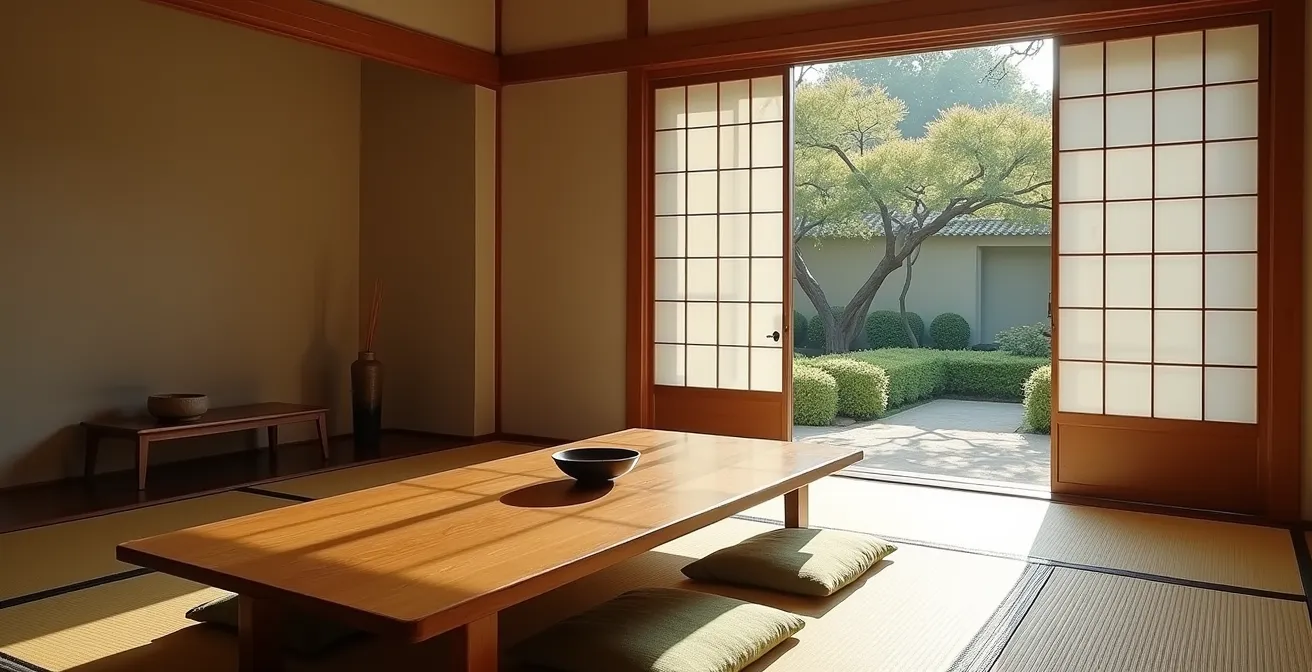
Accessing Kyoto’s elite ryotei isn’t about finding a loophole; it’s about understanding you are entering a centuries-old ecosystem of trust.
- The ichigen-san okotowari (first-timers refused) policy is not elitism, but a system to protect the quality of service and atmosphere for established patrons.
- Your hotel concierge is not just a booking agent but a guarantor, vouching for you with their own reputation and enabling true omotenashi.
Recommendation: The key to entry is demonstrating cultural literacy—from your attire to your conversation—before you even arrive, showing you are a guest who understands the privilege.
Behind a discreetly unmarked door in a quiet Gion alley lies a world of unparalleled culinary artistry, a place where every detail, from the seasonal scroll in the entryway to the hand-thrown ceramic dish, tells a story. For the uninitiated, this world—the world of Kyoto’s referral-only ryotei—can feel impenetrable. Many guides offer the standard advice: “use a five-star hotel concierge” or “you must have a personal introduction.” While correct, these statements only describe the lock; they do not provide the key.
The truth is that gaining access is not a simple transaction. It is an initiation. This guide is not about how to ‘get in’, but how to understand the delicate ecosystem of trust, anticipation, and cultural literacy that defines these hidden establishments. To dine at a top-tier ryotei is to be accepted into a relationship, one that extends from you to your concierge, and from the concierge to the restaurant’s proprietor. It is a system built not on exclusivity for its own sake, but on the preservation of a perfect, seamless experience.
By understanding the ‘why’ behind the rules, you transform from a mere tourist into a respected guest. We will explore the deep-rooted historical reasons for this guarded culture, the true role your concierge plays as your ambassador, the subtle yet crucial nuances of etiquette, and ultimately, what you are truly paying for in a multi-course kaiseki masterpiece. This is your entry into the hidden world of Japanese high dining, navigated with discretion and genuine appreciation.
This guide will walk you through the essential knowledge needed to navigate this exclusive world with confidence and grace. The following sections break down each component, from the philosophy of refusal to the art of conversation.
Summary: A Concierge’s Playbook for Kyoto’s Most Exclusive Restaurants
- Why Do Some Kyoto Restaurants Refuse First-Time Customers?
- How to Use Hotel Concierges to Unlock Exclusive Reservations?
- Kimono or Suit: What Is the Appropriate Attire for a Ryotei Dinner?
- Kaiseki Pricing: What Are You Actually Paying For in a $500 Meal?
- When to Engage in Conversation With Your Private Server?
- Ichigen-san: Can Regular Tourists Eat at a Gion Tea House?
- Why Omotenashi Is About Anticipation, Not Just Reaction?
- How to Behave at a High-End Omakase Counter Without Tension
Why Do Some Kyoto Restaurants Refuse First-Time Customers?
The policy of ichigen-san okotowari, or “refusing first-time customers,” is often misinterpreted as simple snobbery. In reality, it is a deeply ingrained cultural practice rooted in the preservation of trust and atmosphere. It is not about keeping people out; it is about protecting the experience for those within the circle. This system ensures that every guest present understands the unwritten rules of conduct, guaranteeing a serene and respectful environment for all patrons, many of whom are conducting sensitive business or personal affairs.
This tradition is not a modern invention. The system’s origins trace back to the early 17th century, when feudal lords sought discreet venues for secret meetings, away from the prying eyes of the government. As a case study on Japanese fine dining notes, these historic meetings established ryotei as sanctuaries where absolute trust and discretion were the paramount currency. Today, this legacy continues, with politicians and top executives using these same quiet rooms for crucial negotiations, relying on the restaurant to provide an environment of complete privacy and security.
By requiring an introduction from a trusted regular, the ryotei is not judging your status, but rather seeking assurance. The introducer effectively vouches for the new guest’s character and understanding of the decorum required. This ecosystem of trust is the foundation upon which the entire experience is built, allowing the staff to perform their duties with the grace and anticipation that defines Japanese hospitality, without the need for explicit instructions or corrections.
How to Use Hotel Concierges to Unlock Exclusive Reservations?
For a discerning international traveler, the most reliable key to the world of referral-only dining is the concierge at a luxury hotel. However, it is a mistake to view this person as a mere booking agent. A top-tier concierge is your ambassador and, most importantly, your guarantor. When they make a call on your behalf, they are not just passing along a request; they are staking their personal reputation and the hotel’s long-standing relationship with the establishment.

This is a critical distinction. Some establishments refuse reservations from first-time visitors entirely, and the regular customers who provide introductions risk their own future reservation privileges if their guests behave poorly or cancel without ample notice. The concierge steps into this role of the trusted regular. They are vouching that you will honor the reservation, arrive on time, and conduct yourself with the appropriate level of cultural literacy. Their introduction is a signal to the ryotei that you are a guest who will respect their traditions.
To use this service effectively, communication is key. Be prepared to discuss your preferences, your budget, and any dietary restrictions with your concierge in detail. The more information they have, the better they can match you with a suitable restaurant and, in turn, provide the restaurant with a profile that allows them to anticipate your needs. This is the first step in experiencing true omotenashi, where service begins long before you arrive. The concierge is not just securing a table; they are initiating you into the trusted network.
Kimono or Suit: What Is the Appropriate Attire for a Ryotei Dinner?
While a formal kimono is not expected of foreign guests, the question of attire at a ryotei goes far beyond a simple dress code. Your clothing and presentation are the first signals you send about your respect for the establishment, its craft, and its other patrons. The guiding principle is understated elegance and a consideration for the environment. A business suit or a smart semi-formal outfit is always a safe and appropriate choice. Avoid anything overly casual such as shorts, t-shirts, or sandals.
However, true cultural literacy lies in the details that are often overlooked. As you will be removing your shoes upon entry, it is essential to wear socks or stockings. Arriving barefoot is considered impolite, and a pair of clean, simple socks (traditionally white) shows thoughtfulness. Upon removing your shoes, turn them to face outwards toward the exit; this is a small gesture of courtesy, though the staff will almost certainly rearrange them perfectly for your departure. Furthermore, consider removing large rings or bracelets. This is a practical measure to avoid accidentally scratching the delicate, often priceless, lacquerware and ceramic dishes that are an integral part of the meal.
Perhaps the most crucial, yet invisible, aspect of your attire is scent. A respected Japanese dining guide offers a clear rule on this matter:
The absolute ban on perfumes, colognes, or strongly scented hair products is crucial as they interfere with the delicate aromas of the food and the subtle incense of the room.
– Japanese dining etiquette guide, Savor Japan restaurant guide
The kaiseki experience is a multi-sensory journey where delicate fragrances are carefully orchestrated. A strong personal scent disrupts this balance and is seen as disrespectful to both the chef’s creation and the other guests’ experience.
Kaiseki Pricing: What Are You Actually Paying For in a $500 Meal?
The bill at a high-end ryotei can be substantial, often leaving guests wondering what justifies the cost. According to industry data on kaiseki, dinners at top establishments can range from ¥5,000 to over ¥40,000 per person, before drinks. Understanding the price requires looking beyond the plate and appreciating that you are paying for an immersive cultural experience—a meticulously curated “narrative of the meal.”
This narrative is built on generations of artistry. As the Michelin Guide explains, Kyoto’s ryotei culture is rooted in the 16th-century *wabi-sabi* philosophy of tea master Sen no Rikyu. The experience is an investment in Kyoto’s cultural memory, where every element is refined. This includes not just the food, but the architecture, the view of a private garden, and the kimono-clad proprietress (okami) who oversees every detail with practiced grace.
The tangible and intangible elements you are investing in are numerous. The cost encompasses a wide range of factors that come together to create a seamless experience:
- Exquisite Tableware: Many dishes are served on antique ceramics or lacquerware that are masterpieces in their own right, some created by designated Living National Treasures of Japan.
- Peak Seasonality: Ingredients are sourced at their absolute peak, a window that might last only a few days a year, representing the ephemeral beauty of the season.
- The Chef’s Craft: You are paying for a chef’s decades of relentless training and the generational knowledge passed down through a disciplined apprenticeship.
- The Environment: The cost includes the maintenance of historic buildings, pristine tatami rooms, and meticulously manicured private gardens that provide a tranquil escape.
- Personalized Service: With limited seating, often just a few private rooms, the high staff-to-guest ratio ensures a level of personal attention that is simply not possible in a standard restaurant.
When to Engage in Conversation With Your Private Server?
In the quiet, intimate setting of a ryotei private room, the silence can sometimes feel intimidating. Knowing when to speak and when to appreciate the quiet is a fine art. The key is to understand the role of your server, the nakai-san. They are more than just a server; they are a guide and a storyteller. A traditional dining guide puts it perfectly:
The server (nakai-san) or chef acts as a cultural narrator – they are there to tell the story of each dish.
– Traditional dining guide, Your Secret Japan
Your cues for conversation should come from them. When the nakai-san presents a new course, they will often offer a brief explanation of the ingredients, their origin, or the seasonal significance of the dish. This is your opening. Wait for them to finish and linger for a moment; this is an unspoken invitation for questions. Polite inquiries about the dish—”Where does this particular fish come from?” or “What does this flower represent?”—show engagement and appreciation. Avoid personal questions and focus the conversation on the food, the tableware, or the room’s art, such as the calligraphy scroll (kakejiku).
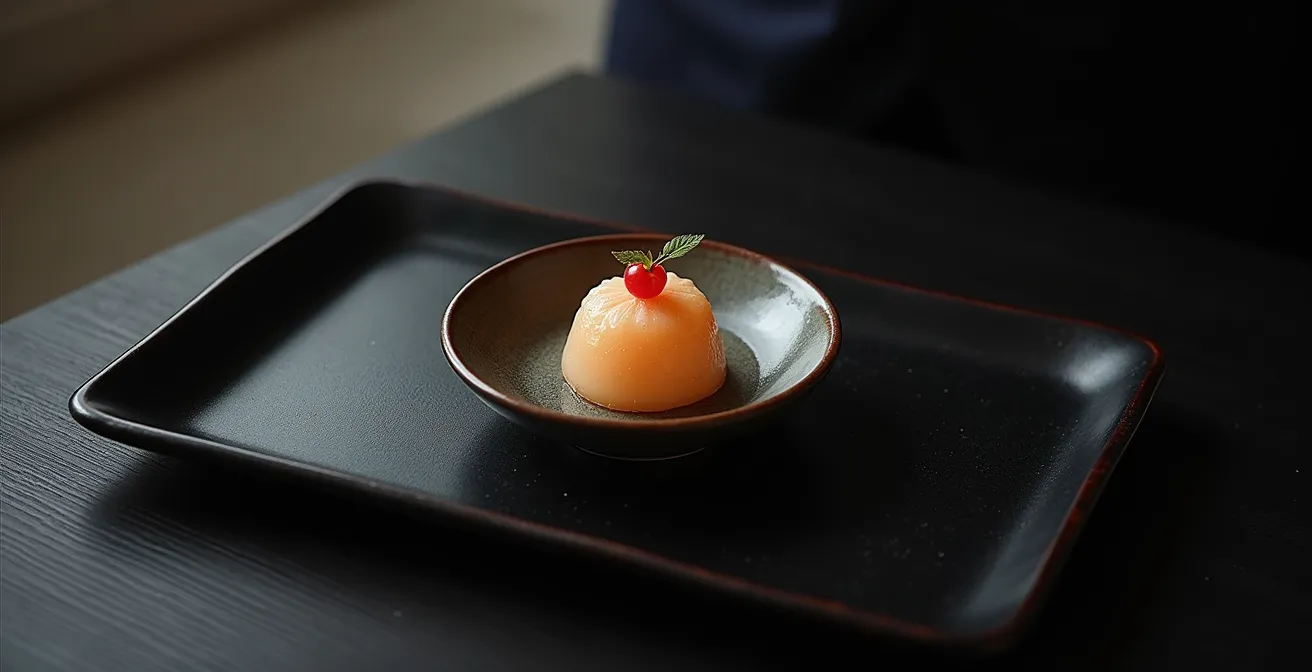
Equally important is the concept of Ma (間), which can be translated as “negative space” or “meaningful silence.” Do not feel the need to fill every moment with chatter. The pauses are part of the experience, allowing you to focus on the flavors, textures, and aesthetics of the meal. A quiet, appreciative nod or a simple “oishii” (delicious) can be more eloquent than a stream of questions. Discreet confidence is shown not by dominating the conversation, but by knowing when to listen and observe.
Ichigen-san: Can Regular Tourists Eat at a Gion Tea House?
While the terms are sometimes used interchangeably by visitors, it is crucial to understand the distinction between a ryotei and an ochaya (teahouse). A ryotei is a high-end traditional restaurant focused on the culinary experience of kaiseki. While many are exclusive, access is possible through the proper channels. An ochaya, on the other hand, is primarily a venue for geisha (or geiko, as they are known in Kyoto) entertainment. The food served is often catered from a nearby ryotei.
The exclusivity of an ochaya is an order of magnitude higher than that of a ryotei. According to tourism industry analysis, true ochaya maintain an absolute ichigen-san okotowari policy that is nearly impossible for a tourist—or even most Japanese locals—to bypass without a formal, long-standing relationship with a trusted patron. The billing system itself, where patrons pay a monthly tab rather than per visit, is built on decades of trust.
For a visitor seeking an authentic cultural experience involving geisha, this does not mean it is out of reach. It simply requires adjusting expectations. Instead of aiming for the impossible private dinner at an ochaya in Gion, a far more practical and equally enriching option is to book a package through a reputable tour operator or hotel. These experiences often include a guided walking tour, a fine Japanese meal, and a performance by a maiko (apprentice geisha) or geiko. These events, which typically cost between ¥15,000 and ¥20,000, are specifically designed for visitors and provide a wonderful and respectful glimpse into the “flower and willow world” without breaching the sacred trust of the private ochaya system.
Why Omotenashi Is About Anticipation, Not Just Reaction?
Omotenashi is often translated as “Japanese hospitality,” but this simple phrase fails to capture its depth. It is not a reactive form of service where staff respond to your requests. It is a proactive, deeply considerate philosophy of anticipating a guest’s needs before the guest is even aware of them. It is the art of providing seamless comfort without being intrusive. This level of service is the ultimate reward for navigating the referral-based system.
Concrete examples of omotenashi in a ryotei setting are subtle yet profound. It might be a staff member noticing you are left-handed and discreetly adjusting your chopstick placement before the meal begins. It could be having a taxi waiting for you at the exact moment you are ready to leave, simply because they noticed a light rain had started to fall. As a guide from the esteemed Hotel Chinzanso Tokyo notes, this consideration is expressed not only through service but “in the quality of the dishes and their presentation, as well as in the interior design and the way that it blends in with the natural environment.”
This “psychic” level of service is only possible because of the ecosystem of trust. The referral system is not a barrier; it is the enabler of perfect omotenashi. Here is how the two are inextricably linked:
- Your concierge provides the restaurant with a detailed guest profile, including preferences and potential needs.
- The staff studies this information before your arrival to begin the process of anticipation.
- For returning guests, records of previous visits inform even more subtle adjustments to service.
- The endorsement from the introducer ensures the guest is prepared for the experience, allowing service to flow without hesitation.
Ultimately, the trust network allows the staff to serve with a quiet confidence, knowing the guest will appreciate the unspoken gestures that define a truly luxurious experience.
Key Takeaways
- The referral system is a mechanism for trust that enables unparalleled omotenashi, not simple exclusion.
- The price of a kaiseki meal covers not just food, but the art, history, and seasonal narrative embodied in the experience.
- Your conduct, from attire to conversation, is a demonstration of cultural literacy and respect for the craft.
How to Behave at a High-End Omakase Counter Without Tension
An omakase dinner, where you entrust the chef completely with your meal, is an intimate and often silent performance. The key to enjoying it without tension is to understand that you are a respectful audience to a master craftsman. The phrase omakase itself translates to “I trust you, chef,” and this dynamic is the core of the experience. The chef observes your reactions to each piece and calibrates the next course based on both the freshest ingredients available and your perceived palate. Your role is not to direct, but to receive.
The counter is the chef’s stage. Your behavior should reflect an appreciation for their intense focus and skill. This means saving questions for natural pauses in their work, not while they are swiftly forming a piece of nigiri or applying a delicate brush of soy sauce. Simple gestures of respect, like a nod and a quiet “gochisōsama deshita” (thank you for the meal) at the conclusion, speak volumes.
To ensure a smooth and respectful experience, follow this simple checklist of essential etiquette. This is not about rigid rules, but about facilitating a harmonious interaction between you, the chef, and the other guests.
Your Action Plan for a Seamless Omakase Experience
- Wait to Start: Before taking your first bite, acknowledge your fellow diners and the chef with a quiet “itadakimasu” (I gratefully receive).
- Eat Immediately: Consume each piece of sushi as soon as the chef places it before you. It is served at the perfect temperature and texture, which diminishes with every passing second.
- Use Soy Sauce Sparingly: The chef has already seasoned each piece to what they believe is perfection. If a small dish for soy sauce is provided, use it minimally.
- Respect the Chef’s Rhythm: Avoid interrupting the chef during moments of intense concentration. The best time for a brief question is when they are cleaning their station or engaging with you directly.
- Express Gratitude: Conclude your meal with a sincere “gochisōsama deshita” to thank the chef and staff for their hard work and artistry.
Now that you understand the principles, the final step is to approach this experience not as a customer, but as a respectful guest. Begin your journey by engaging with a trusted concierge, armed with the cultural literacy to fully appreciate the art of the ryotei.
Frequently Asked Questions About High-End Japanese Dining
What if I don’t like something served during omakase?
In Japanese dining etiquette, not wasting food is of paramount importance. While you are entrusting the chef, it is acceptable to politely inform them of any serious allergies or aversions at the very beginning of the meal. Once a piece is served, it is considered impolite to leave it uneaten.
Should I use my hands or chopsticks for sushi?
Both are perfectly acceptable at a high-end omakase counter. Traditionally, nigiri sushi was considered a finger food, and using your hands is often the cleanest way to eat it in one bite. However, if you are more comfortable with chopsticks, that is completely fine and respected.
How do I pace myself during the meal?
The pacing is controlled entirely by the chef. They will observe your progress and prepare the next piece when they see you are ready. There is no need to rush or to linger excessively. Simply follow the chef’s rhythm and enjoy the flow of the meal as it is presented.