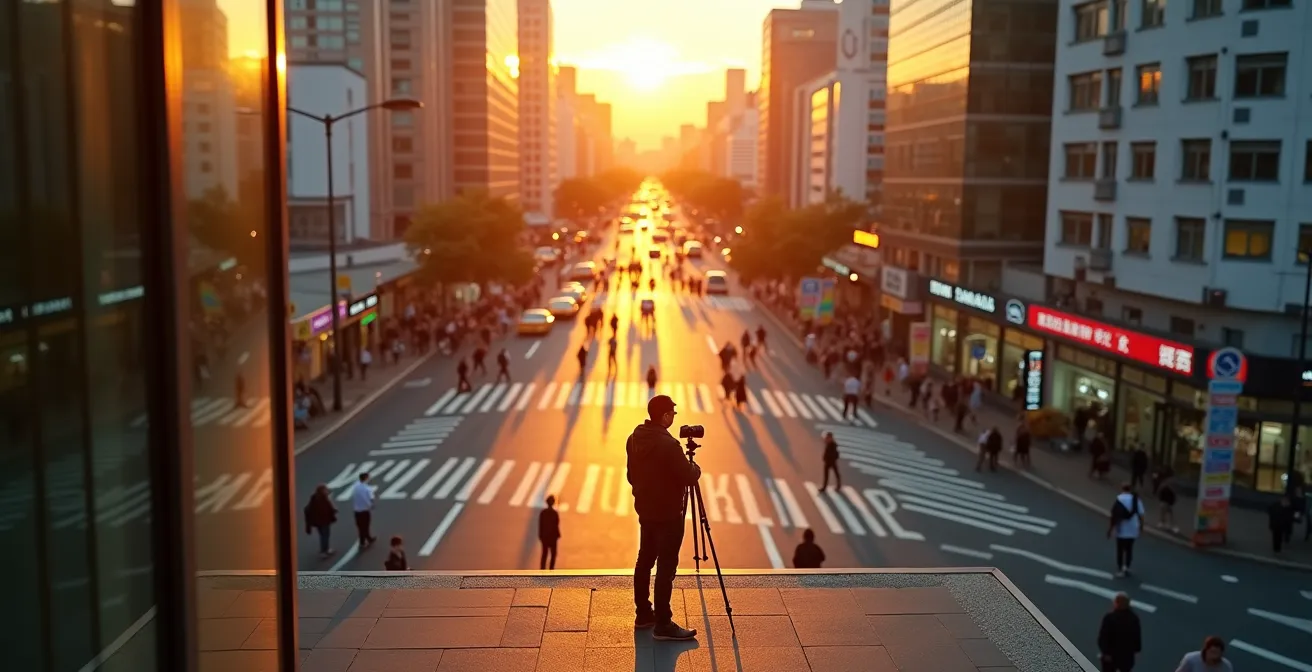
Getting the perfect shot at Japan’s iconic spots isn’t about luck; it’s about insider knowledge that separates you from the tourist hordes.
- Decode the specific fashion scenes of Shibuya’s main towers to match your vibe.
- Learn to spot and avoid common nightlife scams to keep your night on track.
- Find the best views and hidden gems by understanding the effort-to-view ratio.
Recommendation: Swap generic tourist checklists for a “scene-scouting” mindset to truly capture the energy and style of each location.
That photo of a lone figure swallowed by a tidal wave of humanity at Shibuya Crossing? It’s the ultimate visual trophy of any trip to Japan. For trend-chasers and young creatives, capturing this organised chaos is more than a holiday snap; it’s a statement. But the standard advice—”go to the Starbucks,” “be careful”—is outdated and won’t get you the shot that stands out on your feed. It won’t help you navigate the neon-drenched grid like you belong there.
The truth is, mastering Japan’s iconic urban landscapes requires more than just a good camera. It’s about understanding the cultural currents that flow through these spaces. It’s about knowing which fashion tower has the subculture you’re looking for, how to sidestep the tourist traps that plague the nightlife zones, and why the most famous meeting spot is actually the worst. This isn’t just about surviving the scramble; it’s about owning it.
So, what if the key wasn’t just finding a high vantage point, but decoding the entire grid? This guide is your secret manual. We’re moving beyond the clichés to give you the tactical knowledge for scene-scouting in Shibuya and beyond. We’ll break down the fashion demographics, give you real strategies for nightlife safety, reveal the best places to meet your friends, and even take a trip to Osaka to understand its most famous symbol. Get ready to see these iconic spots through the eyes of a trend-spotter.
This article breaks down the essential insider knowledge you need to navigate Japan’s most famous youth culture hubs. The following sections provide a complete roadmap, from decoding fashion and nightlife in Shibuya to understanding the symbolic power of Osaka’s most famous landmark.
Summary: A Trend-Spotter’s Guide to Japan’s Iconic Photo Ops
- Parco or 109: Which Tower Has the Fashion You Are Looking For?
- Clubbing in Shibuya: How to Stay Safe in the Red Light Zones?
- Meet at Hachiko: Why Is It the Worst Place to Find Your Friends?
- Shibuya Sky: Is the Rooftop View Worth the Ticket Price?
- Nonbei Yokocho: How to Find the Tiny Bars Beside the Train Tracks?
- Skytree or Gov Building: Which Tokyo View Is Best (and Free)?
- Is Loitering in the Konbini Parking Lot Acceptable at Night?
- Glico Man Sign: Why Is This Runner the Symbol of Osaka?
Parco or 109: Which Tower Has the Fashion You Are Looking For?
Shibuya is the undisputed heart of Tokyo’s youth fashion, a place where trends are born and broadcast to the world. But treating it as one giant shopping district is a rookie mistake. The two titans of the area, Shibuya 109 and Parco, cater to wildly different crowds and aesthetics. A successful shopping trip—and capturing the right style for your photos—starts with a “demographic decode” to figure out which tower speaks your language. This isn’t just about clothes; it’s about finding your tribe in a city where recent tourism statistics show that 29.5% of spending goes directly to shopping.
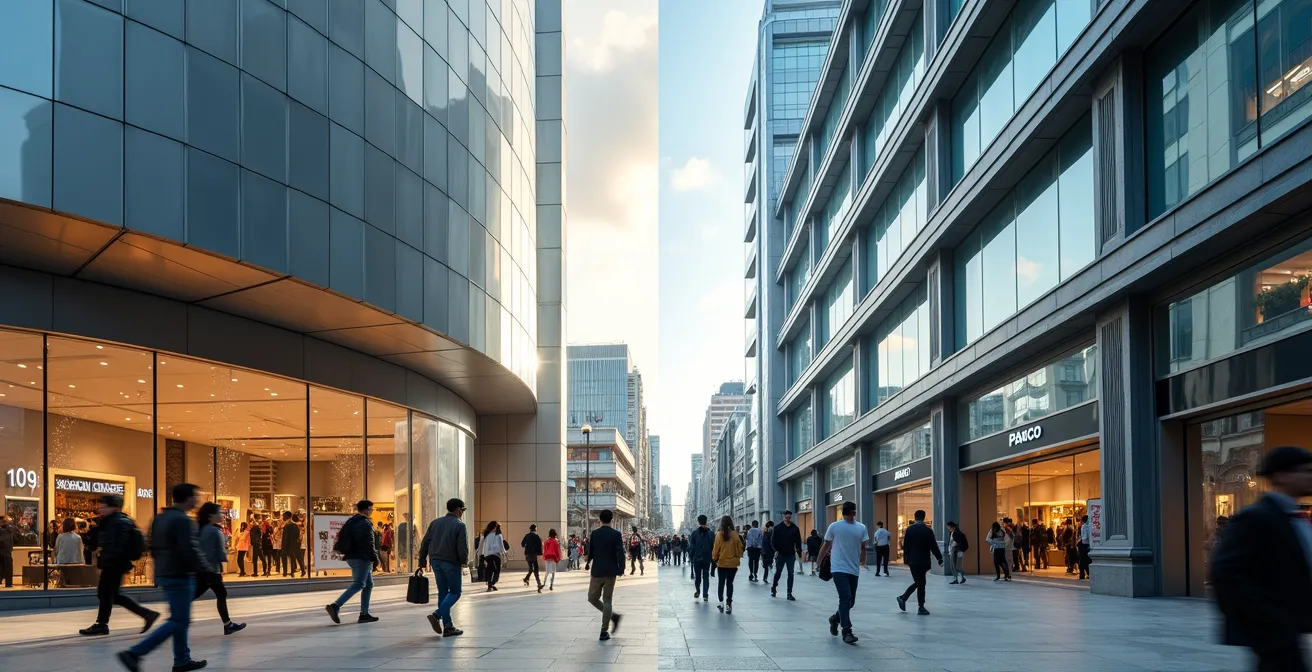
Your choice depends entirely on the vibe you’re chasing. Are you looking for hyper-feminine, trend-driven pieces or something more mature and subculture-focused? Here’s a quick breakdown:
- Shibuya 109: This is the epicenter of “gyaru” (gal) fashion. Think bold, hyper-feminine, and unapologetically trendy styles aimed at teens and women in their early twenties. The energy is intense, with densely packed floors creating a treasure-hunt atmosphere. It’s loud, vibrant, and perfect if you’re into the latest kawaii and pop-idol-inspired looks.
- Shibuya Parco: Reborn as a sophisticated hub, Parco offers a more mature, gender-neutral mix of luxury, streetwear, and niche subcultures. Its open architecture, rooftop spaces, and integrated art galleries create a calmer, more curated experience. Here you’ll find everything from Comme des Garçons to a Nintendo store and even a floor dedicated to innovative cuisine (including insect dishes).
Essentially, 109 is for diving headfirst into fast-paced youth trends, while Parco is for a more curated exploration of high-concept fashion and culture. Knowing the difference is the first step to truly navigating the Shibuya style grid.
Clubbing in Shibuya: How to Stay Safe in the Red Light Zones?
As the sun sets, Shibuya’s energy shifts from shopping to nightlife. Its labyrinth of streets hosts some of Tokyo’s best clubs, but it’s also where you need to switch on your “nuisance navigation” skills. While Tokyo’s safety is consistently highlighted by foreign visitors, this general sense of security can make you a prime target for specific scams prevalent in nightlife districts like Center Gai and Dogenzaka.
The most common issue comes from street touts, known locally as ‘kyacchi’. These are the friendly, often English-speaking promoters who approach you with offers of “free drinks” or “happy hour” deals. While the initial offer might seem great, it’s often a gateway to an establishment with a predatory billing system. The goal isn’t violence; it’s to get you inside and drain your wallet through hidden fees.
Case Study: The ‘Kyacchi’ and ‘Girls Bar’ Trap
Street touts in Shibuya, particularly around the station and Center Gai, use scripted lines to lure tourists into bars. Once inside, hidden charges for seating, snacks, or subsequent drinks can inflate a bill to exorbitant levels. A more specific version is the ‘girls bar’ trap, where friendly female staff encourage customers to buy them expensive drinks, leading to bills that can easily run into hundreds or even thousands of dollars. The key is to politely but firmly decline all offers from street touts and choose your venue independently.
To stay safe, the rule is simple: never follow a street tout. Legitimate clubs and bars in Japan do not need to aggressively pull people in from the street. Instead, do your research beforehand. Look up venues online, check recent reviews, and decide where you’re going before you even leave your hotel. If you do get approached, a polite “no, thank you” while continuing to walk is all that’s needed. Enjoy Shibuya’s incredible nightlife, but do it on your own terms.
Meet at Hachiko: Why Is It the Worst Place to Find Your Friends?
“Let’s meet at the Hachiko statue.” It sounds like a solid plan. The statue of the loyal dog is arguably the most famous landmark in Shibuya, a symbol of unwavering devotion known worldwide. However, making it your rendezvous point is a classic tourist mistake that guarantees frustration. The small statue is perpetually engulfed by a sea of people taking photos, waiting for friends, or simply passing through. With 2.4 million people using Shibuya Crossing daily, trying to spot a single friend in the Hachiko plaza is a near-impossible task.
The sheer volume of foot traffic, combined with multiple converging station exits, creates a chaotic environment where visibility is zero. Instead of squinting into the crowd, use your insider knowledge to pick a smarter, more visible meeting point. A good meeting spot should be an easily identifiable landmark that is slightly removed from the main crush of people. This allows you to find your group without the stress.
The following table compares the Hachiko statue to several superior alternatives. These spots are still centrally located but offer much better visibility and fewer crowds, making them far more practical for connecting with your friends before diving into the scramble.
| Meeting Point | Accessibility | Crowd Level | Visibility | Weather Protection |
|---|---|---|---|---|
| Hachiko Statue | Easy to find | Extremely crowded | Poor – lost in crowds | None |
| 109 Men’s Digital Screen | Clear landmark | Moderate | Excellent – elevated position | Partial overhang |
| Moai Statue West Exit | Less known | Light | Good – unique landmark | None |
| Mark City 4F Walkway | Indoor location | Light | Excellent – overlooks crossing | Full indoor protection |
Choosing a spot like the Moai Statue on the west side or the indoor walkway at Mark City will save you time and stress, setting a much better tone for your Shibuya adventure.
Shibuya Sky: Is the Rooftop View Worth the Ticket Price?
For the ultimate, unobstructed view of the Shibuya Scramble and the sprawling Tokyo skyline, Shibuya Sky has become the go-to destination. Located atop the Shibuya Scramble Square skyscraper, this 360-degree open-air observation deck offers a jaw-dropping perspective that no cafe window can match. But with a ticket price, is it worth it? The answer lies in calculating the “effort-to-view ratio.”
The price is a key factor. According to current pricing data, tickets cost 2,200 Yen online versus 2,500 Yen at the door. More importantly, the most coveted sunset time slots often sell out up to four weeks in advance. This means planning is essential. Unlike the old “go to Starbucks” method, you can’t just show up. However, the payoff is immense: you get an unparalleled, clean shot of the crossing without window reflections, plus a stunning panoramic view of the entire city, including Tokyo Tower and, on clear days, Mount Fuji.
The experience is more than just a view; it’s a destination in itself, with hammocks for lounging and a corner “Sky Edge” for that perfect Instagram photo. For serious photographers and those wanting a truly premium experience, the price is absolutely justified. A leading travel guide puts it best, emphasizing the importance of timing to maximize value.
The views from Shibuya Sky are especially good after dark so the best time to visit is just before sunset, so you can experience the views before the sun goes down and after dark.
– The Whole World Is A Playground, Best Photo Locations at Shibuya Crossing guide
For a guaranteed epic shot and a memorable experience, Shibuya Sky’s ticket price is a solid investment. Just be sure to book well in advance.
Nonbei Yokocho: How to Find the Tiny Bars Beside the Train Tracks?
After experiencing the massive scale of Shibuya from above, the next move for a true trend-spotter is to dive into its most intimate and hidden corners. Tucked away beside the JR train tracks is Nonbei Yokocho, or “Drunkard’s Alley.” This tiny, atmospheric pocket of post-war Japan is a world away from the neon glow of the main crossing. Finding it is part of the adventure: look for the cluster of red lanterns just north of Shibuya Station, near the Miyashita Park complex.
This isn’t your typical bar-hopping scene. Nonbei Yokocho is a preserved time capsule, a glimpse into the Showa-era Tokyo that has mostly vanished. It consists of two narrow, parallel alleys lined with around 40 minuscule bars, many of which can only seat six to eight people. This is the appeal and the challenge. The intimate setting requires a different kind of etiquette; you’re not just a customer, but a guest in a very small space.
Case Study: The Preserved Atmosphere of Showa-Era Tokyo
Originally built in the 1950s, Nonbei Yokocho has survived decades of rapid development. Each tiny establishment, often run by a single owner-operator, maintains a traditional izakaya atmosphere with handwritten menus and vintage decor. This creates an authentic, intimate environment that stands in stark contrast to Shibuya’s modern, large-scale entertainment. To visit is to participate in preserving a piece of Tokyo’s history.
Because the spaces are so small and the atmosphere so cherished, following the unwritten rules is essential. A great experience here depends on your ability to blend in and show respect for the culture of the alley.
Your Checklist for Nonbei Yokocho Etiquette
- Assess group size: Only visit solo or in a pair. Large groups are a major disruption.
- Check for space: Peek inside to see if there are empty seats before entering. Don’t linger in the doorway.
- Order promptly: Be ready to order both a drink and a food item shortly after sitting down.
- Accept the ‘otoshi’: Understand that the compulsory appetizer charge is part of the experience.
- Respect the atmosphere: Keep your voice low and avoid taking photos without asking for permission first.
Skytree or Gov Building: Which Tokyo View Is Best (and Free)?
While Shibuya Sky offers the best view of the scramble, Tokyo is a city of a thousand viewpoints. For a broader perspective of the metropolis, two other giants dominate the conversation: the towering Tokyo Skytree and the Tokyo Metropolitan Government Building in Shinjuku. Choosing between them again comes down to your “effort-to-view ratio,” balancing cost, time, and the specific shot you want. Especially when tourism distribution data reveals that 48.6% of all inbound tourists flock to Tokyo, making smart choices about popular attractions is key.
The Tokyo Skytree is the modern champion, a broadcasting and observation tower that pierces the sky at 634 meters. The Metropolitan Government Building is the savvy traveler’s choice, offering a spectacular—and completely free—view from its twin towers. Each has distinct advantages depending on your priorities.
The Skytree offers a higher, more panoramic 360° view, but comes with a significant price tag and often long wait times. The Government Building is free and quick to access, but the view is through windows and slightly less expansive. The biggest difference, however, is their location and what that means for seeing Mount Fuji.
| Feature | Tokyo Skytree | Metropolitan Gov Building |
|---|---|---|
| Height | 450m & 350m decks | 202m (45th floor) |
| Entry Fee | ¥3,100-4,300 | Free |
| Wait Time | 30-60 minutes typical | 5-15 minutes |
| Mt. Fuji View | Eastern perspective | Direct western view |
| Best Time | Morning for Fuji views | Sunset for Fuji silhouette |
| Photography | 360° panorama | Limited to observation windows |
For the iconic shot of Mt. Fuji silhouetted against a sunset, the Government Building is the clear winner due to its western-facing view. For the most comprehensive daytime or nighttime panorama of the city itself, the Skytree’s height is unmatched. If budget is your main concern, the Government Building offers 90% of the wow-factor for 0% of the cost.
Is Loitering in the Konbini Parking Lot Acceptable at Night?
The Japanese convenience store, or konbini, is a magical place. It’s a 24/7 haven for everything from delicious onigiri to concert tickets. For young people, it often becomes an informal social hub, especially late at night. You might see groups of friends gathered outside, eating fried chicken and chatting. As a visitor, it can be tempting to join in and use the space as a public hangout spot. However, this is where a crucial cultural concept comes into play: ‘meiwaku’ (迷惑), which means causing a nuisance or trouble for others.
While Japan is incredibly welcoming, there’s a strong social emphasis on public order and not inconveniencing others. Konbinis are private businesses, not public parks. Lingering for extended periods, especially in the parking lot, making noise, or leaving a mess can be considered ‘meiwaku’. In urban areas like Tokyo, police patrols often discourage loitering to maintain order and ensure the space remains accessible for actual customers.
This doesn’t mean you can’t enjoy a quick snack outside. The key is to be mindful and follow proper etiquette. The goal is to use the convenience store for its intended purpose without turning it into your personal lounge. Here’s how to do it right:
- Purchase First: Always buy your items before consuming them or using any provided seating.
- Use Designated Areas: If there’s a small “eat-in” corner, use it. Avoid making the parking lot your dining room.
- Keep it Brief: Enjoy your snack, but don’t set up camp. Konbinis are for convenience and quick stops.
- Clean Up: Dispose of all your trash in the correctly sorted bins that are almost always provided.
- Be Respectful: Keep your voice down and be aware that you are on private property.
By following these simple rules, you can enjoy the wonders of the konbini experience while showing respect for the local culture and avoiding any unintentional ‘meiwaku’.
Key Takeaways
- Mastering iconic photo spots requires insider knowledge, not just good gear.
- Shibuya’s culture is decoded by understanding the different demographics of its fashion towers and nightlife zones.
- The best experiences often involve swapping crowded landmarks for smarter, lesser-known alternatives.
Glico Man Sign: Why Is This Runner the Symbol of Osaka?
Our journey for the perfect shot takes us from Tokyo’s scramble to another of Japan’s most vibrant urban landscapes: Dotonbori in Osaka. Here, the undisputed king of photo ops is the Glico Running Man. This colossal, brightly lit sign of a runner crossing a finish line is to Osaka what the Eiffel Tower is to Paris—an unmissable symbol of the city’s spirit. With 43.5% of all inbound tourists to Japan visiting Osaka, this sign has become a global icon of joy and energy.
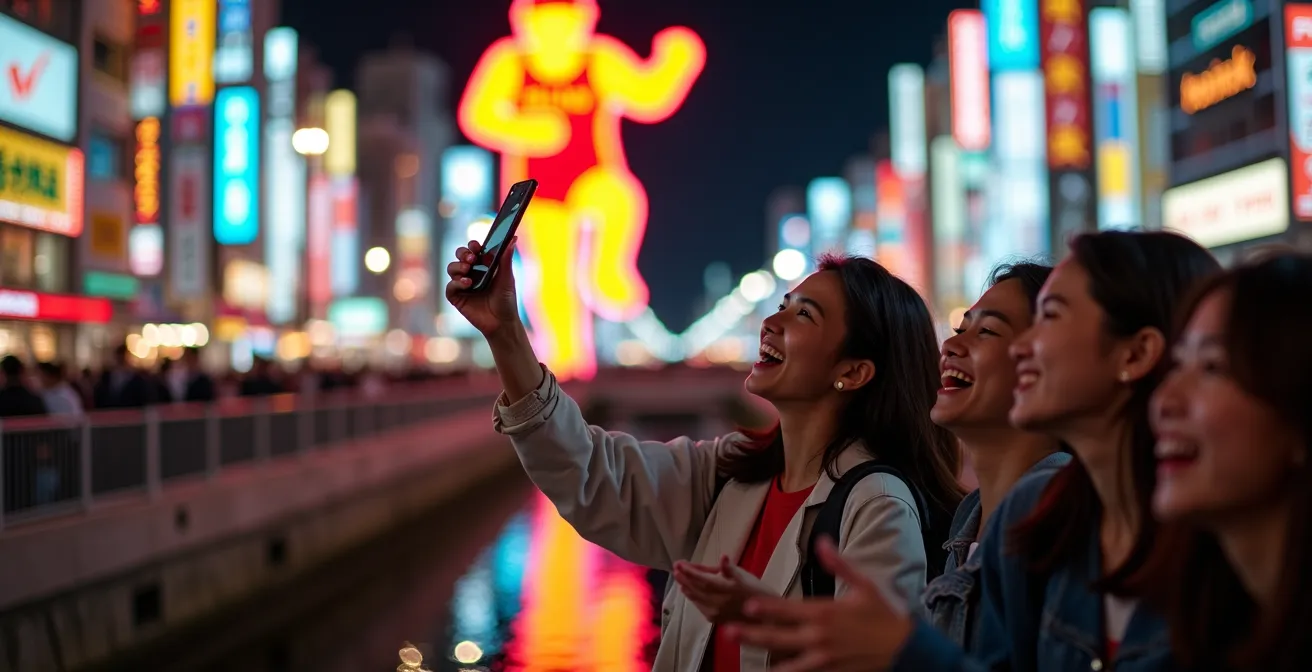
But why this runner? The sign is an advertisement for Glico, a food company. The original 1935 version was based on the idea that a single Glico caramel provides enough energy to run 300 meters. The pose, a triumphant victory sprint, has remained constant through six different technological iterations of the sign, becoming a symbol of Osaka’s own resilience, dynamism, and forward-moving energy.
Case Study: The Six Generations of the Glico Man
The Glico Running Man has been a fixture since 1935, evolving with Japan’s technological progress. From its original neon form to the post-war reconstruction in 1955 and the bubble-era enhancements, each version reflected the times. The current sixth-generation sign, installed in 2014, is a massive 200-square-meter LED display that animates and changes backgrounds. This constant evolution, while keeping the core symbol intact, mirrors Osaka’s ability to innovate while staying true to its energetic character.
Getting the perfect shot here is less about technical angles and more about capturing the atmosphere. The best spot is from the Ebisu Bridge, where you can frame the sign with its reflection in the Dotonbori canal. The quintessential photo involves mimicking the runner’s pose, arms and one leg raised in victory. It’s a shared, joyful ritual that connects you instantly with decades of visitors and the high-octane spirit of Osaka itself.
Now that you have the insider’s playbook, it’s time to go beyond just taking pictures and start capturing the real story. Use this knowledge to build your own trend-spotting itinerary and capture the moments that most tourists miss.