Contrary to the common fear that a ryokan’s strict schedule is a list of inconvenient rules, the truth is far more profound. This guide reveals that the rigid timing for dinners, baths, and checkouts is not a restriction on you, but rather the essential framework that allows for omotenashi—the art of anticipatory hospitality. Understanding this turns the schedule from a source of anxiety into an invitation to participate in a beautiful and seamless cultural performance.
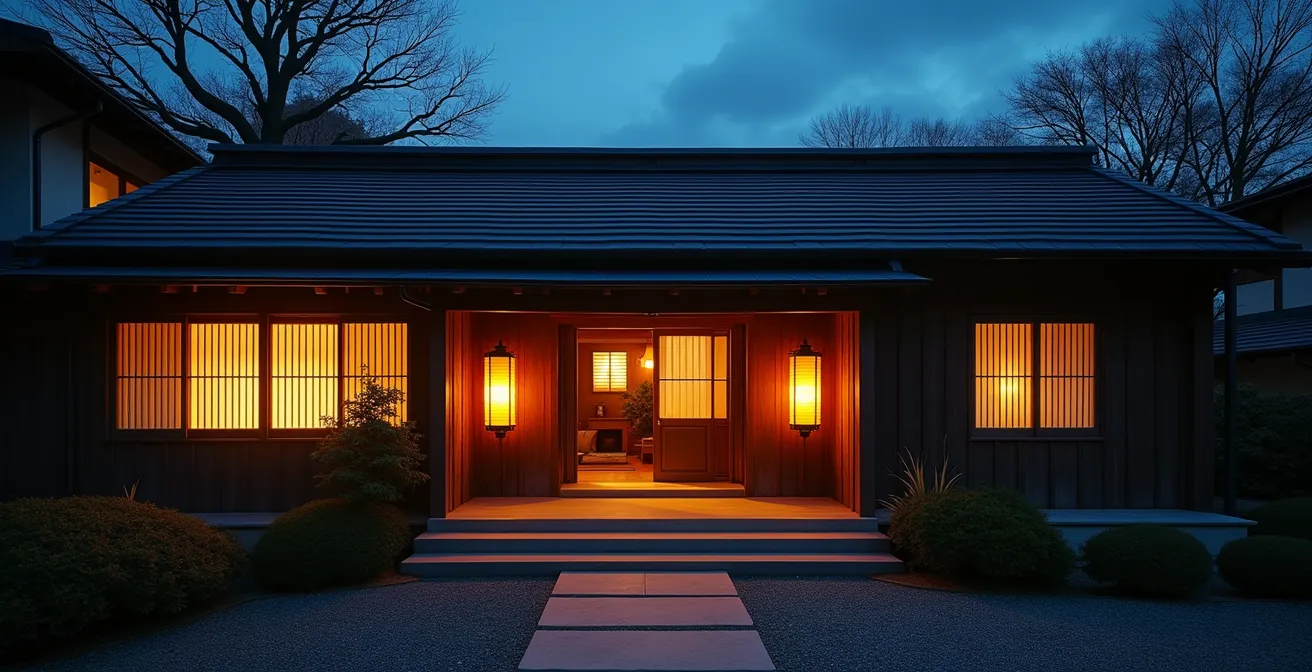
The image of a traditional Japanese inn, or ryokan, evokes serenity: sliding paper screens, the scent of tatami mats, and the promise of a soul-soothing hot spring bath. Yet, for many Western travelers, this idyllic picture is clouded by a single worry: the notoriously strict schedule. You’ve heard the stories—fixed dinner times, early curfews, and inflexible checkouts. For couples and families seeking cultural immersion, this raises a crucial question: will these rigid rules suffocate the relaxing escape you’ve been dreaming of?
Most travel advice focuses on the “what”: be on time, don’t miss dinner, check out by 10 AM. While correct, this advice misses the fundamental point and can amplify the feeling of being constrained. It treats the ryokan experience as a series of hurdles to overcome. But what if the true key to enjoying a ryokan isn’t just following the rules, but understanding the philosophy behind them? What if the schedule is not a cage, but a carefully choreographed stage for an unparalleled display of hospitality?
This guide offers a different perspective. We will move beyond a simple list of dos and don’ts to explore the “why” behind the ryokan’s rhythm. By framing the schedule as an operational ballet, we will show you how each timed event is a deliberate act of care. Your role as a guest is not merely to obey, but to be an appreciated participant in this timeless tradition. This shift in mindset is the single most important element in transforming your stay from a stressful tightrope walk into a deeply rewarding cultural immersion.
In the following sections, we will deconstruct the key moments of a ryokan stay, from wearing your yukata to sleeping on a futon and navigating the intricacies of a multi-course dinner. Each part will illuminate how your adherence to the schedule contributes to the seamless magic of the experience.
Summary: A Consultant’s Guide to Navigating Ryokan Etiquette
- Left over Right: How to Wear Your Yukata Without Looking Like a Corpse?
- Futon vs. Bed: Will Your Back Survive Sleeping on the Floor?
- Nakai-san in the Room: How to Behave During a Kaiseki Room Dinner?
- To Tip or Not: Should You Leave Money for Your Nakai-san?
- Why You Must Stick to the 10 AM Checkout Time Exactly?
- Why Omotenashi Is About Anticipation, Not Just Reaction?
- Why Stepping on the Genkan Divider Is a Major Faux Pas?
- Snow Monkeys or Sea Views: Choosing the Best Rotenburo Experience
Left over Right: How to Wear Your Yukata Without Looking Like a Corpse?
Upon entering your ryokan room, you’ll find a neatly folded cotton robe: the yukata. This is not just a bathrobe; it’s a social signal. Donning it shows you are embracing the inn’s relaxed atmosphere and are ready to participate in the experience. However, there is one crucial rule that separates the savvy guest from an unfortunate cultural blunder. Always, without exception, wrap the left side over the right side. The reverse—right over left—is reserved for dressing the deceased for burial, a mistake you’ll certainly want to avoid.
Once correctly worn, the yukata becomes your uniform of relaxation. It’s perfectly acceptable to wear it throughout the ryokan: to the onsen, to breakfast, and most importantly, to dinner. Many ryokans also provide a heavier outer jacket, a tanzen or haori, for cooler weather, and traditional footwear like geta (wooden clogs) for stepping outside. The entire ensemble is designed for comfort and ease as you move between the different parts of the inn.
In some dedicated onsen towns, like Kinosaki Onsen, this tradition spills out into the streets. It’s a common and celebrated sight to see guests strolling from one public bath to another in their yukata, creating a wonderfully immersive and timeless atmosphere. As a comprehensive guide to ryokan etiquette explains, wearing the yukata is not just for inside the hotel but is part of the destination’s charm. This public acceptance transforms the simple act of dressing into a shared cultural activity, connecting you to the place and its history.
Embracing this tradition is your first step in accepting the guest’s role in the ryokan’s performance, signaling your readiness to engage with the culture.
Futon vs. Bed: Will Your Back Survive Sleeping on the Floor?
For many first-time guests, the prospect of sleeping on a futon laid out on the tatami floor can be a source of anxiety. Will it be comfortable? What about my back? Rest assured, the Japanese futon is a sophisticated, multi-layered sleeping system, a far cry from the thin foldable mattresses known in the West. It typically consists of a firm base mattress (shikibuton), a soft and warm duvet (kakebuton), and a pillow often filled with buckwheat hulls (makura) that molds to your head.
The magic of the futon is part of the operational ballet. While you are away at dinner, your room attendant, or Nakai-san, will discreetly enter, move the low table to the side, and lay out your bedding. This seamless transformation is a cornerstone of the experience. The reverse happens in the morning while you are at breakfast. If you are concerned about comfort, do not hesitate to ask for an extra mattress. A polite “Mō ichi-mai shikibuton o onegai dekimasu ka?” is all it takes. Most ryokans are happy to accommodate this to ensure you have a restful night.

The firm support of the tatami and futon combination is considered by many to be excellent for posture. While it can take a night to adjust, many guests report feeling surprisingly refreshed. Giving the futon a chance is part of the cultural immersion. It is an experience rooted in centuries of Japanese home life, designed for practicality and harmony with the living space.
Rather than a hardship, view the futon as an authentic part of the journey—a chance to live, even for a night, in a truly traditional Japanese manner.
Nakai-san in the Room: How to Behave During a Kaiseki Room Dinner?
If your ryokan offers in-room dining, you are in for a treat: the kaiseki dinner. This is not just a meal; it is a multi-course culinary art form where seasonality, presentation, and flavor are exquisitely balanced. Your Nakai-san will orchestrate this experience, serving as your personal host and cultural interpreter. Their presence in your room, bringing and clearing dishes, is a key part of the service, not an intrusion. Your role is simple: to be present, to relax, and to appreciate.
The rhythm of the meal is deliberate. A kaiseki dinner can consist of anywhere from 6 to 15 small, meticulously prepared courses. These may start with appetizers, followed by sashimi, a soup, a grilled dish, a steamed course, and more, concluding with rice, miso soup, and pickles. As a guide to the choreographed pace of a kaiseki dinner notes, the dishes are designed to be consumed in the order they are presented. The Nakai-san sets the pace, ensuring each dish arrives at its peak, and will often explain the ingredients and their significance.
Constant conversation is not necessary; a quiet focus on the food is a form of respect. However, showing appreciation is always welcome. A simple “Oishii desu!” (It’s delicious!) can bring a smile to your host’s face. If you are curious about an ingredient, feel free to ask, “Kore wa nan desu ka?” (What is this?). At the end of the meal, the phrase “Gochisousama deshita” is a polite way of saying “Thank you for the feast.” This verbal gratitude acknowledges the immense effort that went into preparing and serving your dinner.
By entrusting yourself to their care and timing, you become part of the graceful flow of the kaiseki tradition, turning a simple dinner into a memorable cultural event.
To Tip or Not: Should You Leave Money for Your Nakai-san?
In a culture so focused on impeccable service, the question of tipping naturally arises for many Western visitors. The answer is simple and direct: do not tip. In Japan, tipping is not a custom, and in many situations, it can be considered awkward or even rude. The high standard of service you receive is included in the price and is offered out of a deep-seated cultural commitment to hospitality, not in expectation of a reward.
An official ryokan etiquette guide puts it plainly, offering reassurance to guests who may feel uncertain about this cultural norm.
Basically, there is no custom of tip(gratuity) in Japan. Although it seems guide books often say that tips are required at ryokan, you do not have to pay tip also at ryokan. In addition, your treatment does not change depend on you pay tip or not. So please take it easy.
– Kashiwaya Ryokan, Official Ryokan Etiquette Guide
While a direct cash tip is a faux pas, there are more culturally appropriate ways to express exceptional gratitude. If you wish to give a monetary gift, it must be placed in a special envelope (pochibukuro) and presented discreetly. However, this practice, known as kokorozuke, is typically for special favors and is not expected from foreign tourists. A far better approach, as noted in a guide on alternative expressions of gratitude, is to offer a small, thoughtful gift (omiyage) from your home country at the beginning of your stay. Other powerful gestures include writing a glowing online review mentioning your Nakai-san by name or, most importantly, offering a heartfelt “Arigato gozaimashita” with a sincere bow upon your departure.
This approach aligns with the principle of mutual respect, where sincere appreciation is valued far more than an impersonal financial transaction.
Why You Must Stick to the 10 AM Checkout Time Exactly?
The 10:00 AM checkout time at a ryokan is perhaps the most rigid rule of all, and it is almost universally non-negotiable. While Western hotels might offer a late checkout for a fee or as a loyalty perk, this concept is entirely foreign to the traditional ryokan model. Punctuality here is not just a suggestion; it is a critical component of the inn’s operational cycle. Your adherence is your final act of respect for the staff and the guests who will follow you.
The reason is simple: the operational ballet must be reset. Between the 10:00 AM checkout and the 3:00 PM check-in, the staff has a precisely five-hour window to perform a complete transformation of every room. This involves airing out the futons, cleaning the entire room, preparing the welcome amenities, and ensuring every detail is perfect for the next arrival. A delay from a single guest can create a domino effect, jeopardizing the staff’s ability to deliver the flawless experience that is the hallmark of omotenashi.
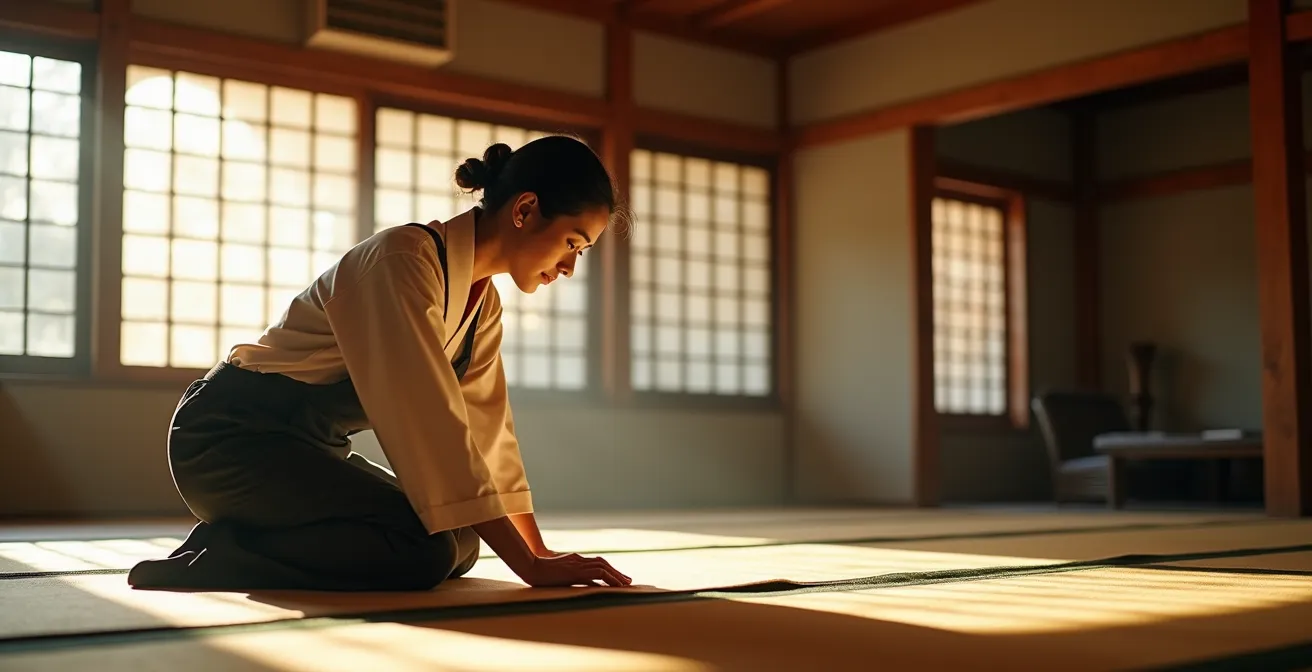
Viewing your punctuality as an act of omoiyari (consideration) is key. You are not being rushed out; you are playing your part to ensure the next guest receives the same wonderful welcome you did. If you need to store your bags after checking out, simply ask. Most ryokans are more than happy to hold your luggage while you explore the town or do some last-minute souvenir shopping. A simple “Nimotsu o azukatte moraemasu ka?” (Could you hold my luggage?) is all that’s needed.
By respecting this final appointment, you gracefully conclude your participation in the ryokan’s meticulously crafted world.
Why Omotenashi Is About Anticipation, Not Just Reaction?
The soul of a ryokan is not its architecture or its food, but the spirit of omotenashi. This concept is often translated as “hospitality,” but it runs much deeper. It is a philosophy of wholehearted and selfless service, focused on anticipating guests’ needs before they are even expressed. This is why the schedule is so important; it is the very framework that allows the staff to be one step ahead of you at all times. They know when you’ll be at dinner, so they can prepare your futon. They know when you’ll be bathing, so they can prepare a post-onsen refreshment.
As one ryokan guide notes, punctuality is a sign of respect that enables this anticipatory service. Arriving late for dinner, for instance, means the kitchen’s careful timing is disrupted, and a dish meant to be enjoyed hot will grow cold. This mutual respect forms an unspoken contract: the ryokan provides flawless, anticipatory care, and the guest provides the punctuality that makes it possible. This is the anticipatory framework in action, where the schedule creates space for staff to perfect “invisible” details, like changing the single flower in your room’s alcove or placing slippers exactly where your feet will land.
This philosophy requires you, the guest, to plan ahead as well. Understanding the ryokan’s schedule before you even arrive allows you to align your own expectations and activities, ensuring a smooth and respectful experience for all. An audit of your travel plans in light of the ryokan’s structure is a practical first step.
Your Pre-Ryokan Stay Action Plan: An Alignment Checklist
- Identify Key Touchpoints: List all scheduled events mentioned in your ryokan booking (check-in/out times, dinner/breakfast times, private onsen slots).
- Gather Information: Review the ryokan’s website for specific rules or FAQ pages to inventory their stated expectations.
- Align with Cultural Values: Confront your own habits (e.g., “I’m always 15 minutes late”) with the ryokan’s value of punctuality and decide how you will adapt.
- Assess Personal Comfort: Evaluate your needs (e.g., “I need a soft mattress”) and prepare polite requests, acknowledging you are asking for an exception to the standard.
- Create an Integrated Itinerary: Draft a personal schedule for your stay that respects the ryokan’s fixed times, planning your sightseeing and relaxation around them, not in conflict with them.
Your cooperation is not a chore; it is what unlocks the highest level of personalized, almost psychic, service that makes a ryokan stay so magical.
Why Stepping on the Genkan Divider Is a Major Faux Pas?
Your first encounter with the ryokan’s deep-seated rules happens the moment you arrive, at the entrance hall, or genkan. Here, you will be expected to remove your outdoor shoes before stepping up into the main reception area. This act is more than a simple matter of cleanliness; it is a powerful ritual that marks the crossing of a sacred boundary. The raised wooden ledge or change in flooring is a physical manifestation of the cultural concept of uchi-soto (inside/outside), which separates the “outside” world (soto) from the pure, private inner sanctum of the “inside” (uchi).
Stepping directly on this divider is considered a significant breach of etiquette, as it blurs this critical line. The correct procedure is to step out of your shoes onto the lower genkan area, then step up into the uchi space without your shoes touching the raised level. To be extra polite, you should then turn your shoes so they face the door. The staff will typically then store them for you, and you will be provided with indoor slippers for navigating the corridors.
This footwear choreography continues throughout your stay. You must remove your indoor slippers before stepping onto the tatami mats of your guest room, which is an even more private “inside” space. You’ll also find a separate pair of dedicated slippers inside the restroom; it’s crucial to switch to these and, more importantly, to remember to switch back to your hall slippers when you leave. Accidentally wearing the toilet slippers into the dining area is a common, and embarrassing, mistake for first-timers. If you do make a mistake, a slight bow and a quiet “Sumimasen” (excuse me) is the best way to recover.
By respecting these boundaries, you are showing a deep understanding of the cultural values that shape the entire ryokan experience.
Key Takeaways
- A ryokan’s schedule is not a list of restrictions but an ‘anticipatory framework’ that enables the staff to provide seamless, predictive hospitality (omotenashi).
- The guest’s role is an active one; your punctuality and adherence to tradition are seen as a form of consideration (omoiyari) that completes the ‘mutual respect contract’.
- Understanding the ‘why’ behind each rule—from wearing a yukata correctly to respecting checkout times—transforms the experience from stressful to deeply meaningful and immersive.
Snow Monkeys or Sea Views: Choosing the Best Rotenburo Experience
The rotenburo, or outdoor hot spring bath, is often the highlight of a ryokan stay. Whether it’s overlooking a snowy valley with visiting monkeys or a dramatic coastline, the experience is sublime. However, your choice of ryokan location can significantly impact the flexibility of your schedule. Understanding this connection allows you to choose an inn that best matches your travel style. As a general rule, the more remote the ryokan, the stricter its schedule will be due to logistical constraints and a focus on total immersion.
This table illustrates how location often correlates with the rigidity of the ryokan’s timetable, especially concerning dinner, which is the main anchor of the evening schedule.
| Location Type | Typical Dinner Time | Schedule Flexibility | Best For |
|---|---|---|---|
| Remote Mountain Ryokan | 6:00 PM fixed | Very strict – limited staff & logistics | Total immersion, disconnection |
| Onsen Town Ryokan | 6:00-8:00 PM range | Moderate – some evening exploration possible | Balance of tradition & exploration |
| City Ryokan | 6:30-8:30 PM range | More flexible – urban dining alternatives | First-timers, business travelers |
Beyond the schedule, diligent research into the onsen itself is crucial. Many ryokans offer private, bookable baths (kashikiri buro), which are perfect for couples, families, or guests with tattoos, as some public onsen still have restrictions. You should also verify the exact opening hours and check if the baths switch between genders, a common practice to allow all guests to experience different views. Planning your bathing times strategically—sunset for photos, early morning for solitude—can elevate the experience from a simple dip to a core memory of your trip.
Armed with this understanding, you are now ready to book your ryokan stay not as a timid tourist, but as a respected guest poised to participate fully in a beautiful, centuries-old tradition.